On this page

What an ATS Actually Is
An applicant tracking system is database software — not an AI, not a recruiter, not a smart filter. It was built to help HR teams manage high application volume. The "tracking" part means it stores your application. The "filtering" part means it scores your resume against a job description and ranks you against other applicants.
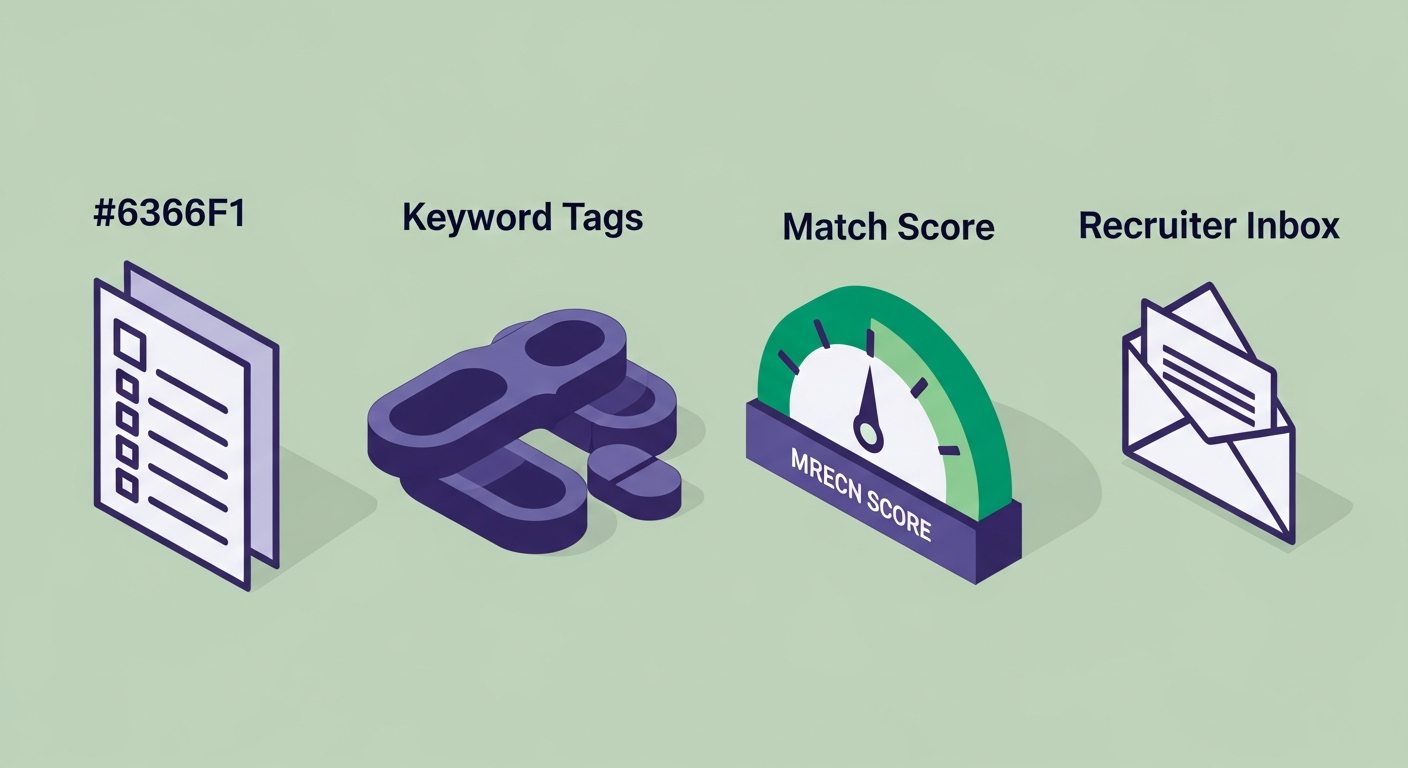
The major platforms — Greenhouse, Lever, Workday, Taleo, iCIMS — all work on the same fundamental logic: parse the resume into structured fields, extract keywords, score keyword match against the job posting, rank applicants by score. The recruiter then opens a list sorted by score and reads the top 20 or so. If your score put you at position 47, nobody reads your resume.
That's not a small edge case. In a 2022 Harvard Business School study of 8 million job postings, 88% of executives acknowledged their ATS filtered out qualified candidates who should have moved forward. The system is imperfect by design — it trades false negatives (missing good candidates) for speed. You're competing against that tradeoff.
How the Parser Reads Your Resume
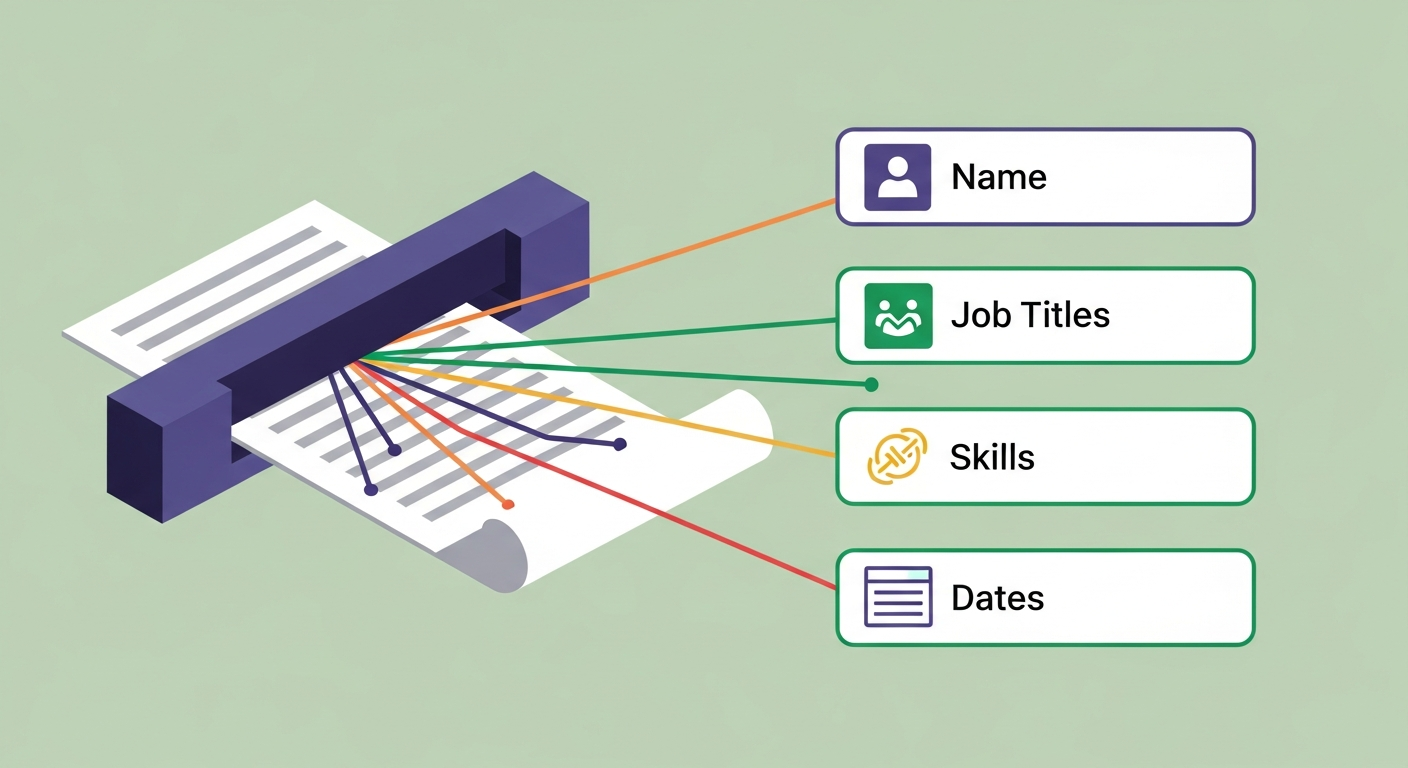
Parsing happens before scoring. The ATS reads your raw file and tries to extract structured data: name, contact info, job titles, employers, dates, education, skills. It's doing this without understanding your content — it's pattern-matching against known resume formats.
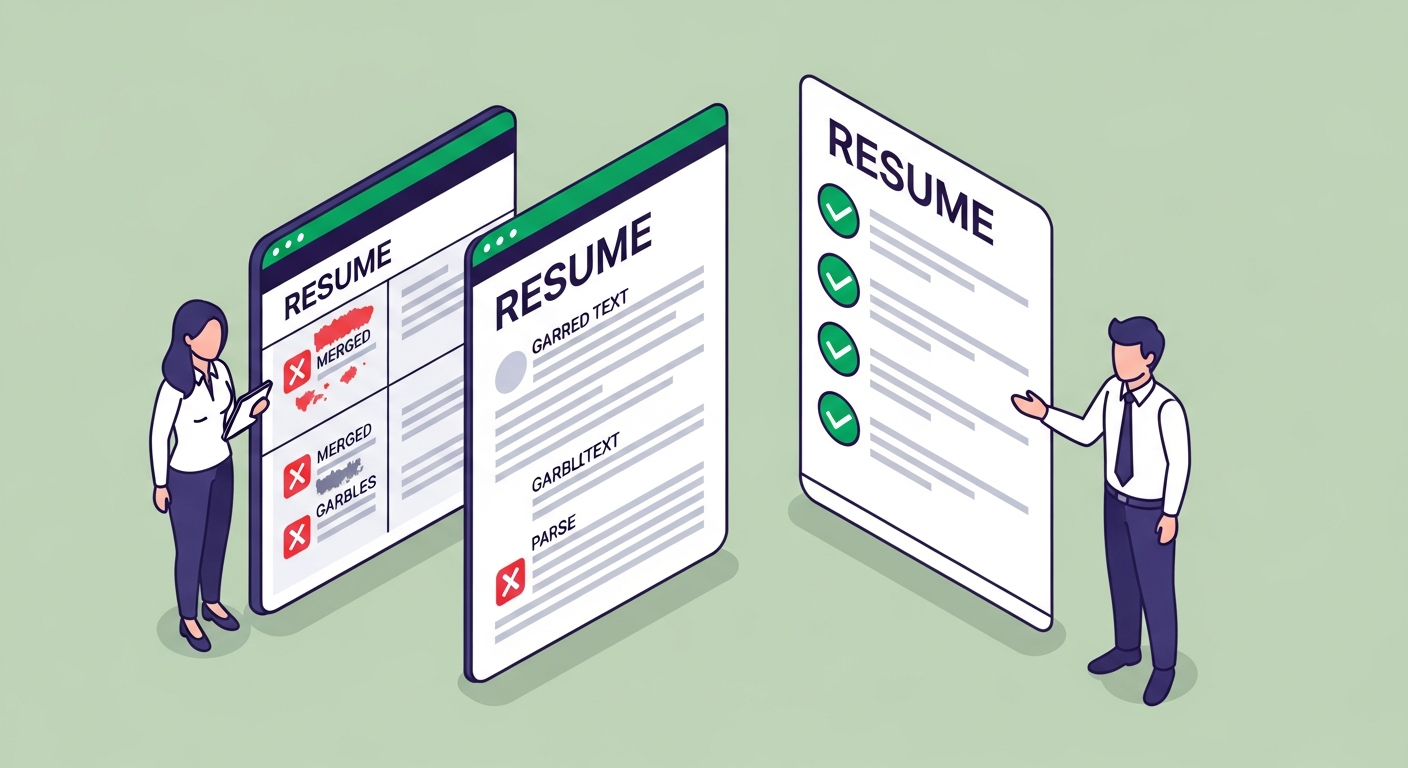
This is where formatting kills otherwise strong resumes. The parser is not a human. It doesn't understand columns. It doesn't read text inside graphics. It can't parse tables reliably in older systems (Taleo, iCIMS). It doesn't handle headers embedded in text boxes. It can't always read footers. When the parser hits something it doesn't recognize, it either skips it or corrupts the data in its database — and corrupted data almost always produces a lower score.
The safest resume format for parser compatibility is a single-column document with standard section headers (EXPERIENCE, EDUCATION, SKILLS — not "Where I've Been" or "My Toolkit"), clean bullet points (no custom symbols), no text boxes, no tables, no columns, and no graphics. Every byte of text should be selectable in the PDF. If you can't highlight the words with your cursor, the parser can't read them either.

How ATS Scoring Works
Once your resume is parsed, the ATS scores it. The scoring algorithm varies by platform, but the core mechanism is consistent: keyword extraction from the job description, keyword matching against your resume, weighted scoring based on keyword importance and placement.
Keyword importance is derived from how the job description is written. A skill mentioned in the job title, the opening paragraph, and three bullet points is weighted more heavily than one mentioned once in a "nice to have" section. The ATS infers importance from frequency and position — the same signals a human would use, just applied mechanically.
Placement in your resume also matters. Most systems weight the Summary and Skills sections more heavily than the body of a work experience entry. A keyword in your headline scores higher than the same keyword buried in your fourth bullet point under a job from 2019. For a practical breakdown of how to write that top section — with examples for every career stage — see the guide to resume introduction examples.
ATSFixer's score is calibrated against live ATS output — we run test resumes through Greenhouse, Lever, Workday, Taleo, and iCIMS weekly and compare our scoring to their actual rankings. Our score lands within ±3 points of real ATS output. The average improvement after one ATSFixer adaptation is +31 points.
Free ATS Score Check
Your result looks like this —
get yours in 30 seconds.
Drag & drop your resume here
PDF or Word · max 10 MB
Results in under 30 seconds · no sign-up required

Which ATS Each Major Company Uses
Knowing which platform a company uses tells you how strict the parsing is and how much formatting flexibility you have.
- Greenhouse — Used by Stripe, Airbnb, Figma, Notion, Linear. Modern parser, relatively forgiving on formatting. Good keyword matching, strong on skills sections.
- Lever — Used by Netflix, Atlassian, Shopify. Similar to Greenhouse in parsing quality. Weights LinkedIn URL and external links.
- Workday — Used by Amazon (corporate), Microsoft, Goldman Sachs, Deloitte. Much stricter parser. Tables and columns frequently break. Single-column format is essential.
- Taleo — Used by Oracle, JPMorgan, many Fortune 500 legacy companies. The oldest and most brittle parser. Most formatting pitfalls hit hardest here. No fancy formatting whatsoever.
- iCIMS — Used by FedEx, Marriott, large healthcare systems. Moderate strictness. Keyword matching is heavy; skills sections matter significantly.
If you can't find which ATS a company uses, apply the most conservative formatting rules — those optimized for Taleo and Workday will work across all platforms.

The Six Things That Get You Auto-Rejected
1. Missing hard keywords. The ATS is looking for specific terms from the job description. "Project management" and "managing projects" are not the same string. If the job says "stakeholder communication" and your resume says "cross-functional collaboration," that's a miss — even if they mean the same thing in practice. You need the exact phrase.
2. Formatting that breaks the parser. Columns, text boxes, tables, headers in shapes, icons instead of bullet points. Any of these can cause the parser to corrupt or skip sections of your resume. Your beautifully designed two-column resume may be completely unreadable to Workday.
3. Keyword stuffing in white text. Some candidates paste the job description in white font at the bottom of a white-background resume. ATS systems now detect this pattern and flag it as manipulation. It's more likely to get you permanently filtered than to help.
4. Wrong job titles. The ATS matches your past job titles against expected titles for this role. "Growth Hacker" doesn't score the same as "Growth Marketing Manager." If you held an unusual title, add the conventional equivalent in parentheses: "Growth Hacker (Growth Marketing Manager)".
5. Date format inconsistency. Some parsers can't handle mixed date formats. "Jan 2022 – Present" in one entry and "2021 – 2022" in another can confuse date-parsing logic. Pick one format and use it everywhere.
6. Wrong file format. DOCX parses most reliably across all ATS platforms. PDF is acceptable on modern systems (Greenhouse, Lever) but can fail on Taleo and some Workday configurations. Never submit a JPEG, PNG, or scanned PDF. If the text isn't selectable, it's not parseable.
How to Pass an ATS in 2026
The path through an ATS is straightforward once you understand the mechanism:
Step 1: Match keywords from the job description exactly. Read the posting. List every hard skill, tool, methodology, and certification mentioned. Check your resume against that list. Add every missing item you can legitimately claim — in the exact phrasing the job uses.
Step 2: Place keywords where they score highest. Skills section, professional summary, and the first bullet point of your most recent role carry the most weight. Don't bury important keywords in paragraph three of a job from 2018.
Step 3: Fix your formatting. Single column. Standard section headers. Real bullet points. Selectable text. Consistent dates. No tables, no text boxes, no graphics.
Step 4: Tailor for each role. The same resume can't score above 70% across wildly different job descriptions. Each application needs a version tuned to that specific posting. This is the part that's genuinely hard to do manually at volume — which is the problem ATSFixer solves in under two minutes.
None of this is gaming the system. It's describing your real experience in the language the role requires. The ATS is a filter, not a judge. Getting past it just means your resume reaches the person who can actually evaluate whether you're a good fit.
Related from ATSFixer
Frequently Asked Questions
An ATS score measures how closely your resume matches a specific job description — across keyword coverage, formatting, section structure, and professional tone. Scores vary by platform but typically run 0–100. A score below 60 is usually auto-filtered before a recruiter sees it. Above 75 is competitive. Above 85 means your resume is well-matched for that specific role. ATSFixer's scoring is calibrated to within ±3 points of real ATS output.

Jordan Marcus
Senior Career Strategist
Jordan has reviewed 4,000+ resumes and coached candidates into roles at Google, Stripe, and McKinsey. She writes about the mechanics of ATS and what actually gets people interviews.