On this page
- What Are Resume Keywords? (The Real Definition)
- How ATS Systems Score Your Resume Keywords
- How to Find the Right Keywords from Any Job Description
- Where to Put Resume Keywords (Scored by Section)
- Skills Section — Highest Return
- Resume Summary / Professional Profile
- Work Experience Bullets
- Resume Keywords by Industry: Examples That Actually Score
- Software Engineering & Tech
- Marketing & Growth
- Finance & Accounting
- Project Management
- Sales & Business Development
- Data Analysis & Business Intelligence
- Human Resources
- Design & UX
- Keywords That Score Zero (And Why You're Still Using Them)
- Three Keyword Mistakes That Get You Filtered Out
- Which Resume Keywords Are Aging Out in 2026
- When Keyword Optimisation Matters Less
- Frequently Asked Questions About Resume Keywords
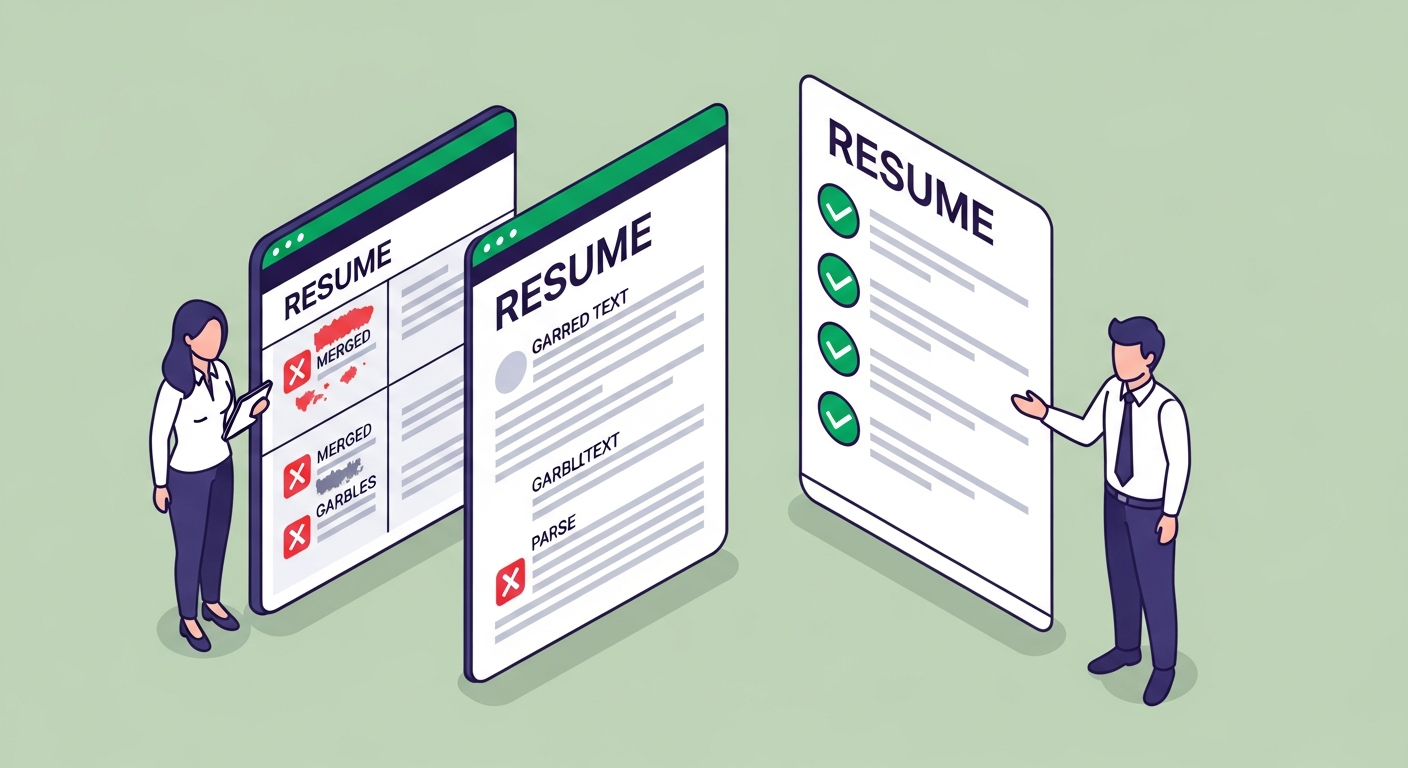
Resume keywords are the reason 75% of resumes never reach a human recruiter. Not weak experience. Not a thin cover letter. The wrong words — or the right experience described in the wrong way. Systems like Greenhouse, Workday, and Taleo don't read your resume; they pattern-match it against the job description, scoring how precisely your language mirrors theirs. A 2021 Harvard Business School and Accenture study of 8 million job postings found that 88% of executives acknowledged their ATS filtered out qualified candidates who should have moved forward. That's the machine you're up against.
What follows covers how to find the right resume keywords for any role, where to place them for maximum score, which terms are gaining and losing weight in 2026, and the industry-specific keyword lists that most guides skip entirely. If you'd rather skip straight to the score, the free ATS resume checker does this in 30 seconds — but reading the next fifteen minutes will tell you why the score matters and exactly what to do with it.
What Are Resume Keywords? (The Real Definition)
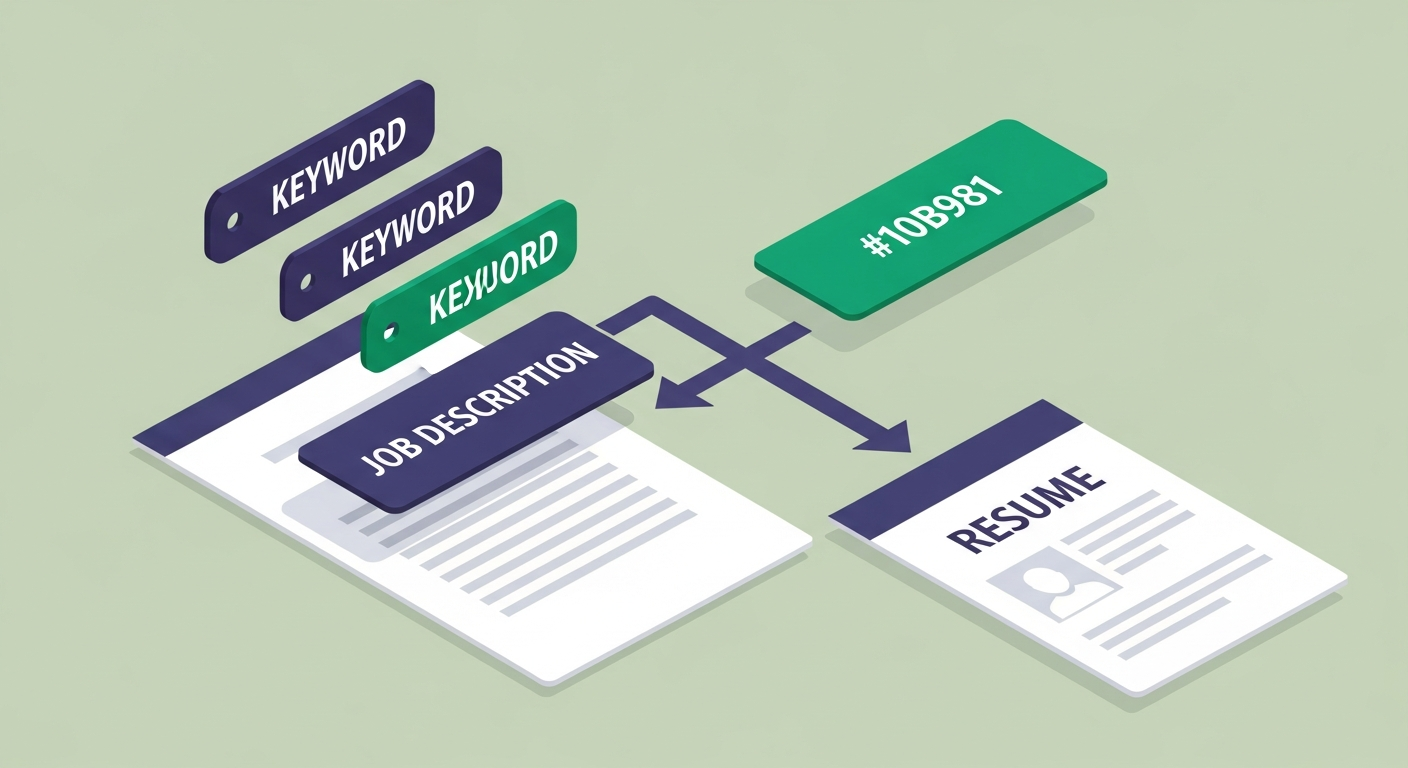
The keywords for a resume that actually move your ATS score are not "team player" and "results-driven." They are the exact phrases pulled directly from the job description you're applying to — "stakeholder communication," "Python," "P&L management," "Salesforce CRM" — matched character-for-character against what the applicant tracking system expects to find.
That distinction matters more than most job seekers realise. A project manager who writes "cross-functional collaboration" on her resume when the job description says "stakeholder communication" scores zero for that requirement — even though any human would understand they mean the same thing. The algorithm looked for a string. It didn't find it. It moved on. (I know. I didn't design the system. I just reverse-engineer it every week.)
This is the central fact behind every useful piece of resume keyword advice: the ATS is not reading your resume. It is pattern-matching it.
There are two categories of resume keywords worth understanding:
- Hard-skill keywords — tools, technologies, certifications, methodologies. "AWS," "Google Analytics," "PMP," "GAAP," "Agile." These score highest and are most likely to be absent from the typical resume because candidates assume their experience speaks for itself. It doesn't. The parser can't infer what you mean; it can only find what you wrote.
- Role-specific phrases — the function-native language embedded in the posting. "Customer lifecycle management," "OKR planning," "loss prevention protocols." These rarely appear on a template resume and are almost always lifted verbatim from job descriptions that use them repeatedly across the role overview, requirements, and responsibilities sections.
Soft skills — "excellent communicator," "team player," "detail-oriented" — are a third category. They don't score meaningfully on any ATS I've tested, and they read as noise to the recruiter who eventually opens your file. More on that shortly.
The phrase "keywords for resume" also gets used to describe the secondary layer: the terms you'd expect in a job description across your entire function, not just the specific posting. These matter, but they matter less than the verbatim phrases from the actual job you're applying to. The job description is the answer key. Everything else is educated guessing.

How ATS Systems Score Your Resume Keywords
Here's exactly what happens when you submit a resume. The ATS parser converts your file to structured data — name, contact details, job titles, dates, and full text. It then extracts keywords from the job description, weights them by frequency and position, and checks whether your resume contains them. The score that comes out is a percentage match against that specific posting.
Frequency weighting: a skill mentioned in the job title, the opening paragraph, and three bullets carries more weight than one mentioned once under "preferred qualifications." The more times a term appears in the posting, the higher its importance score — and the more critical it is that your resume uses the exact phrase rather than a close approximation. Workday and Taleo both apply multipliers to high-frequency terms; our weekly testing shows these can push a single keyword's contribution to as much as 8 points of your overall score.
Placement weighting: keywords in the Summary and Skills sections score higher than the same keyword buried in a bullet under a 2019 role. Most platforms parse the Skills section as a dedicated structured field, then also count it in the full-text pass. It gets counted twice. This is not a trick — it's how the data model works, and it's the primary reason resumes with a dedicated Skills section score 10–15 points higher on average than equivalent resumes without one.
The score threshold varies by company and role volume. A recruiter at a mid-size company sorts her Greenhouse queue by match score and opens the top 15. The cutoff lands around 65/100 at most companies running more than 100 applications per role. Below that, your file doesn't get opened — not because a human decided you were underqualified, but because the sorted list ends before it reaches your name.
In our testing — we run the same resume through Greenhouse, Lever, Workday, Taleo, and iCIMS every week — the average resume submitted without keyword optimisation scores between 38 and 52 on a role it's genuinely qualified for. After one round of keyword matching, that score moves to 69–83. The average improvement across ATSFixer users is +31 points. Same experience. Different words.
To understand the full mechanics behind how ATS systems work — including parsing rules, file format compatibility, and how different platforms handle columns and graphics — that guide covers the complete picture. This article focuses specifically on keywords and what to do with them.
How to Find the Right Keywords from Any Job Description
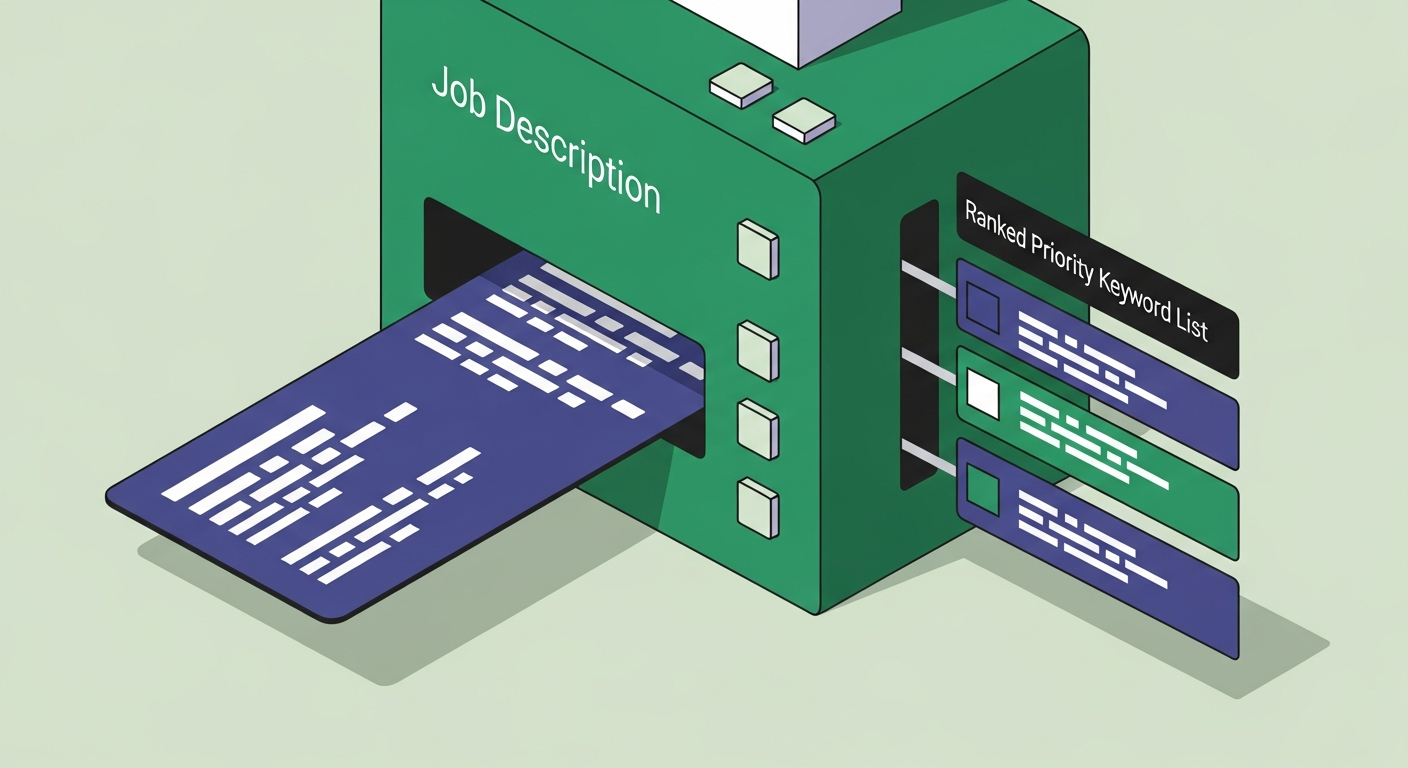
The job description is the answer key. Everything you need is already there — the question is how to extract it efficiently rather than staring at it for 20 minutes and then typing "results-driven professional" in your summary anyway.
Step 1: Extract the hard skills. Read the posting and pull every specific tool, technology, certification, methodology, and credential mentioned. "Salesforce CRM," "HubSpot," "SQL," "PMP certification," "IFRS accounting standards." These are the resume keywords that score highest and that most resumes miss entirely, because candidates assume their experience is self-evident to the parser. It isn't. The parser can only credit what it finds as an exact match.
Step 2: Pull the role-specific phrases. Every function has language native to it. "Customer lifecycle management," "sprint retrospectives," "P&L ownership," "loss prevention protocols." These are rarely generic enough to appear on a template resume. Copy the exact phrase from the posting — not your preferred synonym of it. The ATS is doing string matching, not semantic interpretation.
Step 3: Note keyword frequency. Count how many times each skill appears across the full posting — job title, responsibilities, requirements, and "nice to have." A requirement that appears in the job title, the opening paragraph, and three bullets is worth hitting in multiple sections of your resume. One that appears once under "nice to have" can appear once on your resume. Mirror the signal strength, not just the presence.
Step 4: Gap-check your current resume. Mark which keywords are already present and which are missing. The missing ones are your gap list. Add every hard-skill gap you can genuinely back up in an interview. Do not list keywords you can't speak to — the ATS gets you past the filter, but the recruiter will ask about anything in your skills section during the phone screen. Passing the filter and then floundering on "tell me about your experience with Salesforce" is arguably worse than not getting the call at all.
According to Jobscan's analysis of over a million job postings, the average job description contains 15–25 hard-skill terms. Most resumes cover fewer than half of them by default. Covering 80% or more puts you in the top tier for keyword matching — that's the threshold that consistently pushes scores above the 65-point cutoff where recruiters actually start opening files.
The fastest way to run this process accurately is to paste both your resume and the job description into ATSFixer's free ATS resume checker. It identifies every gap, weights terms by frequency in the posting, and shows you exactly which keywords are moving your score — in under 30 seconds. Manual gap analysis takes 20 minutes and misses the weighting. The tool takes 30 seconds and doesn't.
Where to Put Resume Keywords (Scored by Section)
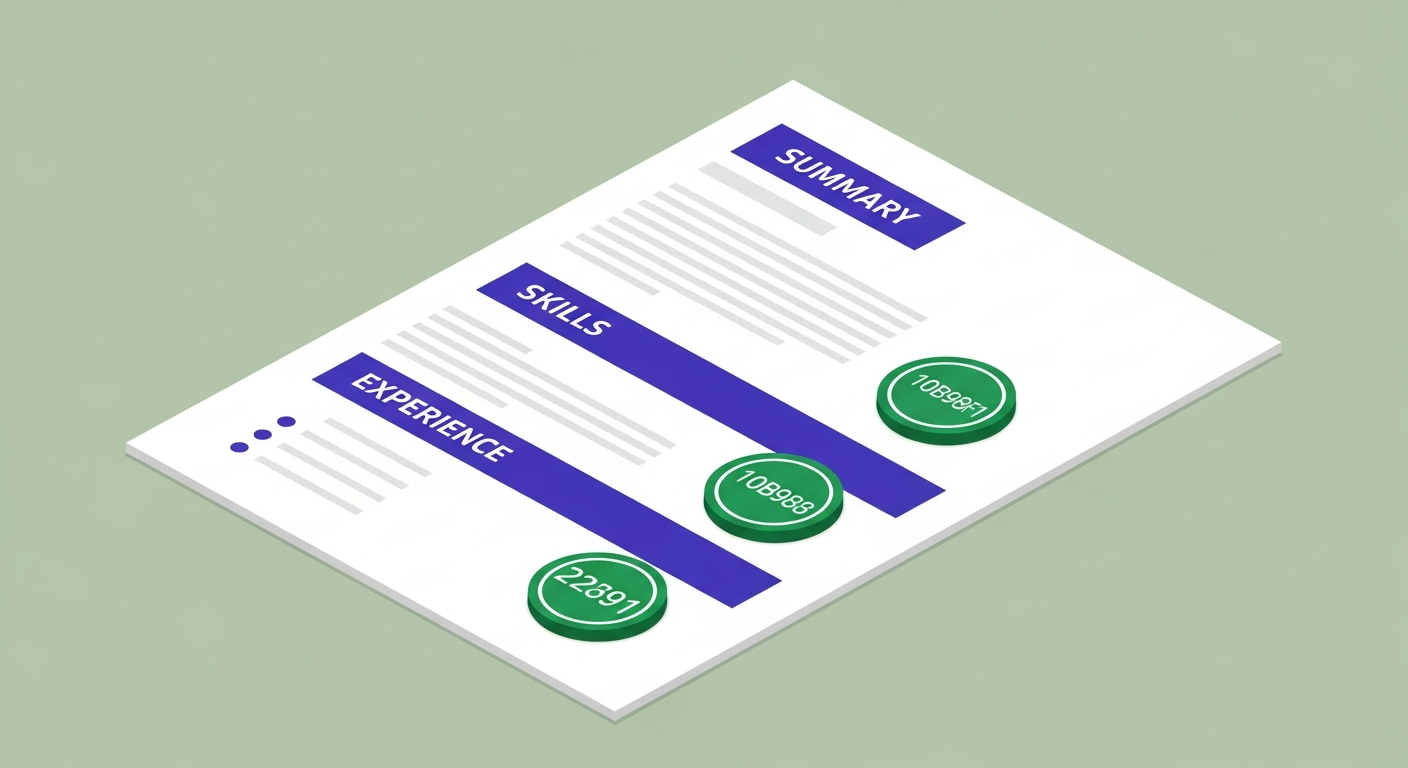
Keyword placement is not just about presence — it's about where the ATS weights what it finds. Most platforms score the same keyword differently depending on the section it appears in. Here's the ranking, from highest return to lowest.
Skills Section — Highest Return
The Skills section is parsed as a structured field (the ATS extracts it explicitly as a dedicated data point) and it also appears in the full-text match. A keyword in your Skills section gets counted in both passes. ATSFixer data shows that resumes with a dedicated Skills section score an average of 10–15 points higher than equivalent resumes without one. This is the most under-used section on the average resume — and it takes about four minutes to fix.
Format matters here. A simple bulleted or comma-separated list of hard-skill terms is what ATS parsers expect. Proficiency bars, star ratings, or the phrase "Advanced: Python | Intermediate: SQL" confuse most parsers — the structured field extraction fails and your keywords end up in the general text pass, where they score less. Keep it plain. The guide to skills for resume covers exactly what to list and what to drop, including the specific format that scores best on iCIMS and Workday, which have different structured-field parsers.
Resume Summary / Professional Profile
ATS platforms treat the top of the document as high-signal real estate — the same logic a recruiter applies when she skims a resume in 7.4 seconds. A two-sentence summary that contains three of the job's most-repeated keywords will score better than burying those same keywords in a bullet point from 2019. Write your summary last — after you've extracted your keyword list from the posting, not before you've even read it.
The practical rule: every keyword that appears more than twice in the job description should appear in your summary if it genuinely anchors your candidacy. Don't try to pack six keywords into a single sentence — pick the two or three that best define your fit for this role and lead with them. For examples across different career stages and role types, the guide to resume introduction examples covers summaries, objectives, and the ATS mechanics behind both.
Work Experience Bullets
The experience section is where you prove what the Skills section claims. Don't just list "stakeholder communication" in your skills and leave it unsupported — use the phrase in a bullet: "Led stakeholder communication across six business units for a $4M systems migration." The keyword appears, it's backed by a number, and it's completely defensible in a phone screen.
Rule of thumb: any keyword that appears more than twice in the job description should appear in at least two places on your resume — once in Skills, once in an Experience bullet. Any keyword that appears only once in the posting needs to appear at least once on your resume. The frequency in the posting tells you the frequency target on your resume. Mirror it.
One placement mistake that costs candidates dearly: keywords inside text boxes, table cells, sidebar columns, or a two-column layout's skills panel are invisible to most ATS parsers. The algorithm reads plain left-to-right text — anything in a container it can't extract simply doesn't exist. A beautifully designed two-column resume with a sidebar skills section is not a resume with a Skills section as far as iCIMS or Taleo is concerned; it's a resume with a decoration those platforms ignore. (Yes, I know the design looked good in Canva. No, the Greenhouse parser does not care about design.)
Free ATS Score Check
Your result looks like this —
get yours in 30 seconds.
Drag & drop your resume here
PDF or Word · max 10 MB
Results in under 30 seconds · no sign-up required

Resume Keywords by Industry: Examples That Actually Score
Most keyword guides give you generic lists — "Python," "leadership," "project management" — that apply to no job specifically and every job vaguely. What actually moves your score is the intersection of your function, your seniority level, and the exact language the hiring company uses in that role's job descriptions. Here's that breakdown by industry, with the terms ATS systems in each sector weight most heavily and example bullets that put them into context.
Software Engineering & Tech
ATS systems at tech companies — Greenhouse dominates here, with Lever a close second for startups — weight technical specificity heavily. "Python" alone scores lower than "Python (FastAPI, Pandas)" or "Python microservices." The more precisely you match the stack listed in the posting, the higher your score. Vague claims like "experience with cloud technologies" score nothing; "AWS (EC2, S3, Lambda)" scores each component as a distinct keyword. Most enterprise tech companies have shifted from Taleo to Workday in the past three years; both platforms weight stack-specific terms over general claims.
- Python, JavaScript, TypeScript, Go, Java, Rust
- React, Next.js, Vue.js, Node.js, Django, FastAPI
- AWS (EC2, S3, Lambda), Google Cloud Platform, Azure
- Docker, Kubernetes, Terraform, CI/CD pipelines, GitHub Actions
- Microservices architecture, REST APIs, GraphQL, system design
- PostgreSQL, MySQL, MongoDB, Redis, Elasticsearch
- Agile/Scrum, test-driven development (TDD), code review
Example bullet: "Built and deployed RESTful microservices in Python (FastAPI) on AWS, containerised with Docker and Kubernetes, reducing average API response time by 38%."
Marketing & Growth
Marketing ATS screening varies by company size. B2B SaaS companies on Greenhouse or Lever weight demand generation and pipeline terms; CPG and retail companies on iCIMS or Workday weight brand management and campaign execution. The common thread: specific platform names score higher than category descriptions. "HubSpot" scores better than "marketing automation platform." "Google Ads" scores better than "paid acquisition channels." Most enterprise marketing departments run Workday or iCIMS; growth-stage companies favour Greenhouse and Lever.
- SEO, SEM, Google Analytics 4, Google Search Console, Google Tag Manager
- HubSpot, Marketo, Pardot, Salesforce Marketing Cloud
- Google Ads, Meta Ads, LinkedIn Ads, programmatic advertising
- A/B testing, conversion rate optimisation (CRO), landing page testing
- Demand generation, lead nurturing, MQL/SQL pipeline management
- Content strategy, email marketing, marketing automation
- Customer lifecycle management, retention strategy, CAC, LTV
- GTM strategy, brand positioning, competitive analysis
Example bullet: "Led demand generation campaigns via HubSpot and Google Analytics 4, improving MQL-to-SQL conversion rate by 28% over two quarters through A/B testing and landing page optimisation."
Finance & Accounting
Enterprise finance departments run heavily on Taleo (Oracle) and Workday — two platforms that parse credentials and certifications with exceptional precision. "CPA" scores as a standalone keyword, and so does each accounting standard as a separate term: GAAP and IFRS are distinct strings, not interchangeable. Most enterprise finance firms use Taleo or Workday; both weight CPA, GAAP, and SAP heavily, and will score a resume listing "familiar with accounting software" at near zero compared to one that names the platform.
- GAAP, IFRS, ASC 842, Sarbanes-Oxley (SOX) compliance
- Financial modelling, DCF analysis, valuation, LBO modelling
- P&L management, variance analysis, budget forecasting, FP&A
- SAP ERP, Oracle Financials, NetSuite, Hyperion, Anaplan
- CPA, CFA, ACCA, CMA (each parsed as a distinct high-weight keyword)
- Accounts receivable, accounts payable, reconciliation, month-end close
- EBITDA, working capital management, cash flow analysis, audit
- Big 4 experience, internal audit, external audit, PCAOB standards
Example bullet: "Managed P&L reporting for a $45M business unit in SAP ERP, delivering monthly variance analysis against GAAP standards for CFO and board review."
Project Management
Project management roles sit across almost every industry — and so do the ATS platforms screening them. Workday is common at large enterprises; iCIMS at healthcare, manufacturing, and government. The key scoring distinction here: certifications (PMP, PRINCE2, Agile certifications) are parsed as high-weight keywords, not merely credential lines. A "PMP" in your certifications section and again in your summary counts as two hits. Most ATS platforms in this space weight methodology-specific terms over generic descriptors — "Scrum ceremonies" scores better than "agile environment."
- PMP, PRINCE2, PMI-ACP, Certified Scrum Master (CSM), SAFe
- Agile, Scrum, Kanban, Waterfall, hybrid project methodology
- Stakeholder management, stakeholder communication, executive reporting
- Risk mitigation, issue tracking, change management, RAID log
- Jira, Confluence, MS Project, Smartsheet, Monday.com, Asana
- OKR planning, KPI reporting, resource allocation, capacity planning
- Budget management, cost control, vendor management, SOW
- Sprint planning, backlog grooming, retrospectives, release management
Example bullet: "Managed cross-functional stakeholder communication across six departments using Jira and Scrum, delivering a $2.1M product migration three weeks ahead of schedule and 4% under budget."
Sales & Business Development
Sales roles at SaaS companies pass through Greenhouse and Workday at scale, and many also flow through Salesforce as both CRM and recruiting tool. The critical insight for this function: revenue metrics stated in your bullets — ARR, MRR, quota attainment, deal size — are parsed as evidence keywords. They tell the ATS the role had commercial outcomes, which matches how the posting is written. A resume that says "met sales targets" scores significantly lower than one that says "achieved 117% quota attainment on a $1.4M ARR pipeline."
- Salesforce CRM, HubSpot CRM, Outreach, Gong, ZoomInfo, Salesloft
- Pipeline management, outbound prospecting, cold outreach, sequencing
- ARR, MRR, quota attainment, average contract value (ACV)
- B2B SaaS sales, enterprise sales, mid-market, SMB sales cycles
- Consultative selling, solution selling, MEDDIC, SPIN, Challenger sale
- Account management, account expansion, upsell, cross-sell, renewal
- SDR, BDR, AE, sales cycle management, deal closing, forecasting
- Territory management, partner channel sales, revenue growth
Example bullet: "Managed a $1.4M ARR pipeline in Salesforce CRM, exceeding quota attainment by 117% through structured outbound prospecting and account expansion in the mid-market segment."
Data Analysis & Business Intelligence
Data roles are screened heavily through Greenhouse and Workday, both of which parse tool names with high precision. A data analyst resume that says "experienced with BI tools" scores nothing; one that says "Tableau, Power BI, Looker, dbt" scores each as a separate keyword match. SQL is nearly universal as a requirement and should appear in your Skills section regardless of posting — its absence is an automatic red flag to any tech-stack ATS, and its presence scores as a baseline expectation, not a differentiator.
- SQL (PostgreSQL, MySQL, BigQuery, Snowflake, Redshift)
- Python (pandas, NumPy, scikit-learn), R, Jupyter notebooks
- Tableau, Power BI, Looker, Google Data Studio, Metabase
- dbt, Apache Airflow, ETL pipelines, data modelling, data warehousing
- A/B testing, statistical analysis, hypothesis testing, regression analysis
- Excel (pivot tables, VLOOKUP, Power Query), Google Sheets
- Business intelligence, KPI dashboards, data visualisation, reporting
- Machine learning (scikit-learn, XGBoost), forecasting, predictive modelling
Example bullet: "Built automated KPI dashboards in Tableau sourced via dbt and BigQuery, replacing manual weekly reporting and reducing data processing time by 60% across four business units."
Human Resources
HR roles face a particular irony: they're often screened by the same ATS platforms HR professionals help administer. Workday HCM and SAP SuccessFactors dominate at enterprise scale; iCIMS is common in healthcare and manufacturing. Certifications are parsed as distinct high-weight keywords — SHRM-CP, PHR, and SPHR differentiate candidates in a way that "extensive HR experience" simply does not. Both Workday and SuccessFactors weight platform-specific experience heavily; listing "Workday HCM" as a skill on a Workday-screened role scores better than most candidates realise.
- SHRM-CP, SHRM-SCP, PHR, SPHR (each parsed as a distinct high-weight keyword)
- Workday HCM, SAP SuccessFactors, BambooHR, ADP Workforce Now
- Talent acquisition, full-cycle recruiting, sourcing, Boolean search
- Onboarding, offboarding, performance management, PIP management
- Compensation analysis, benefits administration, HRIS management
- Employee relations, HR compliance, employment law, EEOC
- Workforce planning, succession planning, organisational development
- HR analytics, DEI initiatives, L&D strategy, engagement surveys
Example bullet: "Led full-cycle talent acquisition for 120+ roles using Workday HCM, reducing average time-to-hire by 18 days through structured interview frameworks and offer management optimisation."
Design & UX
Design and UX roles are screened primarily through Greenhouse and Lever — both common at product-led companies where design is a core function. Portfolio links matter but don't replace keyword matching; the ATS scores your resume before a human opens the portfolio link. The differentiating keywords in 2026 are tool-specific (Figma over "design tools") and methodology-specific (design systems, WCAG accessibility standards) rather than aesthetic descriptors like "visually compelling," which score nothing on any platform.
- Figma, Sketch, Adobe XD, InVision, Framer, Principle
- User research, usability testing, user interviews, contextual inquiry
- Wireframing, prototyping, high-fidelity mockups, interaction design
- Design systems, component libraries, design tokens, Storybook
- Accessibility (WCAG 2.1, ARIA), inclusive design, screen reader testing
- Information architecture, card sorting, journey mapping, service design
- A/B testing, UX metrics, task completion rate, SUS scoring
- Developer handoff, Zeplin, cross-functional collaboration with engineering
Example bullet: "Designed and usability-tested end-to-end user flows in Figma for a B2B SaaS product, improving task completion rate by 34% and reducing support ticket volume by 22% post-launch."
Keywords That Score Zero (And Why You're Still Using Them)
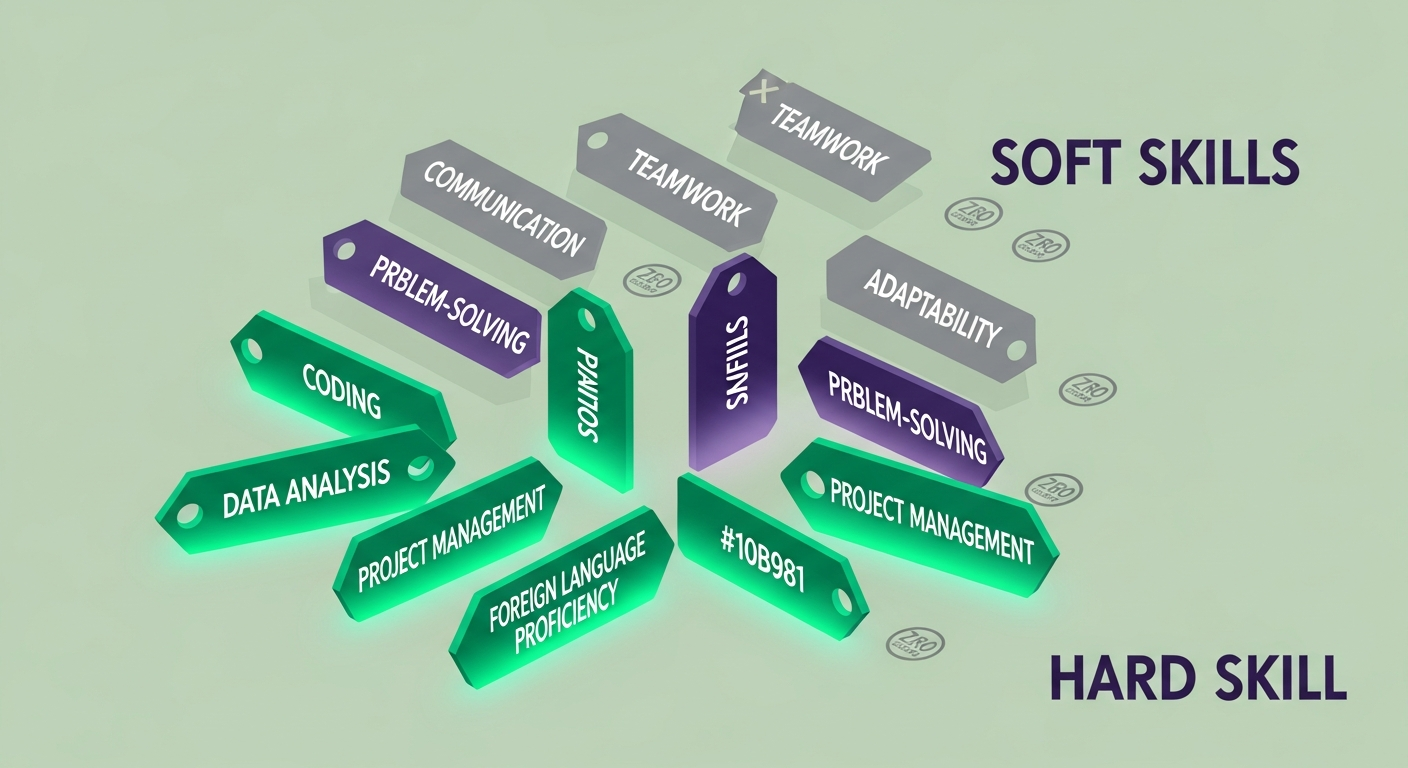
Soft skills in a Skills section score nothing on any ATS I've tested, and they irritate the recruiter when she finally reads your resume. "Team player," "strong communicator," "detail-oriented," "results-driven" — every resume has these. The algorithm learned to ignore them years ago. Prove soft skills in your bullets. List hard skills in your section.
"Led a six-person cross-functional team through a product launch under a compressed 6-week timeline" proves communication, leadership, and organisational skill without using any of those words. That bullet scores better and reads better than "excellent communicator" in a skills list. (If I had a dollar for every resume I've reviewed with "detail-oriented" as a skill, I'd have enough to retire. I haven't retired. The problem persists.)
Also scoring poorly, in roughly ascending order of invisibility:
- Bare action verbs. "Managed," "led," "developed" with nothing following them. The parseable keyword is the noun — the tool, the team size, the outcome — not the verb. The verb is structural. It doesn't score.
- Table-stakes technology. "Proficient in Microsoft Word" on a resume for any office role. It's background noise — not a keyword, not a differentiator, not worth the line on a page that a recruiter is going to review for 7.4 seconds.
- Generic jargon without specifics. "Drove business growth" contains no parseable hard-skill keyword. "Increased ARR by 23% through outbound pipeline expansion in the enterprise segment" contains several — ARR, outbound pipeline, enterprise — and implies a sales methodology behind them.
- Industry-generic buzzwords. "Innovative," "strategic thinker," "passionate about outcomes" — these are not keywords. They're not even claims. They're the verbal equivalent of humming while waiting for someone else to answer the question.
The test: if the word or phrase could appear on any resume in any industry without changing its meaning, it's not a keyword. It's decoration. The ATS doesn't score decoration. Neither does the recruiter.
Three Keyword Mistakes That Get You Filtered Out
Mistake 1: Using synonyms instead of exact phrases. Your resume says "managed vendor relationships." The job description says "third-party contract management." To a human: the same thing. To Greenhouse, Lever, Workday, or Taleo: zero match. Mirror the posting's language precisely. This is the single most common fixable reason a qualified resume scores below 50 — and the most demoralising, because the candidate has the experience. They just didn't use the right words.
The fix is mechanical: open the job description alongside your resume, identify every hard-skill phrase, and search for it in your current document. If it's missing and you can genuinely claim the skill, add it using the posting's exact phrasing. You can use your preferred synonym in the interview. The resume is not the place for editorial preference.
Mistake 2: Keyword stuffing. Pasting the job description in white text, repeating a keyword 14 times across three paragraphs, or listing 50 skills that span three unrelated functions. Modern ATS platforms — Greenhouse and Lever in particular — flag abnormal keyword density and score it down, or route the application to manual review. (Not the good kind of manual review.) The goal is natural integration, not saturation. One mention in Skills, one or two in Experience bullets. Done.
Stuffing also fails the human test, which you eventually need to pass. A recruiter who opens a resume and finds a 60-item skills section spanning DevOps, GAAP accounting, and graphic design closes it in under five seconds. The algorithm didn't filter you; the human did, on sight.
Mistake 3: Hiding keywords in graphics, text boxes, or sidebar columns. Any keyword inside a table cell, a two-column sidebar, a text box, or an image is invisible to the parser. The ATS reads left-to-right as plain text. If you can't highlight the word with your cursor in the PDF, the ATS can't see it. A beautifully designed two-column resume with a sidebar skills panel scored 12/100 for a software engineer with eight years of relevant experience. He switched to a single-column layout. Same content. No other changes. Score: 71. Interview request that week. (He later admitted the sidebar "looked professional." It did. It just looked professional to no one who mattered at that stage.)
Which Resume Keywords Are Aging Out in 2026
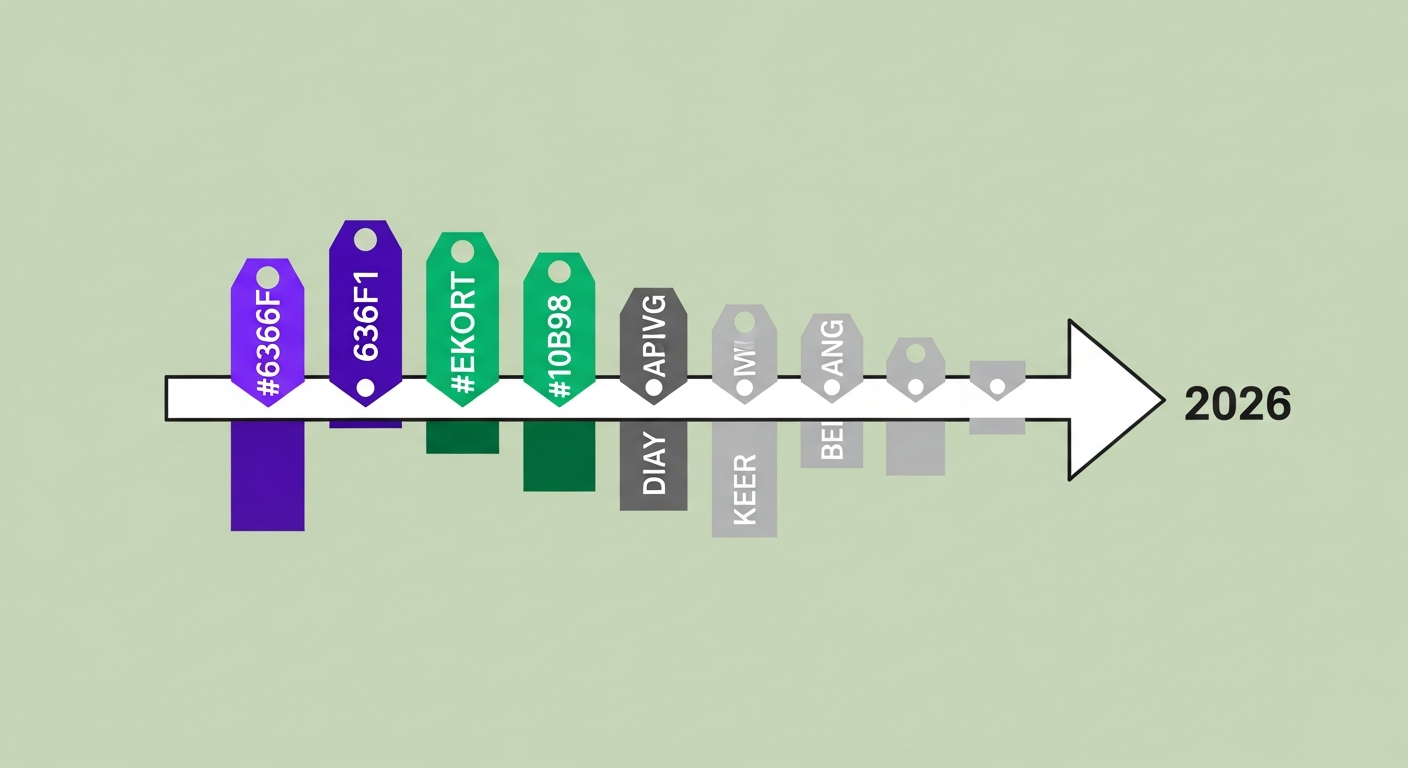
Here's a gap that most resume keyword guides skip entirely: keywords age. A phrase that was a strong signal three years ago can now be table stakes — present on every resume, differentiated on none. And a term that's currently trending in 2026 job descriptions can tip from signal to noise faster than you'd expect.
Terms that have become table stakes (still include if the posting requires them, but don't lead with them):
- "Agile" and "Scrum" — nearly universal in software and product roles now. Include them if the posting lists them; they no longer differentiate. The specific methodology matters more: "Shape Up," "continuous delivery," "SAFe at scale" are the terms moving scores in 2026.
- "Data-driven" — became a soft-skill phrase before it was ever a hard one. It scores nothing on most ATS platforms and reads as filler to any recruiter who opens your file. State the tool and the outcome instead.
- "Remote collaboration" — post-2020 every resume has this. Not a differentiator. Not a keyword worth a line.
- "Cross-functional" — overused to the point of invisibility. Replace with the specific functions: "stakeholder communication across Engineering, Finance, and Legal" scores higher and reads as concrete rather than decorative.
Terms gaining weight in 2026 (include these if you genuinely have the experience):
- Specific AI tools: "Prompt engineering," "LLM fine-tuning," "RAG pipelines," "Claude API," "GitHub Copilot," "AI workflow automation" — job descriptions across engineering, product, and operations are beginning to list these explicitly, and most resumes don't include them yet. This is the current gap to close if it applies to you.
- ESG-specific: "Scope 3 emissions reporting," "ESG disclosure frameworks," "ISSB standards," "TCFD reporting" — meaningful differentiation in finance, consulting, and operations roles in 2026, as regulatory requirements drive demand for this expertise.
- Specific collaboration tools at scale: "Notion," "Linear," "Figma" appear in job descriptions at tech companies far more frequently than "Microsoft Teams" and score as distinct keywords rather than general communication skills.
- Compliance and data privacy: "GDPR compliance," "SOC 2 Type II," "ISO 27001" are appearing in non-technical roles — product, operations, HR — far more than they did two years ago, particularly at companies handling EU customer data.
The practical implication: audit your keyword set every 6–12 months, not just when you start a job search. A resume you optimised in 2024 for "Agile methodologies" may now score lower on a role that lists "Shape Up" or "continuous delivery" as the specific methodology. According to the U.S. Bureau of Labor Statistics Occupational Outlook Handbook, the skill requirements for most technical and professional roles shift meaningfully on a 2–3 year cycle. Your resume should shift with them.
When Keyword Optimisation Matters Less
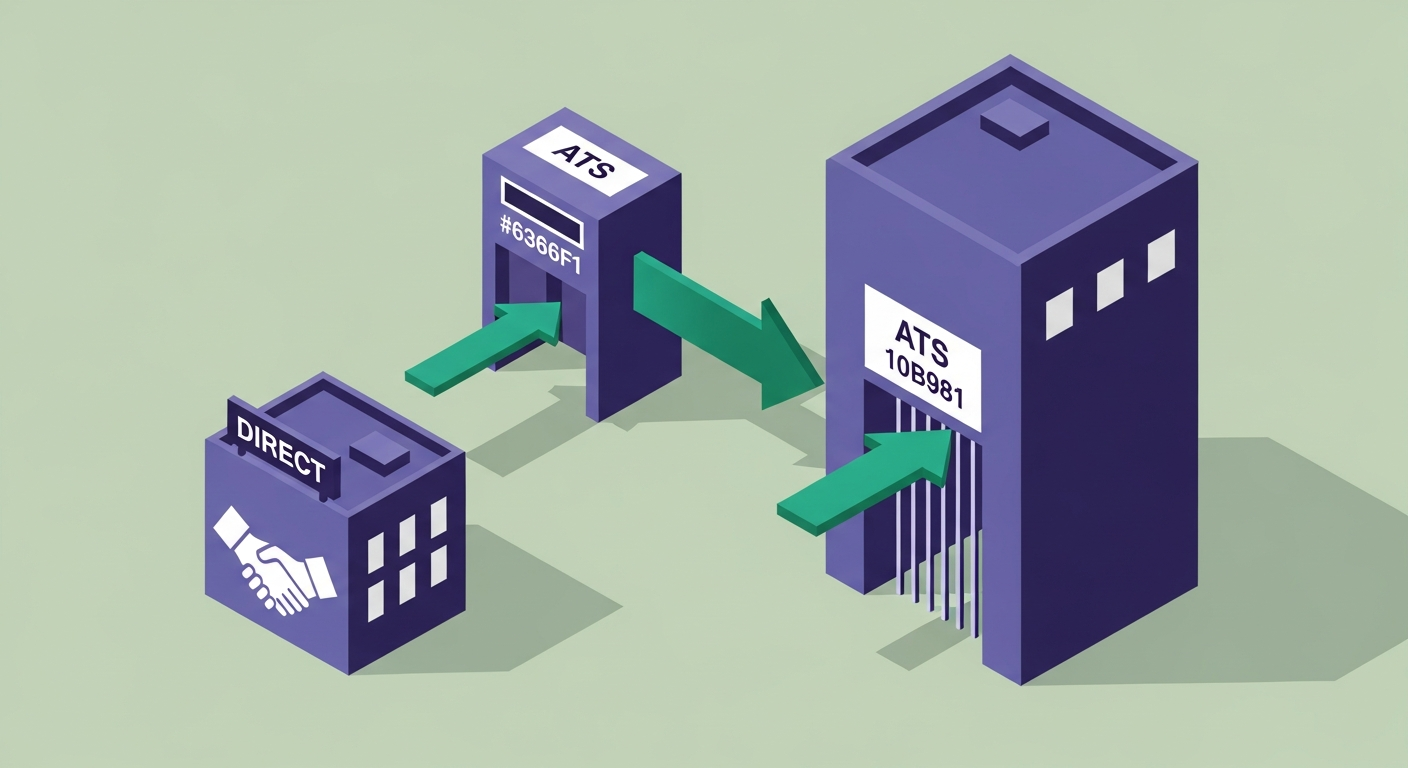
Not every application goes through an ATS. If you're applying to a company with fewer than 50 employees, there's a reasonable chance your resume lands directly in a human inbox — no parser, no score, no filter. At that scale, keyword density matters less than a clear, honest document that's easy to read in 7.4 seconds. (That's the average recruiter review time, per the Ladders eye-tracking study. Seven seconds. Same as it ever was.)
Similarly, if you're being referred by someone at the company, your application often bypasses or gets flagged ahead of the ATS queue. The referral doesn't make keyword matching irrelevant — the recruiter may still search by skill across the ATS database — but it reduces the urgency of hitting 80%+ keyword match on every term. A referred candidate with a 55% match score still gets a look. A cold applicant with a 55% score does not.
The 98% of Fortune 500 companies that use an ATS? Optimise aggressively. The 20-person startup where the founder is doing the hiring? Write clearly, tell the truth, and don't pad your skills section with buzzwords because a blog told you to. We'll tell you when not to use ATSFixer. That was this section.
You made it to the end of an article about resume keywords. You have more patience than the average ATS. That already puts you ahead.
Frequently Asked Questions About Resume Keywords
Related from ATSFixer
- → Resume keyword generator — get keywords by job title, free
- → Software engineer resume keywords
- → Marketing manager resume keywords
- → How ATS systems actually work — and why 75% of resumes get filtered
- → Skills for resume: what to list and what to drop
- → Check your resume's keyword score free — paste and get results in 30 seconds
Frequently Asked Questions
The most important resume keywords are the hard-skill terms that appear multiple times in the specific job description you're applying to — tools, certifications, methodologies, and role-specific phrases like "Salesforce CRM," "SQL," "PMP certification," or "stakeholder communication." These are the terms that score highest in ATS matching and are most commonly absent from resumes where candidates assume their experience speaks for itself. The hierarchy is: hard-skill keywords first (specific tools, technologies, certifications), role-specific phrases second (function-native language from the posting), and soft skills never — phrases like "team player" and "detail-oriented" carry near-zero scoring weight on Greenhouse, Workday, Taleo, and iCIMS. According to Jobscan's analysis of over a million job postings, the average job description contains 15–25 hard-skill terms; covering 80% or more consistently pushes scores into the range where recruiters actually open files.

Gabriel J.
Recruiting Insider & Career Writer
Gabriel spent eight years on the hiring side — sourcing, screening, and rejecting thousands of resumes at a Fortune 500 staffing firm. He switched to writing about it when he realised most job seekers had no idea what was actually happening to their applications.