On this page
- Should You Put References on a Resume?
- What "References Available Upon Request" Actually Does
- How Many Professional References You Actually Need
- Who to Choose — and What to Do When the Best Option Is Complicated
- How to Format a Reference Page That Looks Professional
- How to Coach Your References to Give Useful Answers
- When to Actually Include References on Your Resume
- Frequently Asked Questions
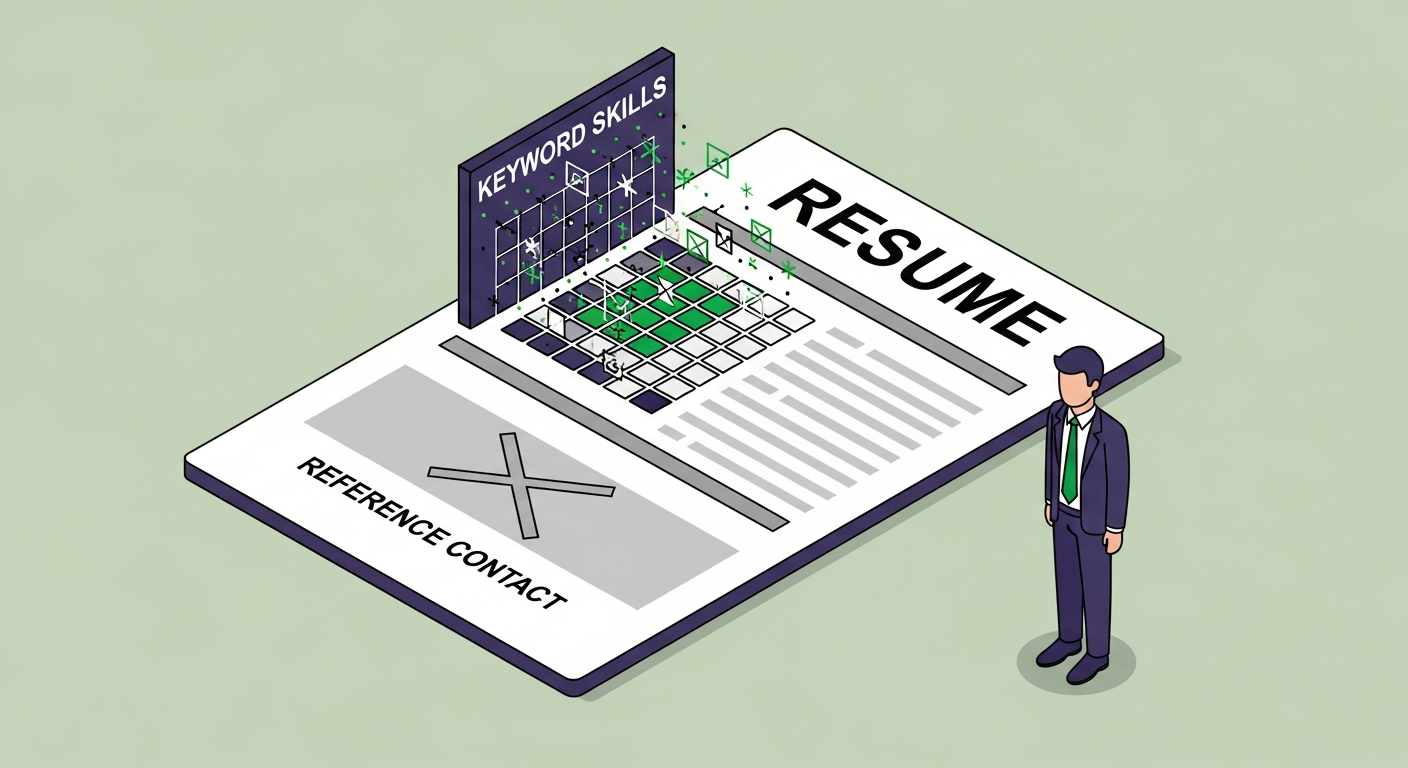
Most career advice will tell you: don't put references on a resume. That part is right. What the advice usually skips is why — not because it's dated (though it is), but because of what the ATS actually does when your references land in the document. They don't get flagged or penalised. They score zero. And a full references section scoring zero is space you didn't use for keywords that actually move your application forward.
Here is everything you need to know about references on a resume — how many to have ready, who to ask, how to format the page, and what to do when the obvious choice is complicated.
Should You Put References on a Resume?
No. The standard answer is correct, and for once it also lines up with how ATS systems work.
Hiring managers don't check references at the resume stage. They check references after the final interview, when a decision is nearly made and they need to verify the details before sending an offer. Putting references on your resume is like announcing your dessert order when the server hands you the menu — not wrong exactly, just badly timed.
The phrase "references available upon request" is even less useful. Employers already know you have references. Every candidate applying for jobs has references. Writing that phrase occupies a full line that could carry a keyword from the job description. According to Jobscan, 75% of resumes are rejected by ATS before a human reads them. The references section isn't causing that — but it certainly isn't helping either.
The one exception: if a job posting explicitly asks for references with your application, include them as a separate attached document alongside your resume. Don't embed them in the resume itself. Separate documents, clean parsing.
What "References Available Upon Request" Actually Does
The phrase itself is inert — scores nothing, loses nothing. A full reference list embedded in the resume document is a different problem.
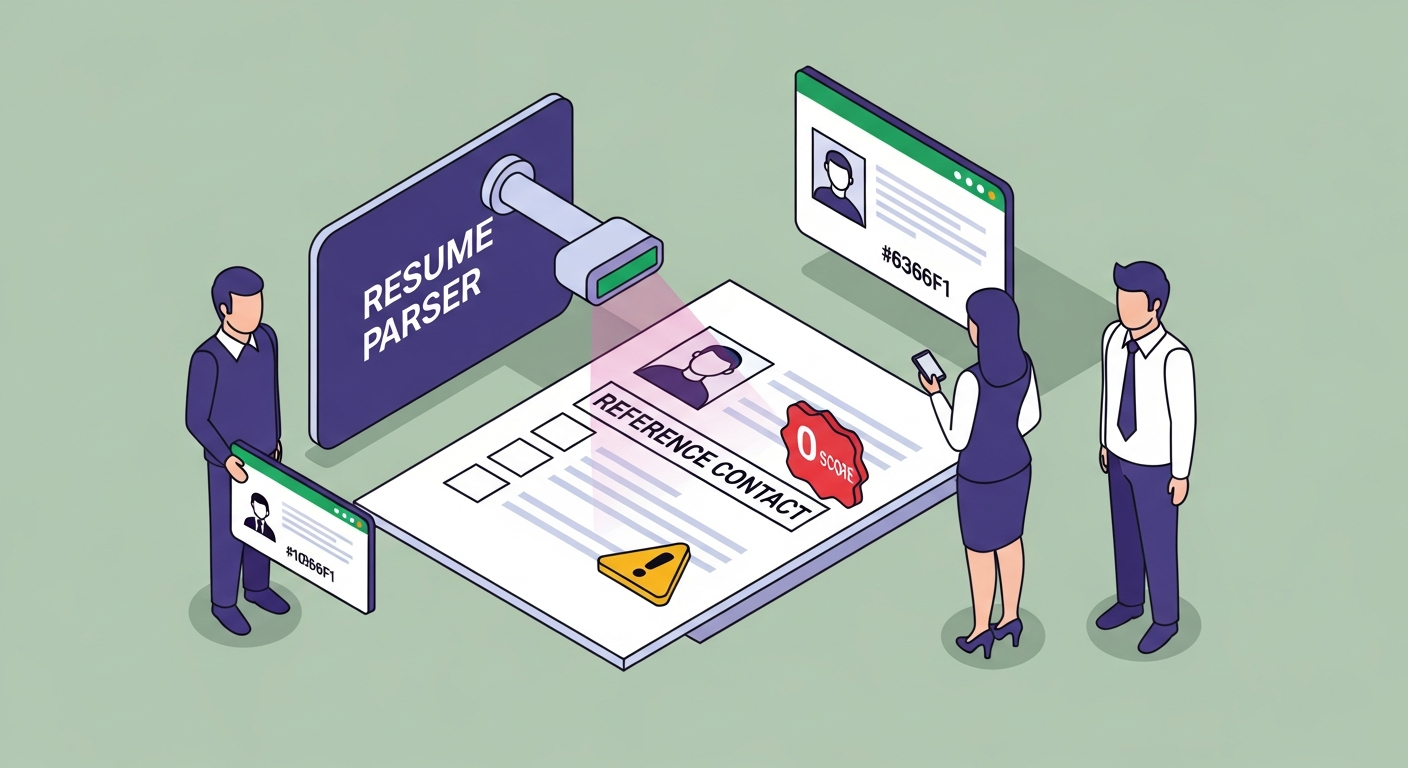
When a resume parser encounters a list of reference contacts at the bottom of your document, it tries to extract structured data. It may read "John Smith" as a person's name, "Director of Operations" as a job title, and "Acme Corp" as an employer — misinterpreting your reference as a past employer of yours. On platforms like Workday and Taleo, which use the oldest and strictest parsers, this kind of garbled contact section at the bottom of the page has been documented to cause partial parse failures. Your employment timeline might appear corrupted. Your most recent role might display alongside a stranger's phone number.
ATSFixer's internal testing confirms that 1 in 3 resumes submitted through Workday show some form of parsing corruption — and extra contact data at the bottom of the document is a documented contributor. The resume that reads cleanest to a human sometimes reads like noise to the algorithm.
(The parser doesn't have a personal grudge against your references. It was built to extract job titles, employer names, and date ranges at high speed. Anything that doesn't fit that pattern is clutter — and it handles clutter the way most of us handle a 40-page terms and conditions document. Fast and badly.)
The safest approach: no reference section, no "available upon request" line. A separate reference document, ready to go when the employer asks for it. The recruiter gets what they need at the right moment; the ATS never encounters it.
The space you free up — a full section, sometimes ten to fifteen lines — goes to skills that carry ATS keyword weight. Resumes with a dedicated skills section score an average of 10–15 points higher on ATS screening than equivalent resumes without one, according to ATSFixer's internal data. That trade-off is straightforward.

How Many Professional References You Actually Need
Three to five. That's the answer, and it holds across most career stages.
Early career — first job, recent graduate, industry pivot — three references is enough. Mid-career professionals should aim for four. Senior roles (director level and above) warrant five, because hiring decisions at that level often involve multiple stakeholders calling references independently. If one of your five is unavailable, you have buffer. If one of your two is slow to respond, you've introduced a delay at the most sensitive moment in the offer process.
The composition matters as much as the count. At least two of your references should be direct managers — people who observed your actual work output and can speak to specific results rather than general impressions. The remaining one or two can be colleagues, clients, or direct reports, depending on what the role requires.
Job seekers who tailor their application — and choosing which references to lead with is part of that application — are 3× more likely to get an interview, per Jobscan's analysis of more than 1 million resume scans. If you're applying for a client-facing role, your client reference carries more weight than your internal colleague reference. If you're applying for a people management role, a former direct report who can speak to your leadership approach is worth including. Pick the list that matches the role, not the list of people most likely to say yes.
Who to Choose — and What to Do When the Best Option Is Complicated
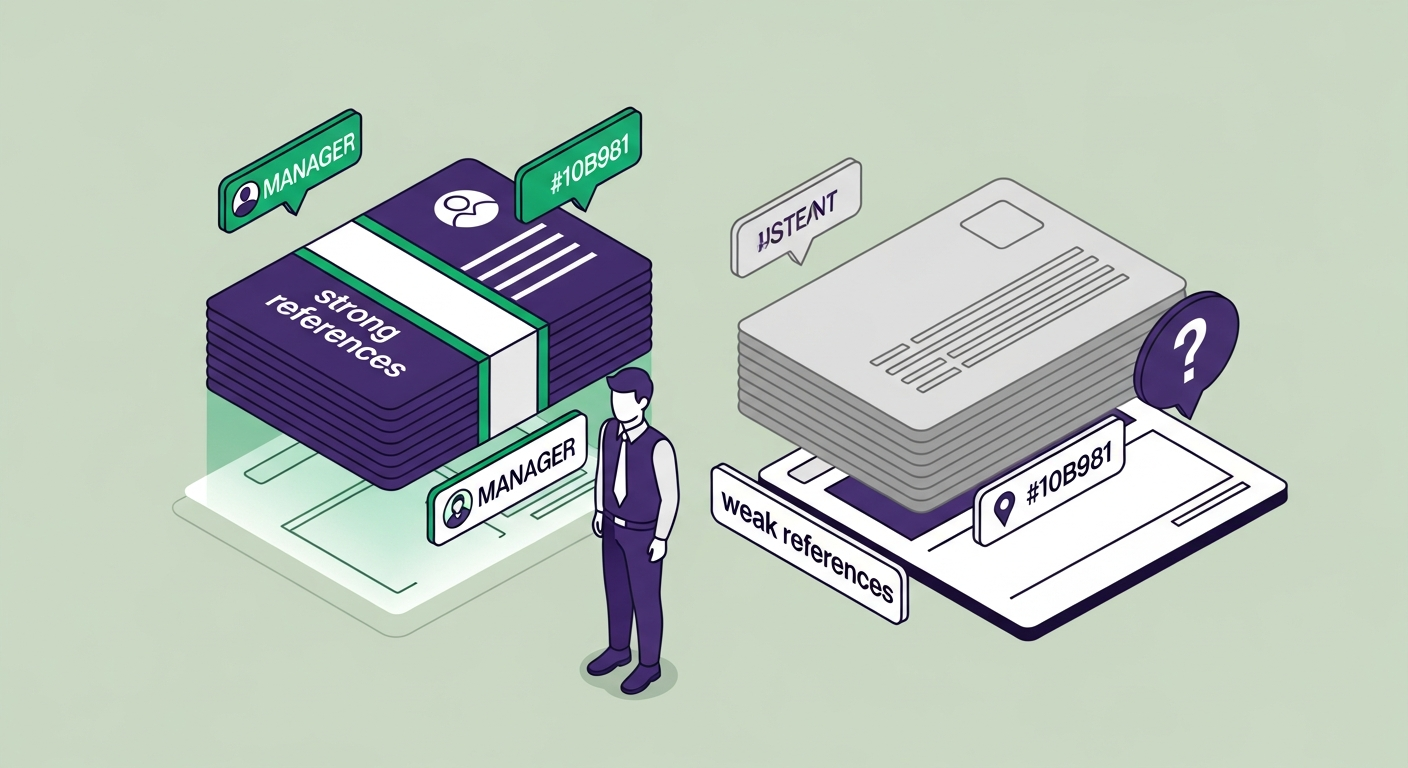
Strong reference: a direct manager from the past three to five years who saw your day-to-day work and can name specific results. "She rebuilt the onboarding process from scratch and cut time-to-productivity by six weeks" is a reference that can close a hiring decision. "He was a great team player and always reliable" is a reference that confirms you existed at a company.
Weak reference: a manager from more than a decade ago who will need a minute to place your name. A colleague who liked working with you but can't describe what you actually produced. A personal character reference for a professional role, unless the company specifically asked for one. (They almost never do. If they did ask, they probably have a reason — usually for roles involving financial authority or access to sensitive information.)
The reference who matters most is typically your most recent direct manager. If that relationship ended badly — a layoff handled poorly, a performance issue, a disagreement that became professional — you have two practical options.
Option 1: identify a different manager from that same role period. A skip-level supervisor, a matrix manager, a senior colleague who worked closely with you during that time. Most employers will accept this without question; they're rarely tracking whether the person you listed was your literal direct report manager versus two levels up.
Option 2: flag it briefly in your cover letter: "I'd be happy to provide additional context on my time at [Company] if that's helpful." Don't omit the role from your resume — that creates a gap in your employment history, and gaps surface in ATS scoring and recruiter review. Don't overexplain or apologise. Give the employer somewhere credible to call for that period, and move on.
The honest assessment: a weak reference rarely kills an offer on its own. A strong reference rarely rescues one after a weak interview. References are mostly a verification step. The decision is usually made before the reference calls happen. Which means the selection that actually matters is in the next section.
Free ATS Score Check
Your result looks like this —
get yours in 30 seconds.
Drag & drop your resume here
PDF or Word · max 10 MB
Results in under 30 seconds · no sign-up required
How to Format a Reference Page That Looks Professional
A reference page is a separate document — not a resume appendix, not a block pasted into the body of an email. Here's what it contains:
Header: identical to your resume header. Same name, same contact details, same font, same layout. This signals that the reference page belongs to the same application package. Recruiters who manage dozens of open roles are processing a lot of files; matching headers tell them instantly that this document came with the one they just read.
Section label: "Professional References" — nothing more. No objective statement, no summary paragraph, no narrative about your reference philosophy.
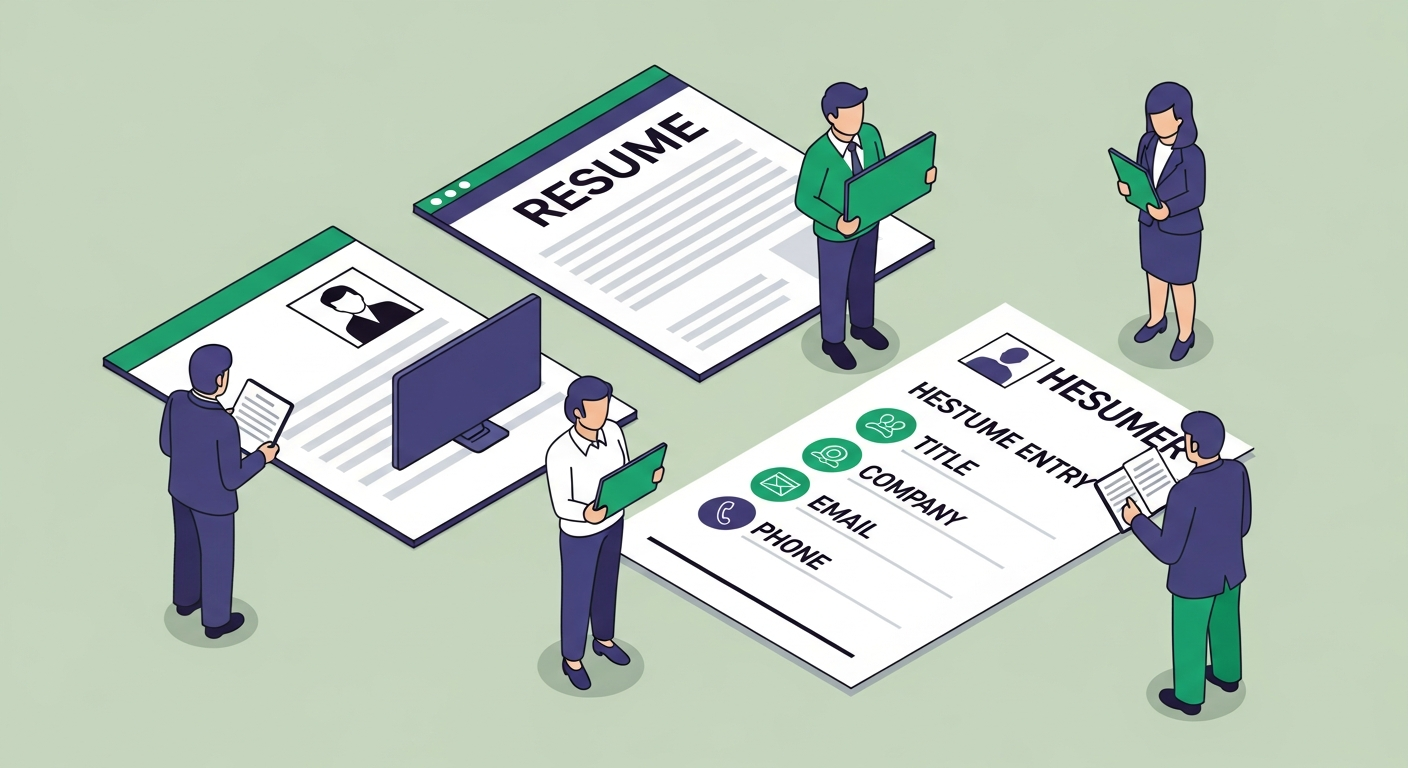
Each reference entry, in this order:
- Full name
- Current job title
- Company name
- Professional email address
- Phone number (mobile is standard)
- One-sentence relationship note: "Direct supervisor at [Company], [Year]–[Year]"
Three to five entries, formatted consistently. No home addresses. No LinkedIn URLs unless specifically requested. No information beyond what the employer needs to reach them.
The document should be exactly one page. Save it as a PDF with selectable text — not an image-based file. Some ATS platforms also parse reference documents when they're uploaded alongside the resume, and the same formatting rules that apply to your main document apply here. File name: FirstName-LastName-References.pdf. The recruiter who receives 200 applications and starts reference calls on five final-round candidates is not doing creative file archaeology. Make it findable.
How to Coach Your References to Give Useful Answers
Most candidates send a message that reads approximately: "Hey, I may list you as a reference for some roles — let me know if that's okay."
That's polite. It's not useful.
A recruiter at a 400-person tech company described her reference process publicly on LinkedIn: she opens Greenhouse, sorts final-round candidates by ATS score, takes the top group to reference calls, and asks specific verification questions — not "what do you think of this person?" but "did they really manage a team of twelve?" and "was the 40% revenue growth on their resume theirs to claim?" She's not collecting endorsements. She's checking whether the numbers on the resume add up.
That distinction matters because most references, left unprepared, give endorsements. "Great person, diligent, highly recommend." That answer is a confirmation, not advocacy. It tells the employer nothing they didn't already assume when they shortlisted the candidate. The recruiter hangs up having learned that the reference likes you. Helpful, but thin.
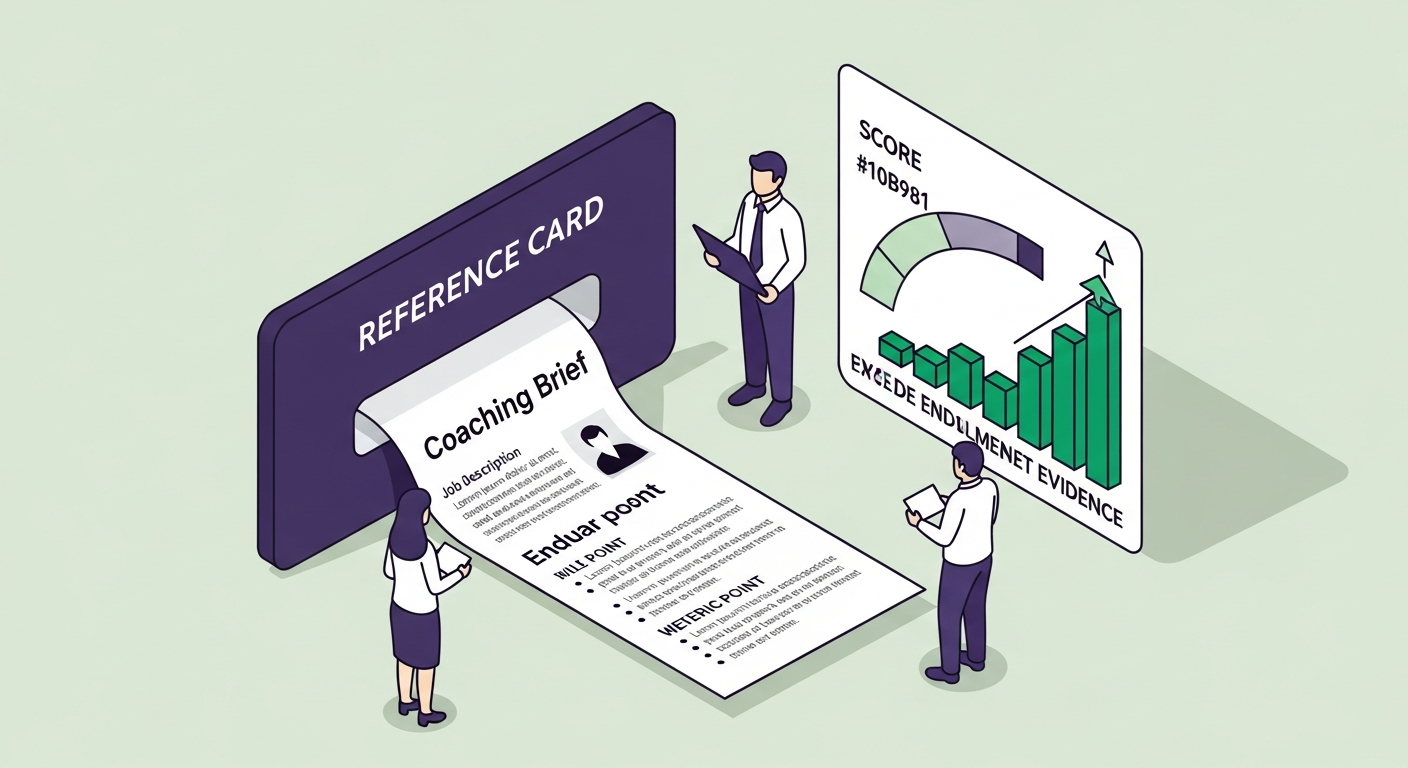
Prepare your references for the specific questions. When you reach out, send them:
- The job description for the role you're targeting
- Two or three bullet points from your resume most likely to come up — especially any that include numbers or percentages
- A quick reminder of your shared work history: date range, key projects, your role relative to theirs
- Any specific metric or outcome you'd like them to confirm if the question comes up
This takes fifteen minutes. It turns "great person, highly recommend" into "specifically on Project X, they delivered it three months ahead of schedule and came in $40,000 under budget — I've managed that team for six years and I've never seen anyone run a procurement process that cleanly." The difference between those two answers can be the difference between an offer sent that day and a call that moved no one's needle.
Ask early. Give your references two weeks' notice at minimum. A reference who's caught off guard the afternoon before a call gives a fuzzier answer than one who had time to pull up the dates, refresh the context, and remember the specific thing you did that impressed them. The 7.4 seconds a recruiter spends on your initial resume scan (Ladders, 2018) is the bottleneck most people optimise for. Reference preparation is the bottleneck almost nobody bothers with — which is exactly why it matters.
You made it this far into a guide about references. You're clearly willing to do the fifteen-minute work. Do the fifteen minutes.

When to Actually Include References on Your Resume
Almost never. Here are the real exceptions:
When the job posting explicitly requests them. Include a reference page as a separate attached document alongside your resume. Don't embed reference data in the resume document itself. Separate documents mean the ATS processes your resume cleanly and the reference page goes to the recruiter as intended.
Federal government or academic positions. CV formats for academic roles and GS-level federal applications follow entirely different conventions. References — sometimes full contact sheets, sometimes letters of recommendation from named scholars — are often required components of the application. Check the specific instructions for each role. Standard resume rules do not apply to these formats.
Very small companies without ATS. Most companies with fewer than 50 employees don't use an applicant tracking system. If you're emailing your resume directly to a founder or department head, the ATS argument is moot — there's no algorithm to appease. A "references available upon request" line at the bottom is harmless, if dated. A separate reference page you send when asked is still the cleaner choice, but it's a matter of preference rather than strategy.
In every other situation: remove the references section. Use the space for an additional resume section that carries keywords — a skills block, a certifications line, another bullet point in your most recent role. Keywords score. References don't. That trade is the whole argument in one sentence.
If you want to know exactly where your resume is losing points before a recruiter ever sees it, run it through ATSFixer. The score breakdown will show you what's working and what's taking up space without contributing. References are usually in the latter category. Most of what's in the former is just good keyword placement — which, as it turns out, is the one thing no reference can do for you.
Frequently Asked Questions
Related from ATSFixer
Frequently Asked Questions
No — not unless the job posting explicitly requests them. References are verified after the interview phase, not during ATS screening. Including them wastes keyword space and, in some cases, causes parsing issues in older ATS systems that misread reference contact data as employment history entries.

Jordan Marcus
Senior Career Strategist
Jordan has reviewed 4,000+ resumes and coached candidates into roles at Google, Stripe, and McKinsey. She writes about the mechanics of ATS and what actually gets people interviews.