On this page
- Skills to Put on Any Resume
- Hard Skills vs. Soft Skills — What ATS Actually Scores
- Hard Skills: What to List
- Soft Skills: Where They Actually Belong
- Good Skills to Put on a Resume by Industry
- Tech and Engineering
- Marketing and Communications
- Finance and Accounting
- Healthcare
- Operations and Project Management
- Sales and Customer Service
- Skills to Put on a Resume With No Experience
- The ATS Double-Score Rule
- How Many Skills Should You List
- How to Format Your Skills Section
- When This Doesn't Apply
The skills to put on your resume come down to one question: what does the job description say, and have you said it back? That's not a metaphor. It's literally how ATS systems score your application — exact phrases against exact phrases, like a very boring game of Snap that determines whether a recruiter ever sees your name.
The short answer: list the hard skills pulled directly from the job posting in a dedicated skills section. Back them up in your experience bullets. Leave soft skills out of the list entirely — they score zero with the algorithm and every recruiter has seen "team player" approximately ten thousand times. More on all of this below.
If you want the full picture of what skills to put on a resume, which ones matter by industry, and one mechanic that almost no resume guide mentions, read on.

Skills to Put on Any Resume
These are the hard skills that appear across most industries and role types. They're not a substitute for job-specific keywords — they're the baseline. Use these to fill gaps, not to lead with.
- Microsoft Office Suite — Word, Excel, PowerPoint. Still required by more job postings than you'd expect in 2026.
- Google Workspace — Docs, Sheets, Drive, Slides. If the company uses Gmail, they expect this.
- Data analysis — even non-technical roles ask for it now. Specify the tool: Excel, Tableau, Power BI.
- Project management — list the methodology or tool. Not "project management" alone — "Agile project management" or "Asana" or "JIRA."
- CRM software — Salesforce, HubSpot, Zoho. Essential for any client-facing role.
- AI tools — ChatGPT, Microsoft Copilot, Gemini, or whatever you actually use. List it. It's a signal in 2026.
- Research and reporting — vague on its own; better paired with a specific tool or format.
- Budget management — if you've done it at any scale, include it.
These are starting points. The skills that actually move your ATS score are the ones you pull directly from the job posting you're applying to — the exact phrases, in the exact order they appear. The universal list above is filler if the job description has already told you what they want.
Hard Skills vs. Soft Skills — What ATS Actually Scores
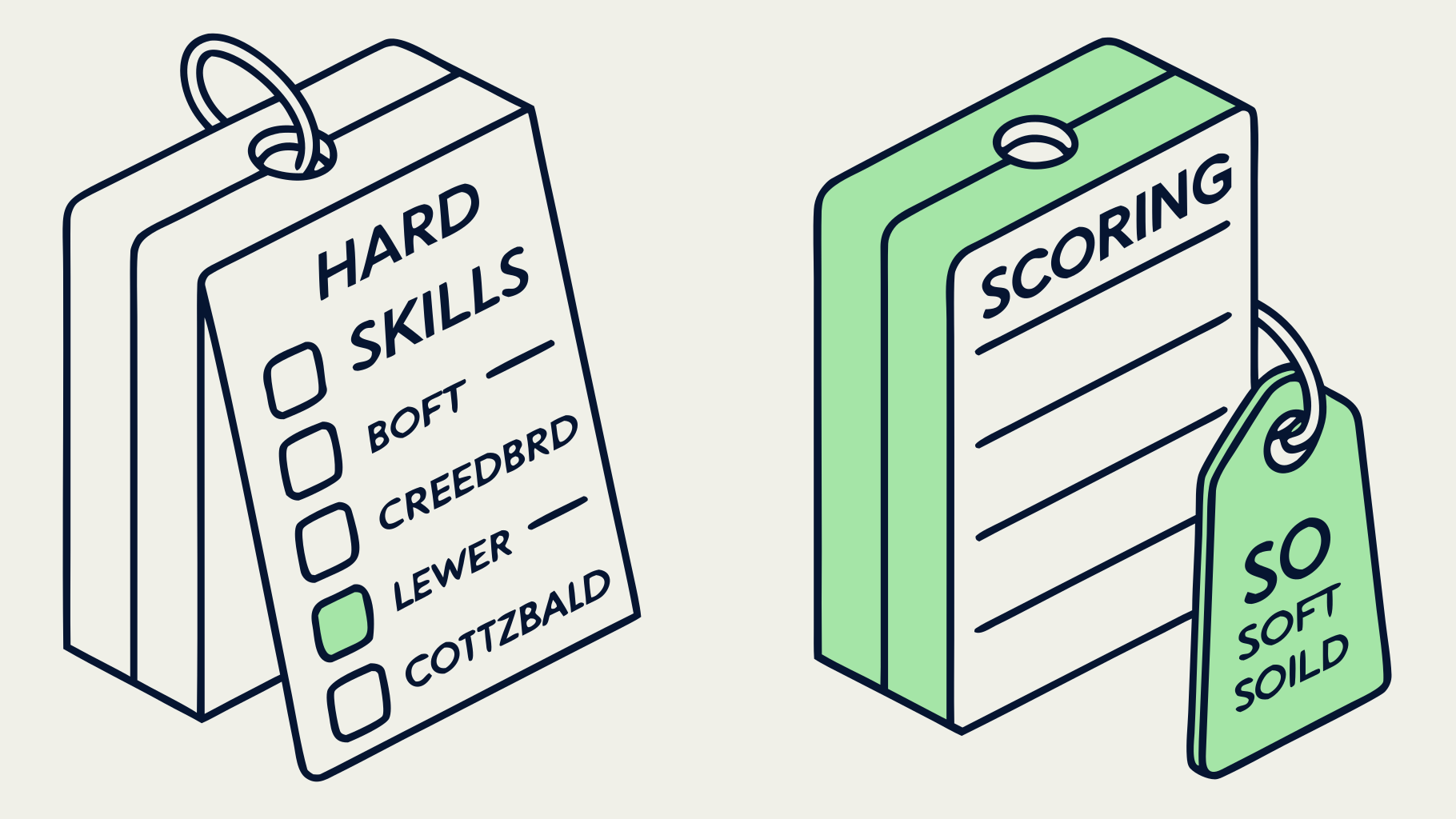
Most resume advice tells you to include both. That's technically correct and practically misleading, because it doesn't tell you where each type belongs — and the placement is the whole game.
Here's the honest version: soft skills in a skills section score nothing with an ATS.
"Team player," "strong communicator," "detail-oriented" — these phrases appear on every resume in the stack. The algorithm has seen them so many times it filters right past them. According to ATSFixer internal data, resumes with a dedicated hard skills section score an average of 10–15 points higher on ATS screening than equivalent resumes without one. That gap shrinks to near-zero when the skills section is filled with soft skills instead of hard ones.
Hard Skills: What to List
Hard skills are specific, teachable, and verifiable. The parser can find them. Examples:
- Python, SQL, JavaScript, R, Go
- Google Analytics 4, Tableau, Power BI, Looker
- Salesforce, HubSpot, Marketo, Intercom
- SEO, PPC, Google Ads, Meta Ads Manager
- Financial modelling, GAAP, QuickBooks, SAP
- AutoCAD, SolidWorks, MATLAB
- HIPAA compliance, Epic EHR, CPR/BLS certification
- Agile, Scrum, Kanban, JIRA, Asana
- Adobe Creative Suite, Figma, After Effects
These are things a recruiter can search for in Greenhouse or Workday and actually find. These go in your skills section. Everything else goes in your bullets.
Soft Skills: Where They Actually Belong
Soft skills don't score in a skills section — but they absolutely belong on your resume. The trick is that they need to live in your work experience bullets, backed by evidence rather than asserted as a label.
Don't write: Skills: Leadership, Communication, Problem-solving
Do write: Led a cross-functional team of 8 to deliver a $1.2M product launch two weeks ahead of schedule and $40K under budget
One of those proves leadership. The other just claims it. The recruiter who eventually reads your resume — the human one, after the ATS lets you through — will notice the difference. (The algorithm already moved on.)
The principle: list hard skills in your skills section. Prove soft skills in your bullets. This is how you score with the algorithm and with the person.

Good Skills to Put on a Resume by Industry
What you put in skills in a CV depends entirely on the role. The lists below are starting points — not checklists. The actual keywords that matter are the ones in the job description you're applying to. Mirror that language exactly.
Synonyms don't score on most ATS platforms. "Cloud infrastructure" doesn't match "AWS EC2." "Data visualisation" doesn't match "Tableau dashboards." The algorithm is looking for the phrase it was told to look for, not a paraphrase of it. (I know. It's frustrating. It's also fixable in about ten minutes.)
Tech and Engineering
- Python, Java, C++, Go, Rust, TypeScript
- AWS, Azure, Google Cloud Platform (GCP)
- Docker, Kubernetes, CI/CD pipelines, Terraform
- REST APIs, GraphQL, microservices architecture
- Machine learning, TensorFlow, PyTorch, LLMs
- SQL, NoSQL, PostgreSQL, MongoDB, Redis
- Git, GitHub, GitLab, version control
- Agile, Scrum, sprint planning, sprint retrospectives
- Cybersecurity, penetration testing, SIEM, SOC 2 compliance
- Linux, shell scripting, Bash
Marketing and Communications
- SEO, SEM, Google Ads, Meta Ads, programmatic advertising
- Content strategy, copywriting, editorial calendar management
- Email marketing, Mailchimp, Klaviyo, HubSpot, Marketo
- Google Analytics 4, Mixpanel, Amplitude, attribution modelling
- Social media management, Buffer, Hootsuite, Sprout Social
- A/B testing, conversion rate optimisation (CRO)
- Brand strategy, media relations, PR, influencer partnerships
- Adobe Creative Suite, Canva, Figma
- Podcast production, video editing, YouTube SEO
Finance and Accounting
- Financial modelling, DCF analysis, LBO modelling, valuation
- GAAP, IFRS, regulatory compliance, SOX compliance
- QuickBooks, SAP, Oracle Financials, NetSuite
- Excel (advanced) — pivot tables, VLOOKUP, XLOOKUP, Power Query
- Budget forecasting, variance analysis, scenario planning
- Accounts payable and receivable, general ledger reconciliation
- Internal audit, risk management, internal controls
- Bloomberg Terminal, FactSet, Capital IQ
- FP&A, management reporting, investor relations
Healthcare
- Electronic health records (EHR) — Epic, Cerner, Meditech
- HIPAA compliance, patient privacy, PHI handling
- Phlebotomy, IV insertion, wound care, clinical documentation
- CPR, BLS, ACLS, PALS certification
- Patient triage, care coordination, discharge planning
- Medical coding — ICD-10, CPT, HCPCS; medical billing
- Lab procedures, diagnostic imaging interpretation, sterile technique
- Case management, prior authorisation, utilisation review
Operations and Project Management
- JIRA, Asana, Monday.com, Trello, Smartsheet, Confluence
- Agile, Scrum, Kanban, waterfall, hybrid methodology
- Process improvement, Lean, Six Sigma (Green Belt / Black Belt)
- Vendor management, contract negotiation, procurement
- Supply chain management, logistics, ERP systems (SAP, Oracle)
- PMP certification, risk assessment, change management
- Stakeholder communication, executive reporting, OKR frameworks
- Facilities management, fleet management, capacity planning
Sales and Customer Service
- Salesforce, HubSpot CRM, Zoho CRM, Pipedrive
- B2B sales, SaaS sales, enterprise sales cycles, channel sales
- Cold outreach, prospecting, lead generation, pipeline management
- Customer success, account management, churn reduction, renewals
- Zendesk, Intercom, Freshdesk, customer support ticketing
- Upselling, cross-selling, QBR facilitation
- Net Promoter Score (NPS), CSAT, DSAT, customer health scoring
- Outreach.io, Salesloft, Apollo — sales engagement platforms
If your industry isn't listed here, the method is the same: pull three job descriptions you actually want to apply to, highlight every specific tool, certification, or methodology that appears in at least two of them, and add those to your skills section. The job posting has already written your keyword list. You don't need to guess — you need to read it.

Skills to Put on a Resume With No Experience
The skills section is where entry-level candidates have the most to gain, because it's the one place where you can compete directly with experienced applicants on a specific, verifiable basis. You can't fake five years of experience. You can accurately list the tools and methodologies you've genuinely used.
You have more nameable skills than you think. The question is whether you've translated them into the language the job posting uses.
- Academic software and tools: SPSS, R, LaTeX, MATLAB, Excel — anything used in coursework counts if the role asks for it
- Online certifications: Google Analytics, HubSpot certifications, AWS Cloud Practitioner, Coursera completions — list the specific credential and the issuer
- Volunteer or internship experience: same rules apply — exact phrases from the role you performed, not a summary of what you learned
- Tools used independently: Figma, Notion, Airtable, WordPress, Squarespace, Canva — if you built something with it, it belongs here
- Language proficiency: Spanish (B2), Mandarin (conversational), French (native) — always include the level, always
- Relevant coursework as skills: if you completed a data science module covering Python and pandas, list "Python" and "pandas" in your skills section
The "I have no experience" problem is almost always a framing problem. The issue isn't that you lack skills — it's that you haven't matched your existing skills to the language of the posting. Run a job description through ATSFixer alongside your resume and it'll show you the exact phrases you're missing, even with a thin work history. That gap list is your rewrite checklist.
Free ATS Score Check
Your result looks like this —
get yours in 30 seconds.
Drag & drop your resume here
PDF or Word · max 10 MB
Results in under 30 seconds · no sign-up required

The ATS Double-Score Rule
This is the mechanic almost no resume guide mentions, including every competitor page currently ranking for this keyword.
Listing a skill in your skills section is not the same as scoring full points for it.
Most major ATS platforms — Greenhouse, Workday, Taleo, iCIMS — weight both frequency and placement. A keyword that appears only in your skills section scores once. The same keyword appearing in both your skills section and a work experience bullet scores meaningfully higher. Not marginally higher — enough to change where you land in the ranked list a recruiter opens.
The full move is two steps:
- Add the keyword to your skills section
- Use the exact same phrase in at least one relevant work experience bullet
A project manager applied for a role that listed "stakeholder communication" as a required skill. Her resume said "cross-functional collaboration" — which means the same thing to any human who's worked in an office, and to no ATS ever built. The system searched for "stakeholder communication," found zero matches, and scored her accordingly. She changed two phrases. Got the interview. Got the job.
The lesson isn't just "use exact keywords." It's that both placements count. A single mention in the skills section is half the job. The bullet is what seals it.
This is why the standard advice — "add keywords to your skills section" — is useful but incomplete. It gets you past the first filter. The double placement is what moves you up the ranked list once you're through.
To see how your current resume scores against a specific job description, paste both into ATSFixer. The breakdown shows which keywords are present, which are missing, and where they need to appear.

How Many Skills Should You List
Most people either list too few (looks thin, misses keywords) or too many (looks like they copy-pasted the job description, which some people do — the algorithm noticed).
A rule of thumb: 8–15 skills for most roles. Fewer than 8 leaves scoring points on the table. More than 20 dilutes the section and signals keyword stuffing to anyone reading it manually.
Prioritise by relevance to the specific role. The top 5–6 skills in your section should be the most-repeated hard-skill keywords from the job posting. After that, fill in with adjacent tools and methodologies you genuinely have — things that would come up in an interview without embarrassment.
One thing worth knowing: keyword stuffing — pasting the entire job description in white text at the bottom of your resume, or hiding terms behind the page margins — gets you flagged and permanently filtered. ATS platforms detect it. Recruiters who see it mark the profile as fraudulent. Don't. The organic version, where you list skills you actually have that genuinely appear in the posting, is both more ethical and more effective.
The goal isn't to trick the algorithm. It's to accurately represent your skills in the exact language the algorithm was trained to look for. Those are two different things.

How to Format Your Skills Section
Where you put the skills section matters less than how you format it. Most ATS platforms parse a dedicated skills section differently from the rest of your resume — they expect to find it, and when they do, they extract structured keyword data from it in a specific way.
A few formatting rules that hold across every major platform:
Single-column layout. A two-column resume that puts skills in a sidebar breaks on Taleo, Workday, and older iCIMS installs. The parser reads columns left-to-right in a single pass, merging your skills list with your job titles into garbled text. In our testing, 1 in 3 resumes submitted through Workday are corrupted during parsing due to columns, tables, or text boxes. Single column, always.
Plain text, no icons or graphics. Skills presented as icon-rated bars (five stars out of five, little circles, coloured dots) parse as nothing. The parser reads the label, ignores the visual. The graphic wastes space and the algorithm ignores it. Skip it.
Organised by category if you have 12 or more. Group skills under subheadings: Technical Skills, Industry Tools, Certifications, Languages. This helps recruiters scan the section quickly and often parses better in systems that extract structured fields. It also makes a dense list feel organised rather than chaotic.
No proficiency labels if you're not sure they'll help. "Python (Advanced)" is fine if you genuinely are advanced. "Excel (Intermediate)" is fine if the job description doesn't require advanced Excel. But "Salesforce (Beginner)" is doing you no favours — either you know it enough to list it, or you leave it off and learn it.
If you want to verify how your formatted resume actually parses, paste it into ATSFixer — the score breakdown shows what the system extracted and what it missed.

When This Doesn't Apply
A company with 12 employees probably doesn't run Greenhouse. It might not use an ATS at all. For boutique firms, family businesses, and early-stage startups, the ATS scoring mechanics matter less than having a clear, honest, human-readable resume.
Similarly, some industries still rely heavily on referrals and network hires. Bureau of Labor Statistics data cited by LinkedIn's Economic Graph team consistently shows that 70% of roles are filled before they're publicly posted. For those roles, the skills section is the last thing that gets you the interview — the relationship is.
And if you're applying through a recruiter or headhunter, they translate your experience for the employer. The skills section still needs to exist and be accurate, but the exact-match keyword optimisation is less critical when a human is brokering the match.
That said: 98% of Fortune 500 companies use an ATS to screen candidates, according to Jobscan research. For most job seekers applying online at companies of any size, the algorithm reads your resume before any human does. Getting your skills section right — the right keywords, in the right places, in a parseable format — takes about 10 minutes. It's hard to think of a better return on 10 minutes in a job search.
And if you've genuinely done all of this and you're still not getting callbacks, the skills section probably isn't the only issue. Paste your resume into ATSFixer and check the full score — there's usually something in the formatting or keyword placement that the skills section alone can't fix. We'll tell you exactly what the algorithm sees, and unlike most of the advice you'll find online, we'll also tell you when not to bother optimising.
Related from ATSFixer
Frequently Asked Questions
List the hard skills that appear in the job description you're applying to — exact phrases, not synonyms. Add a baseline of universally relevant skills like Microsoft Office, Google Workspace, data analysis tools, and any software you use daily. Soft skills like "communication" and "leadership" should appear in your work experience bullets, backed by evidence, not in the skills list itself.

Gabriel J.
Recruiting Insider & Career Writer
Gabriel spent eight years on the hiring side — sourcing, screening, and rejecting thousands of resumes at a Fortune 500 staffing firm. He switched to writing about it when he realised most job seekers had no idea what was actually happening to their applications.