On this page
- How ATS Scores Teacher Resumes (and Why Most Guides Miss This)
- The Teacher Resume Format That Passes ATS and Hiring Committees
- Teacher Resume Skills: What Scores vs. What the Algorithm Ignores
- Teacher Keywords: The Exact Terms ATS Looks For in 2026
- How to Write Teacher Experience Bullets That Score and Get Read
- Certifications and Licensure: Where to Put Them and What to Call Them
- New Teacher vs. Experienced Teacher: What Changes on the Resume
- When ATS Advice Doesn't Apply to Teaching Jobs
A teacher resume gets judged twice. The second judge is the hiring committee member who actually cares whether you can manage a classroom of 28 fourth graders. The first judge doesn't care about your teaching philosophy at all — it's an ATS parser checking whether your document contains the right keyword strings.
Most teacher resume guides write for the committee. They explain how to structure your certifications, when to use a summary versus an objective, which action verbs signal strong pedagogy. What they mostly skip: the fact that a resume formatted with a sidebar, a table for credentials, or a section labeled "Teaching Philosophy" can score 12 out of 100 before the committee ever opens the file.
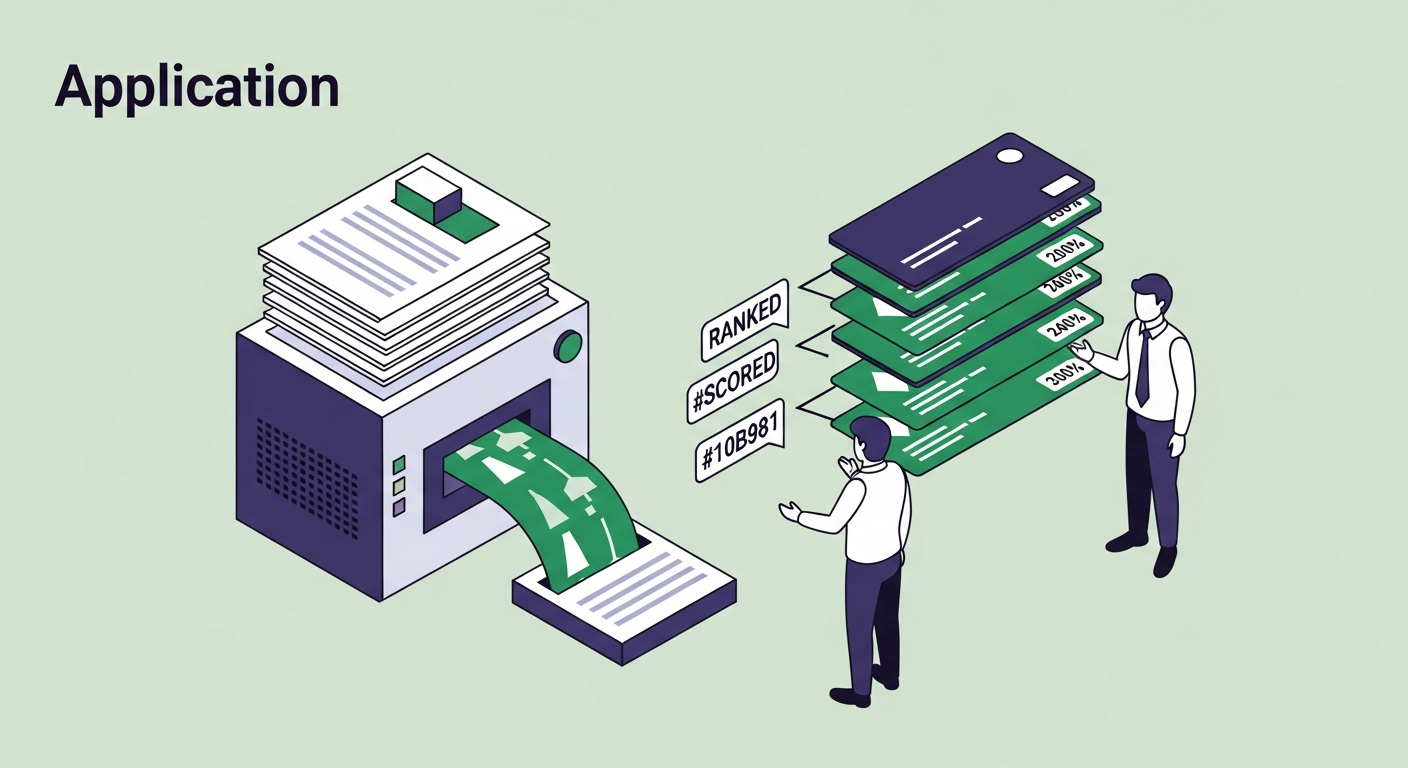
Large public school districts route applications through Workday, Taleo, or iCIMS. The system processes each resume against the job description, scores keyword matches, and ranks the stack. The hiring committee opens the top of the list. If your certifications are inside a table the parser can't read, or your skills section lists "dedicated educator" instead of "Google Classroom" and "differentiated instruction," you've been filtered out before anyone reads your name. (Which is frustrating. Though perhaps slightly less frustrating than parallel parking, which I maintain is an unreasonably punitive skill requirement for adults.)
This guide covers both judges. ATS-compatible format first — because that's the door you have to clear. Then what makes the human reader call you in. If you work at a small private school that emails applications directly to the head of school, skip to the last section — the ATS logic doesn't apply there, and I'll tell you when.
How ATS Scores Teacher Resumes (and Why Most Guides Miss This Entirely)
School districts use Applicant Tracking Systems the same way corporations do: to handle volume. A mid-size district advertising a 3rd grade position might receive 200 applications. A large urban district hiring across 15 schools can receive 600 for a single role. The ATS processes the stack and surfaces the candidates whose resumes match the job description's language. Everyone else waits at zero unread.
The specific platforms vary. Large public districts favor Workday, Taleo (Oracle), and iCIMS. Charter networks often use Greenhouse or SmartRecruiters. Frontline Education is widely used in K-12 specifically. What they share: they all parse your document as raw text and check each keyword against the job posting. The parser doesn't see your resume the way a principal does. It sees a string of characters and confirms matches.
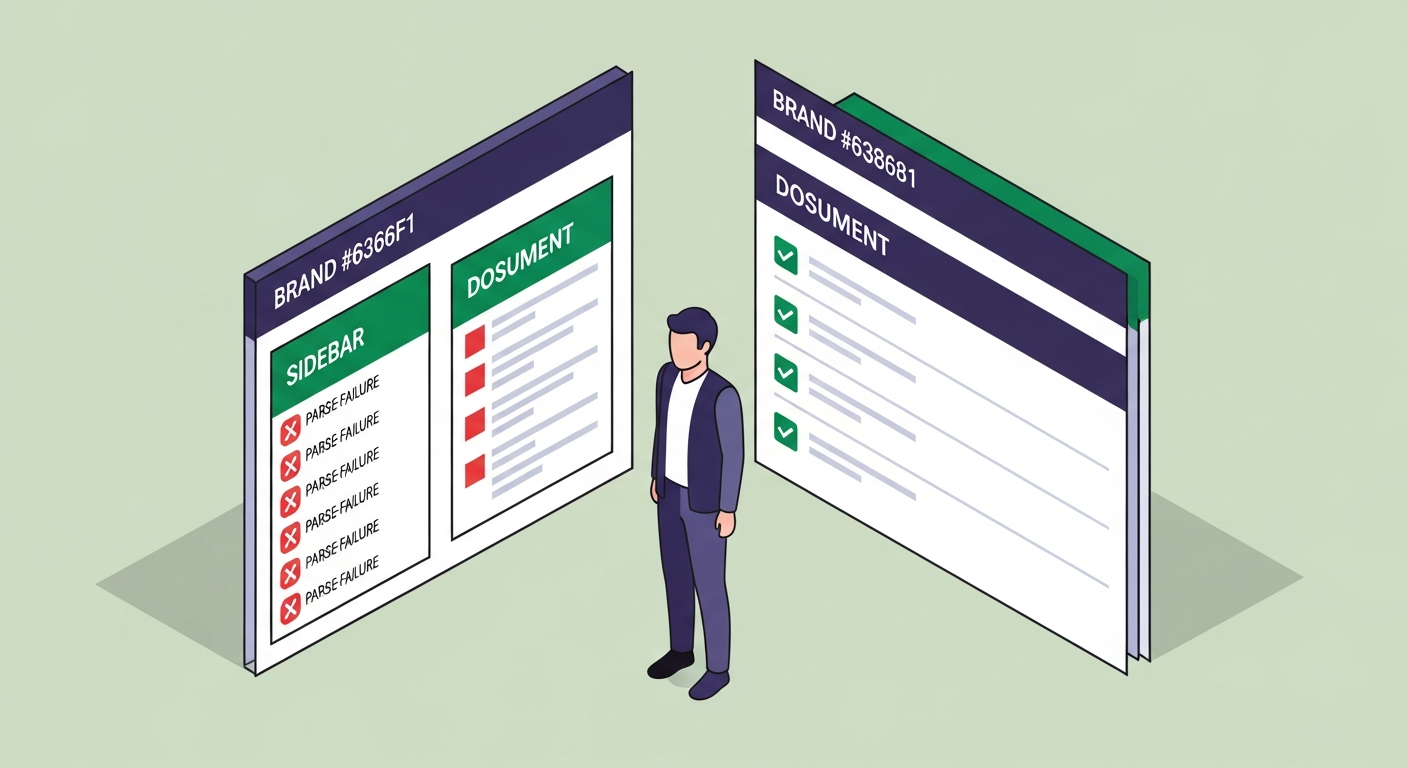
Here's the part most teacher resume guides don't mention. A beautifully formatted sidebar resume — common in teacher resume templates because it looks organized to a human reader — often produces garbled output when parsed. The parser reads columns left-to-right in a single pass, merging your skills list with your job titles into a jumble. You end up looking, to the algorithm, like you taught "Microsoft Word to third graders" and listed "Passionate Educator Google Classroom" as a previous employer.
This isn't theoretical. In ATSFixer's internal testing, a software engineer's two-column resume scored 12/100. Converting to a single-column format, with the same content and no other changes: 71/100. The same dynamic plays out with teacher resumes that use identical layouts — only now the ATS is also failing to read the certification table in your sidebar, which means your credentials aren't parsing at all.
According to Jobscan's 2023 survey, 98% of Fortune 500 companies use an ATS to screen candidates. Most large school districts use the same systems. And Jobscan estimates that 75% of resumes are rejected by ATS before a human reads them. Teachers aren't a special case. The algorithm processes them the same.
For a broader explanation of how ATS ranking works across all industries, see our guide on how ATS systems work.
The Teacher Resume Format That Passes ATS and Hiring Committees
The format that works is not complicated. Single-column layout, standard fonts, standard section labels, PDF submitted from a clean Word or Google Docs file. This combination passes every major ATS parser used in K-12 hiring and reads clearly to a committee.
Here's what breaks it:
Two-column layouts. The left sidebar reads as a separate text column — parsers merge it with your main content. Skills become embedded in job titles. Certifications become part of your work history. Workday and Taleo handle multi-column resumes especially poorly. 1 in 3 resumes submitted through Workday are corrupted during parsing (ATSFixer internal testing, 2024–2025) — the majority are multi-column layouts.
Tables and text boxes. Content inside tables and text boxes is often completely invisible to parsers. Teacher resume templates frequently put certification grids in tables. The system may not extract those credentials at all, which means you score zero on the most important requirement of the role.
Custom section labels. "Teaching Philosophy," "Pedagogical Approach," "Professional Portfolio," "Summary of Qualifications," "My Journey in Education" — these make sense to a human reader and confuse parsers that expect "Professional Summary," "Experience," "Education," "Skills," and "Certifications." Use standard labels.
Decorative elements. Icons next to section headers, decorative dividers, teacher-themed borders, and photo placeholders all produce unreadable characters in the parsed output. No graphics, no icons.
Headers and footers for contact information. Some parsers skip header and footer content. Put your name, email, phone, and location at the top of the main document body.
The format that works:
- Single-column layout throughout
- Standard section labels: Professional Summary, Experience, Education, Skills, Certifications, Professional Development
- Fonts: Calibri, Arial, Times New Roman, or Garamond — 11–12pt body, 14pt name
- PDF submitted from a .docx source (not scanned, not an image-based PDF — those score zero)
- Margins: 0.5–1 inch
- Contact information in the main document body, not in a header/footer
One thing that surprises teachers: the format doesn't need to look impressive. The hiring committee opens your file. If the experience matches, you move forward. You're not pitching a design portfolio. Cleaner is better — and for once, "less effort" and "correct answer" are the same thing.
For a deeper look at which specific formatting choices break ATS parsing — and which ones are myths — see our guide on scannable resume formats.
Teacher Resume Skills: What Scores vs. What the Algorithm Ignores
The skills section is where teacher resumes most commonly underperform. Not because teachers lack skills. Because the wrong skills occupy all the space.
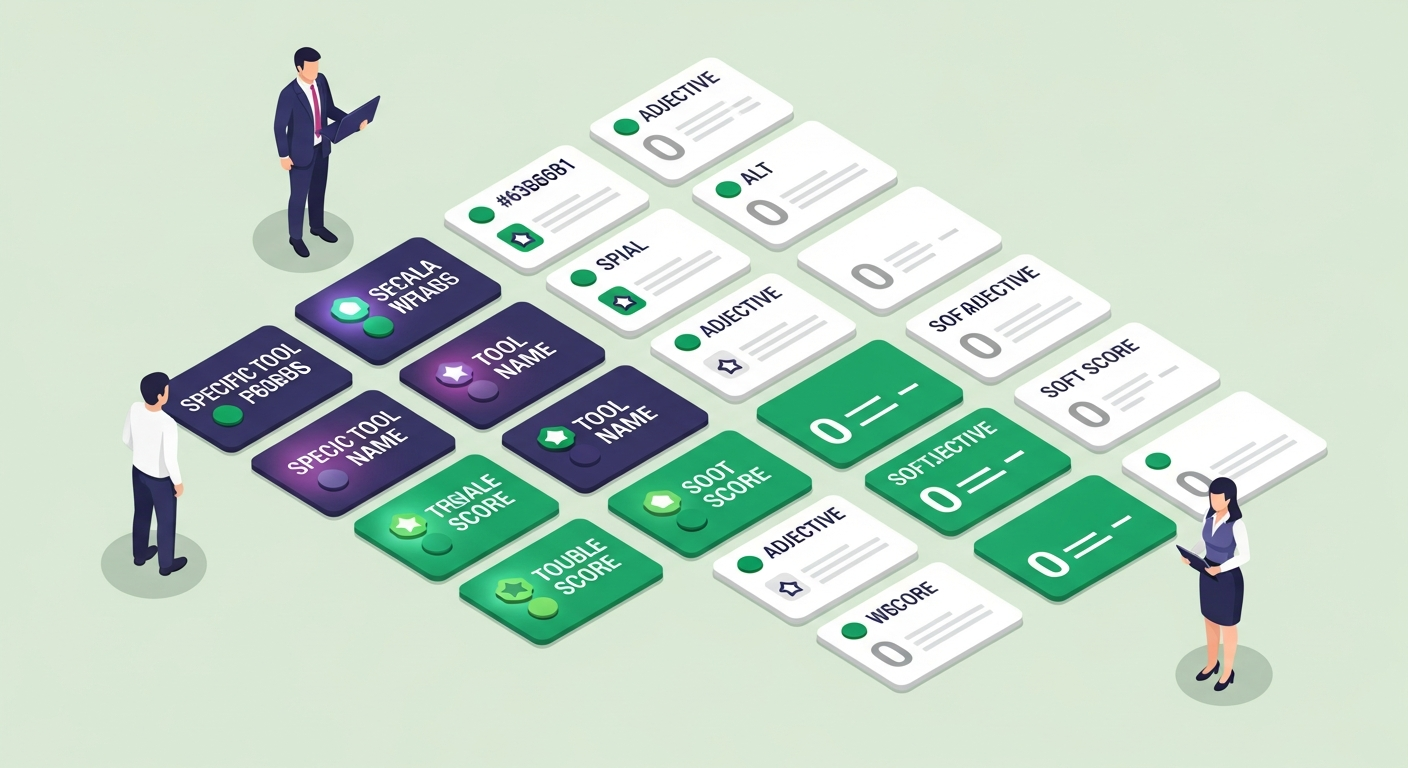
Look at a typical teacher resume skills section: "passionate educator," "student-centered approach," "commitment to lifelong learning," "collaborative team player," "strong communicator." These are true for most teachers and useless to an ATS. The algorithm scores the second category below. It ignores the first entirely.
Skills that score on ATS — technology and platforms:
- Google Classroom
- Canvas LMS
- Schoology
- ClassDojo
- Seesaw (elementary and early childhood roles)
- PowerSchool, Infinite Campus (student information systems)
- Kahoot, Quizlet, Nearpod (interactive learning tools)
- Microsoft Teams, Zoom (hybrid and remote teaching)
- Google Workspace (Docs, Slides, Sheets, Forms)
Curriculum and instruction methods — as they appear in job descriptions:
- Differentiated instruction
- Project-based learning (PBL)
- Universal Design for Learning (UDL)
- Response to Intervention (RTI)
- Backward design
- Culturally responsive teaching
- Social-emotional learning (SEL)
- Co-teaching / Inclusion model
Assessment skills:
- Formative assessment
- Summative assessment
- Data-driven instruction
- Progress monitoring
- IEP (Individualized Education Program) — include this only if it appears in the job description
Skills that score zero:
- "Passionate about education" — every teacher says this; no job description lists it as a requirement
- "Student-centered" — sounds meaningful, matches nothing specific in a keyword scan
- "Dedicated educator" — same problem
- "Strong communicator" — a soft skill claim that proves nothing; put this in a bullet instead
- "Lifelong learner" — the algorithm doesn't award points for enthusiasm
The rule is the same in every industry: list hard skills in the section; prove soft skills in your bullets. "Implemented ClassDojo for behavior tracking across 28 students" demonstrates classroom management. "Student-centered educator" claims it without evidence — to both the algorithm and the committee.
Resumes with a keyword-relevant skills section score an average of 10–15 points higher on ATS screening than equivalent resumes without one (ATSFixer internal data). That gap is the difference between clearing the filter and not. For more on structuring a strong skills section, see our guide on skills for a resume.
Teacher Keywords: The Exact Terms ATS Looks For in 2026
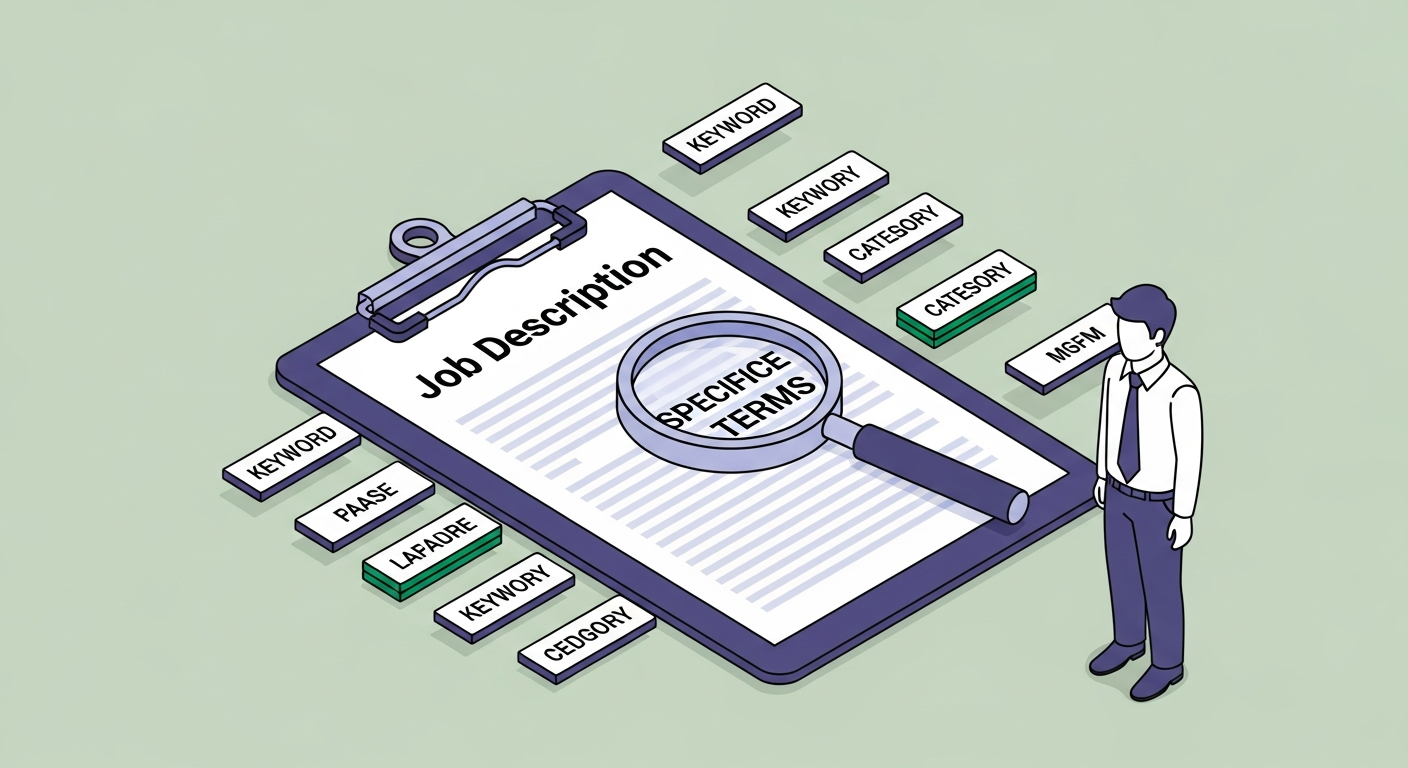
The most important keywords are the ones in the specific job description you're applying to. But knowing the common high-scoring categories helps you read a posting with a sharper eye — and spot the exact phrases that need to appear on your resume.
Classroom and behavior management:
- Classroom management
- Behavior management
- Positive behavioral interventions and supports (PBIS)
- Restorative practices
- Trauma-informed practices
Curriculum and standards:
- Curriculum development
- Lesson planning
- Standards-aligned instruction
- Common Core State Standards (CCSS)
- State-specific frameworks: TEKS (Texas), Next Generation Science Standards (NGSS), etc.
- Scope and sequence
Student support and special populations:
- Special education, IEP, 504 plan
- English language learners (ELL), English language development (ELD)
- Gifted and talented (GT)
- Multi-tiered system of supports (MTSS)
- Academic intervention
- SIOP model (Sheltered Instruction Observation Protocol) — for ESL roles
Professional development and leadership:
- Professional learning community (PLC)
- Instructional coaching
- Mentoring, student teacher supervision
- Curriculum mapping
- Data-driven instruction, student achievement data analysis
How to read a job posting for keywords:
Read the posting once for context. Read it a second time with something to underline. Everything underlined is a potential keyword — the role's exact requirements, the curriculum frameworks named, the platforms mentioned, the student populations served. If the posting says "MTSS," "PLC," and "Google Classroom," those are your three highest-priority terms.
Most teachers apply with the same resume to every posting. That's where the score gap opens. Job seekers who tailor their resume to each specific posting are 3× more likely to get an interview, according to Jobscan's analysis of over one million resume scans. The same holds for teaching applications.
If your resume says "behavioral interventions" where the posting says "PBIS," or "parent outreach" where it says "family engagement," you're leaving keyword matches unclaimed. Same concept. Different string. Different score.
For a broader framework on how keyword placement works — and how often they should repeat — see our guide on resume keywords.
Free ATS Score Check
Your result looks like this —
get yours in 30 seconds.
Drag & drop your resume here
PDF or Word · max 10 MB
Results in under 30 seconds · no sign-up required
How to Write Teacher Experience Bullets That Score and Get Read
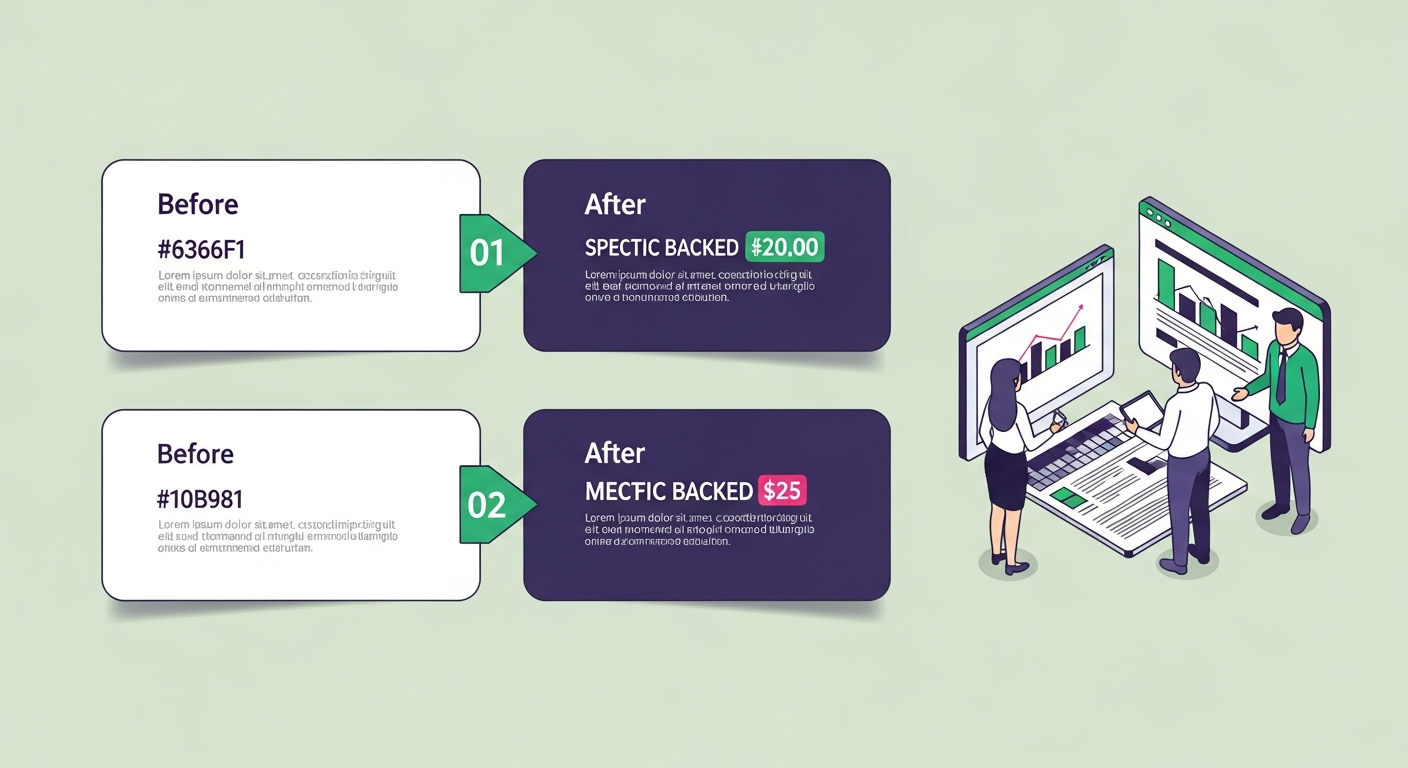
The work experience section is where ATS scores your keywords in context and where the hiring committee decides whether you know what you're doing. The two goals align. A bullet with specific, quantified information scores better on ATS (more keyword density, clearer context) and reads better to a human (less vague, easier to evaluate).
The formula that works: [Action verb] + [what you did] + [for whom or at what scale] + [measurable result]
Before:
- Taught 4th grade math
- Supported students with IEPs
- Used technology in the classroom
After:
- Delivered differentiated instruction in 4th grade math to 26 students; 87% met or exceeded grade-level proficiency benchmarks on spring assessments
- Implemented IEP accommodations for 6 students with learning disabilities, coordinating weekly with the special education team through a formal co-teaching model
- Integrated Google Classroom and Kahoot into daily instruction; digital submission tracking reduced assignment gaps by 40% over one semester
The "after" versions score higher because they contain exact keyword matches (differentiated instruction, IEP, co-teaching, Google Classroom) and specific numbers. They also tell the hiring committee three evaluable things: the context, the method, and the outcome.
Numbers to include on a teacher resume:
- Class size
- Proficiency rates, growth percentages, or standardized assessment scores
- Number of students with IEPs, 504s, or ELL services you supported
- Grade levels served
- Years of experience with a specific curriculum, platform, or program
- Extracurricular program metrics: students mentored, clubs led, events organized
If you don't have formal assessment data — common for teachers in districts without consistent testing cycles — use what you have. Class size, grade level, specific curriculum materials used, and years with a given program are all better than no numbers.
The action verb matters, too. "Taught" is present on 95% of teacher resumes and does nothing to differentiate yours. "Designed," "implemented," "differentiated," "analyzed," "coached," "assessed," "facilitated," "coordinated," "developed" — all more specific, all more keyword-aligned, all more useful to the committee. (And frankly, "taught" undersells what most teachers actually do. You're running a small company with 25–30 stakeholders and a government-issued curriculum. "Facilitated standards-aligned instruction" is just more accurate.)
Certifications and Licensure: Where to Put Them and What to Call Them
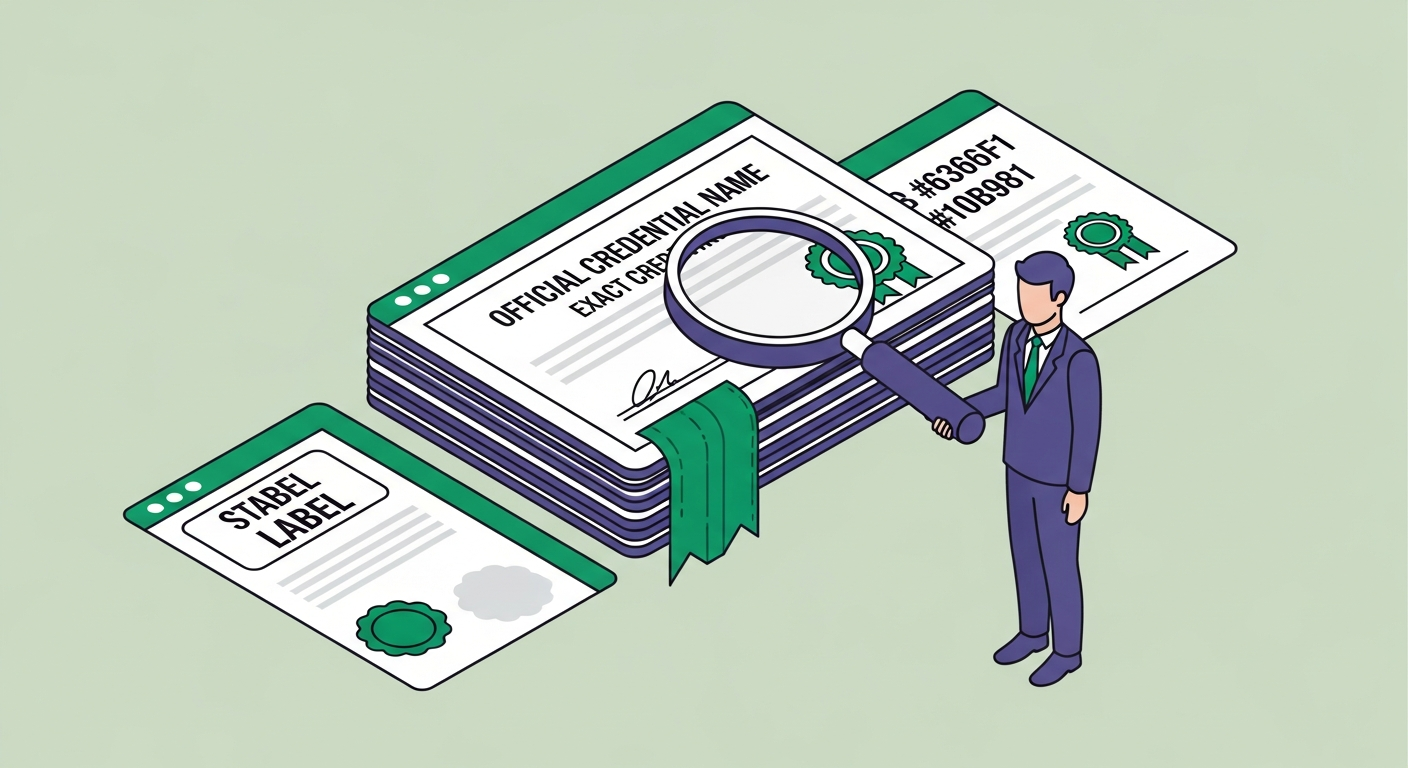
Teaching certifications are the most important credential on a teacher resume. They're often a legal hiring requirement. They also have a specific parsing problem: ATS systems match your certification language against the job posting's language, and those two strings must align to produce a keyword match.
The posting says: "Valid Texas Standard Certificate, EC-6 Generalist required." (This is a real requirement — the Texas Education Agency's certification lookup is where you confirm the exact official name.)
Your resume says: "Texas teaching license," "Certified K-6 educator," or "State certified teacher."
None of those match. The ATS scores zero for certification, even though you have exactly the right credential. This is the synonyms problem applied to the most important section of a teacher resume — and according to Jobscan's keyword research, missing exact-match keywords is the most common reason for ATS rejection.
The correct format: Use the official name as it appears on your certificate. In most states, this is printed on the document. Copy it verbatim.
- Texas Standard Certificate, Elementary Education (EC-6), Generalist
- New York Initial Certificate, Childhood Education (1-6)
- California Multiple Subject Teaching Credential
- Florida Professional Educator's Certificate, Elementary Education K-6
Where to put it: Create a dedicated "Certifications" section. Place it below Education for new teachers; below Skills for experienced teachers. Do not rely on certifications listed only inside the Education section header — they may not parse as a separate field.
What to include:
- Full official name of the certificate or credential
- Issuing state
- Any endorsements (ESOL, Bilingual, Special Education, Gifted and Talented)
- Certification level (Initial, Professional, Standard — varies by state)
- Expiration or renewal year
If you hold National Board Certification (NBCT), list it separately above your state certification — it's a significant differentiator and deserves prominence, not a footnote.
If your certification is in progress (student teacher completing final semester), note it as "Expected [Month Year]." The ATS still scores the keyword match, and the committee understands the timeline.

New Teacher vs. Experienced Teacher: What Changes on the Resume
The structure of a teacher resume shifts depending on how much relevant experience you have. Two templates don't exist — but the section order and content emphasis change meaningfully.
New teacher (0–2 years, including student teaching):
One page. Student teaching belongs in your Experience section — not a separate "Student Teaching" category. Use the same format as paid roles: school name, grade level, subject, dates, and keyword-relevant bullets. Your cooperating teacher's name in parentheses is optional but helpful context for district administrators who know the school.
Section order for new teachers:
- Professional Summary
- Education (leads because your degree is your strongest credential)
- Certifications
- Experience (student teaching and any practicum)
- Skills
- Professional Development (if relevant)
Include GPA if it's above 3.5. Include relevant coursework only if it's genuinely relevant — "Methods of Teaching Reading" is relevant to an elementary ELA role; "Introduction to Sociology" generally isn't.
Don't pad. A one-page resume with substance clears ATS and impresses committees. A two-page resume with filler teaches the hiring committee something about your editorial judgment. (And they teach for a living. They've seen filler.)
Experienced teacher (3+ years):
Two pages is appropriate if — and only if — you have enough keyword-relevant content to fill it. Two pages signals depth: progression across grade levels or schools, curriculum leadership, additional certifications, committee service, professional development contributions.
Section order for experienced teachers:
- Professional Summary (5–6 sentences, keyword-dense — this is your ATS anchor)
- Experience (reverse-chronological, most recent first)
- Skills
- Certifications
- Education
- Professional Development (optional, but valued in K-12)
The professional summary is more important for experienced teachers than new ones, because experienced teachers have more information to organize and a longer keyword list to signal. Treat it as 5–6 sentences that contain your grade levels, subject areas, strongest keywords from the posting, and one quantified outcome.

When ATS Advice Doesn't Apply to Teaching Jobs
Most ATS optimization advice applies to most teaching applications — but not all of them, and being honest about the exceptions matters.
Small private schools, independent day schools, Montessori programs, and many faith-based schools hire through direct application processes. The head of school or hiring committee reads every document. In that context, a more polished visual design isn't the liability it would be in a district submission — and optimizing for a parser that doesn't exist is wasted effort.
How to tell which situation you're in:
- If the application goes through an online job portal — district website, Workday, Taleo, iCIMS, Frontline Education — assume ATS-gated. Optimize for the algorithm first.
- If the application is submitted via email directly to a school or head of school, assume human-first. The committee reads your file. Format for clarity and readability.
- Public school districts: almost always ATS-gated. Large charter networks: increasingly ATS-gated. Small independent and private schools: usually not.
If you're applying to a private school under 200 students, the formatting constraints relax somewhat — a more distinctive layout isn't likely to hurt you when a human is reading every document anyway. But the content rules stay the same regardless: specific skills, measurable bullets, exact certification language, and keywords from the job description. Those signal competence to a human committee just as much as they score points with a parser.
For your district applications — which for most teaching candidates represent the majority of applications — run your resume through ATSFixer's free score tool before you submit. It'll show you exactly which keywords from a specific job description are missing from your resume, and what fixing them would do to your ATS score.
You spent years learning to meet students where they are. The job application process, at least, has the decency to tell you exactly what it's looking for. (The algorithm, unlike most students, will not ask for extra time on the rubric.)
Related from ATSFixer
Frequently Asked Questions
New teachers (0–2 years, including student teaching) should use one page. Experienced teachers with 3+ years can use two pages — if they have enough keyword-relevant content to fill them. Two pages with filler is worse than one tight page. The goal is to include every relevant credential, certification, and experience that matches the job description, in whatever space that requires.

Jordan Marcus
Senior Career Strategist
Jordan has reviewed 4,000+ resumes and coached candidates into roles at Google, Stripe, and McKinsey. She writes about the mechanics of ATS and what actually gets people interviews.