On this page
Automated resume screening is the step between you pressing submit and a recruiter ever seeing your name. Software parses your resume, extracts structured data, and assigns a score. If that score falls below the threshold, your application is archived. No human made that call — the algorithm did.
This happens at 98% of Fortune 500 companies, according to Jobscan research. The figure you see cited constantly — 75% of resumes rejected before a human reads them — is that system doing exactly what it was built to do. What nobody leads with is this: the score isn't based on whether you're qualified. It's based on whether the algorithm could read your document and whether it found the right words in the right places. Those are formatting and keyword problems. Both are fixable in under an hour. (I know. I didn't write the spec. I just test against it every week.)
What Automated Resume Screening Actually Does
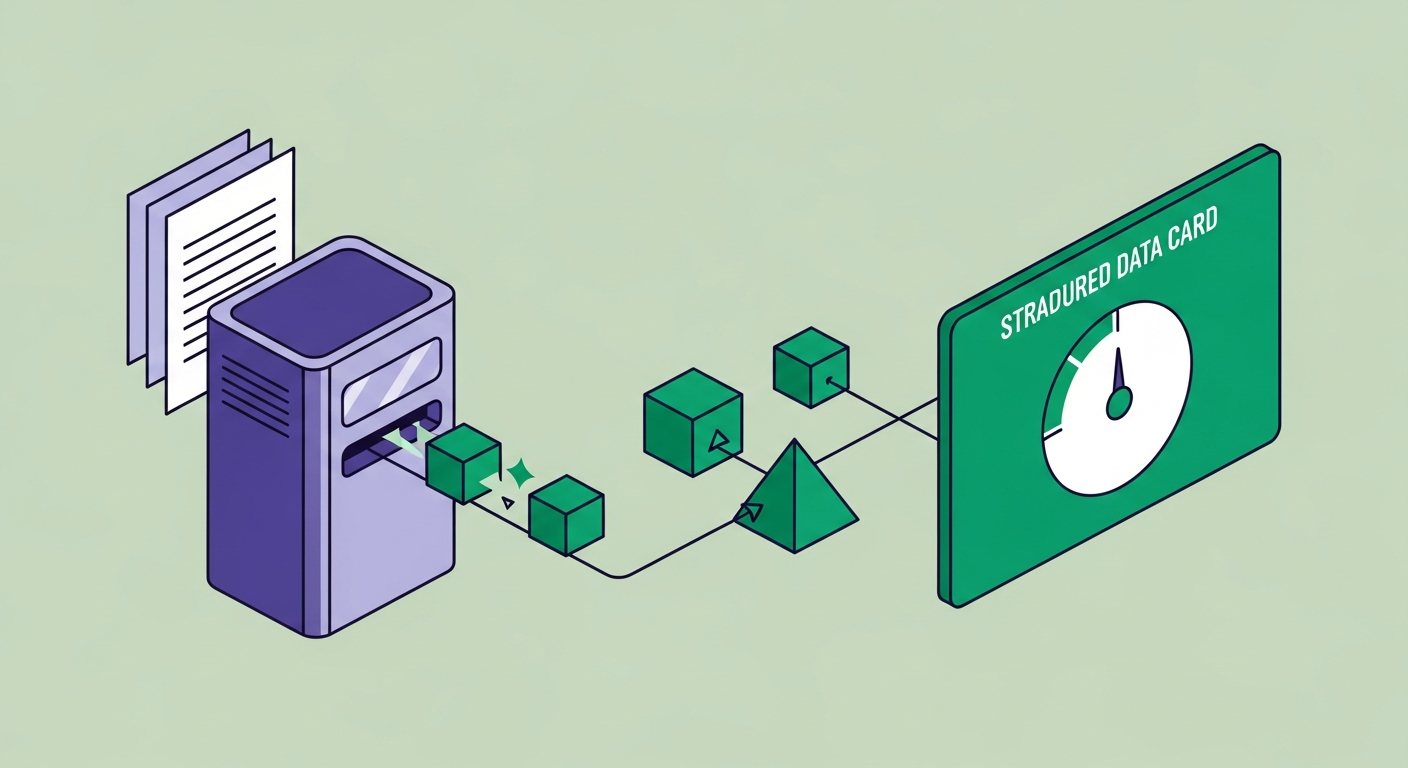
When you submit a resume through an online application portal, it enters a parsing pipeline. The ATS — Greenhouse, Workday, Taleo, iCIMS, or one of several dozen others — converts your file into plain text, then extracts structured data: name, contact details, job titles, employer names, employment dates, education, and skills. That structured data is compared against the job requirements attached to the posting. The comparison produces a score.
Recruiter views are sorted by that score, highest first. In a pool of 250 applications, she reads the top 15. The rest are archived without review. Getting into the top 15 is a formatting and keyword problem, not a qualifications problem.
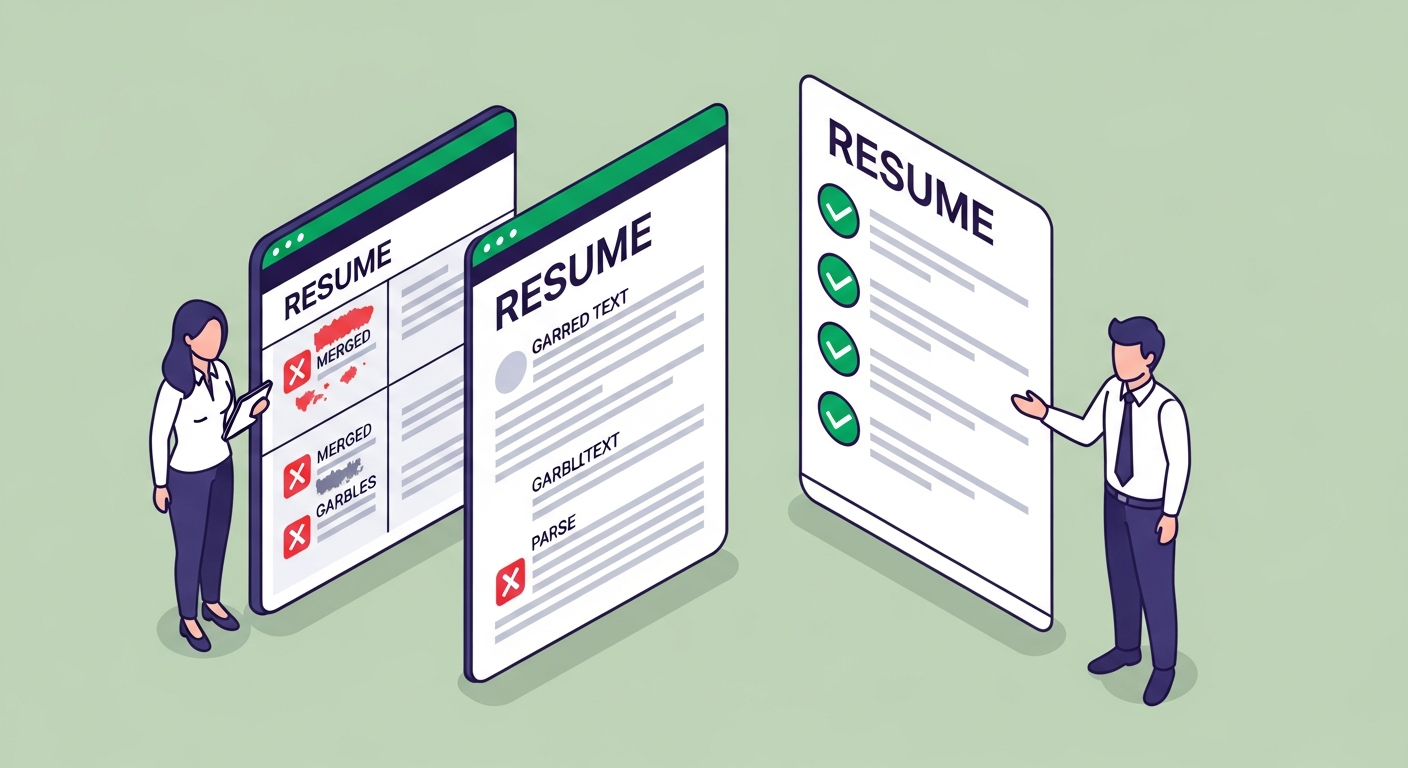
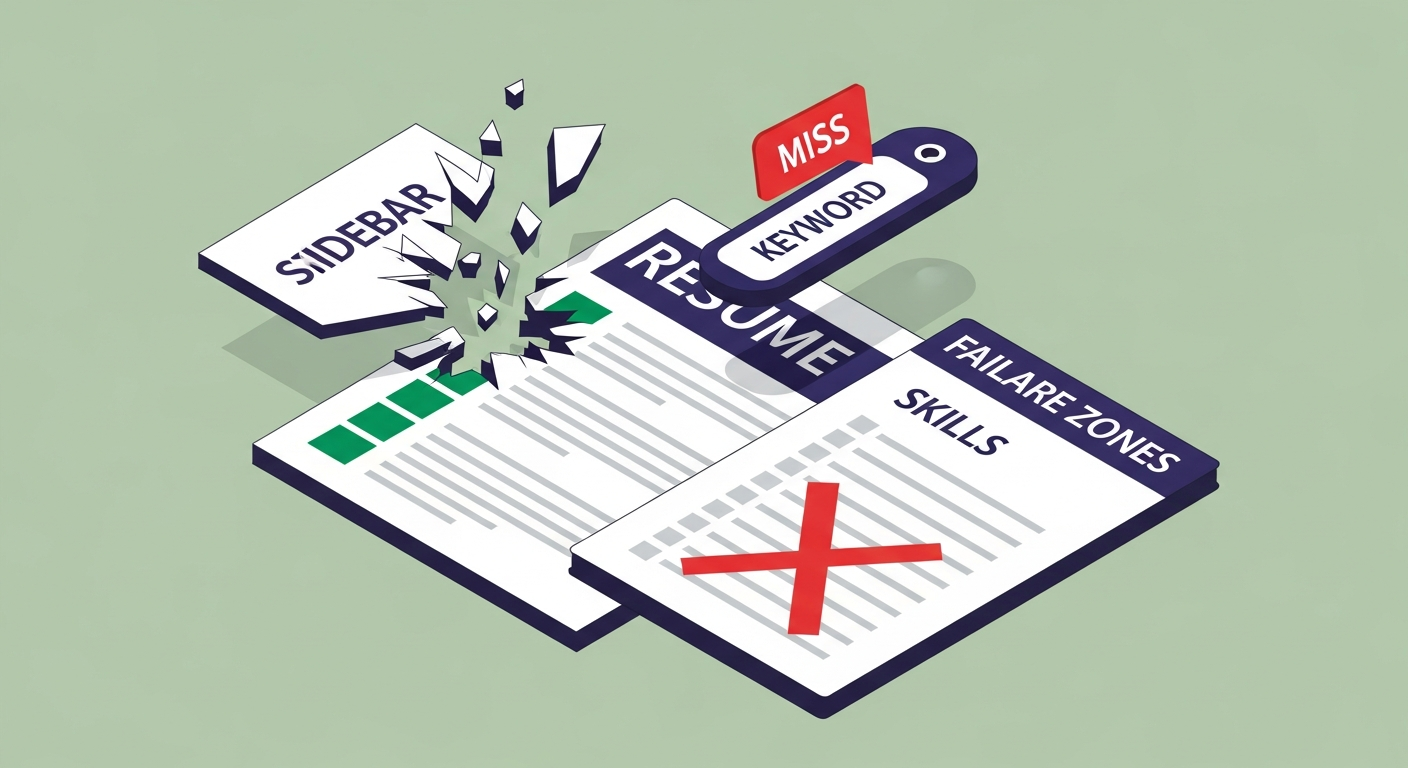
A software engineer with eight years of experience submitted a two-column resume — skills down the left sidebar, experience on the right. Three days of design work. His ATS score: 12 out of 100. The parser read both columns left-to-right in a single sequential pass, merging the skills list with the job titles into garbled text. His employer names, titles, and employment dates were effectively unreadable to the system. He converted to a single-column format — same content, same bullet points, no other changes — and scored 71. Interview that week.
The resume hadn't changed. The document had. That distinction is what automated resume screening actually tests, and it's the one most candidates miss. For a full breakdown of how each major platform scores candidates, see our deep-dive on how ATS systems work and what they score.
The Three Screener Types That Rank Your Resume Differently
Not all automated screening works the same way. The platform a company runs determines how you're scored — and what you need to prioritise fixing.
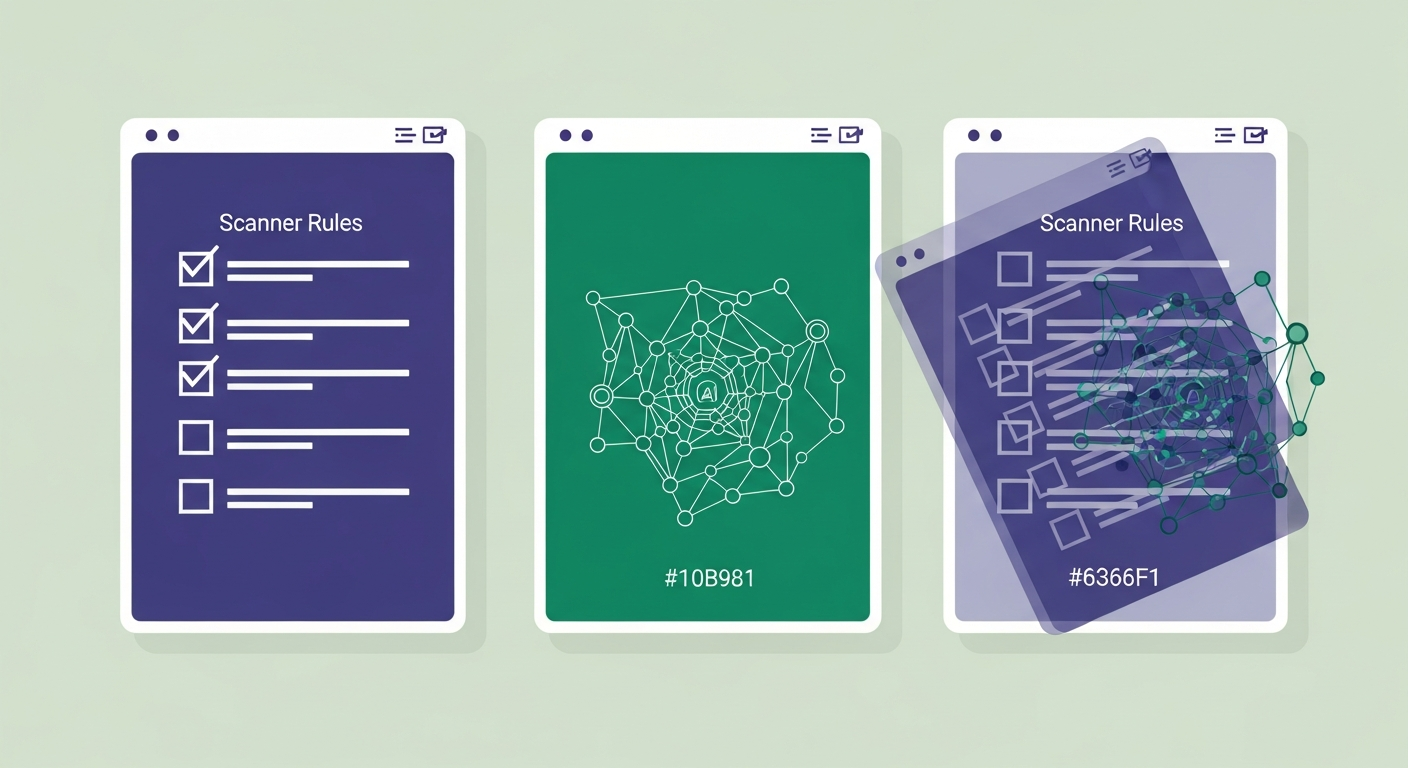
Rule-based systems are the most common and the most restrictive. Taleo, older iCIMS installations, SAP SuccessFactors at most legacy enterprise deployments — these match your resume against a checklist. Required years of experience, required degree level, required job titles, required skill keywords. Each requirement is binary: pass or fail. The keyword matching is exact-match only. "Stakeholder communication" and "cross-functional collaboration" mean the same thing to a human, and to no ATS ever built. Exact phrase scores. Synonym scores zero, even a perfect one. This is not a bug. It's how the filter was designed.
AI-powered screeners — modern Workday configurations, Eightfold, Beamery — use natural language processing and can weight candidates across multiple dimensions simultaneously. They're somewhat more forgiving about synonyms, but still lean heavily on keyword density, section completeness, and whether your career progression matches the role's pattern. They're more common at tech companies and high-growth startups.
Hybrid systems run rules-based pre-filtering before passing surviving candidates to an AI ranking layer. You can fail at the first gate without ever reaching the scoring phase. Your resume doesn't receive a low score — it simply doesn't enter the queue.
Rule-based systems dominate in healthcare, government, banking, and large enterprise. AI-heavy systems are more common in tech. Since you usually can't tell which one you're applying into — the application portal is not going to announce "Welcome to Taleo 17.3" — optimise for the most restrictive version. The formatting and keyword fixes that satisfy rule-based systems also satisfy AI systems. Fix once, apply everywhere.
Why a Qualified Resume Scores 41 Out of 100
Automated screening doesn't filter bad candidates. It filters unoptimised ones. A 2021 Harvard Business School and Accenture study covering 8 million job postings asked executives directly whether their ATS rejected qualified candidates who should have moved forward. 88% said yes. Most of them knew it. Most hadn't changed anything, because reading 250 applications manually wasn't operationally viable. The system over-filters by design. The job seeker absorbs the cost.
Here's what actually suppresses scores, roughly in order of impact:
Formatting the parser can't extract. Columns, text boxes, tables, sidebar layouts, key information buried inside headers and footers — all of these break parser extraction on most major platforms. ATSFixer internal testing found that 1 in 3 resumes submitted through Workday are corrupted during parsing due to columns, tables, or text boxes. When the extraction fails, your employer names may end up merged with your skill tags. Your employment dates may land beside your degree program. The structured fields the algorithm tries to score become noise, and noise scores low.
Missing exact-match keywords. The job description says "project management." Your resume says "programme management" or "project coordination." Rule-based ATS: zero keyword matches for that term. Job seekers who tailor their resume to the exact phrasing in a job description are three times more likely to get an interview, according to Jobscan analysis of over a million resume scans. The exact language is the signal. Your preferred synonym is invisible to the filter.
No dedicated skills section. ATSFixer data shows resumes with a dedicated skills section score 10–15 points higher on average than equivalent resumes without one. The skills section is a distinct structured field the ATS parses separately from the full-text pass. A keyword in your skills section scores twice — once during structured field extraction, once during the full-text keyword search. The same keyword buried only in a bullet point scores once. Across 15 keywords, that gap is the difference between appearing in the recruiter's top 15 and not.
Image-based PDF files. A PDF exported from Canva, Adobe Illustrator, or saved from a scanner contains text embedded inside an image. The parser finds nothing. The system receives what amounts to a blank document. Submit .docx files or PDFs generated from text-based tools — Word, Google Docs, LibreOffice. If you can't select the words in your PDF with a cursor, the ATS can't read them either.
Free ATS Score Check
Your result looks like this —
get yours in 30 seconds.
Drag & drop your resume here
PDF or Word · max 10 MB
Results in under 30 seconds · no sign-up required
What the Algorithm Is Actually Looking For
Most candidates think about keywords and miss the other scoring dimensions. Here's what gets evaluated on every major platform:
Keywords — exact phrase, frequency, and placement. Pull 15–25 hard-skill terms directly from the job description. The average posting contains that many, according to Jobscan. Paste them verbatim into your skills section and mirror them in the bullet points where you can substantiate them. A keyword appearing in both your skills section and a bullet point scores higher than the same keyword appearing once. This is not stuffing — it's how frequency scoring works on Greenhouse and Lever. One appearance, one score. Two appearances, higher score. The system is counting occurrences.
Section headers the system recognises. Standard headers — "Work Experience," "Education," "Skills," "Summary" — parse correctly across every major ATS. Creative alternatives introduce parsing risk. "What I've Built," "My Professional Journey," "Core Strengths" — some older parsers don't know what to do with these. Save the personality for the content inside the section. The header is infrastructure. (Taleo has no appreciation for creative section naming. I have verified this personally, at some expense.)
Chronological date structure. ATS parsers expect dates, job titles, and company names in a recognisable sequential pattern. Functional resumes — which group accomplishments by skill category rather than by role — confuse parsers built for chronological data. They're designed for human readers who can follow a non-linear narrative. Automated screeners score them poorly because no coherent employment timeline emerges. If you're managing gaps or a non-linear path, a hybrid resume format handles both problems without breaking your ATS score.
Contact field completeness. A missing phone number, email, or LinkedIn URL leaves structured fields empty. Most ATS platforms expect these fields for candidate record creation and matching. Incomplete records produce lower completeness scores and sometimes cause application-to-candidate matching failures on the recruiter's end.
File parsability. Already covered above — but worth restating as a standalone point. If the text in your document isn't selectable, the content doesn't exist to the algorithm. For a full breakdown of which formatting elements break which parsers most severely, see our guide on what makes a resume scannable.
How to Format Your Resume to Survive Automated Screening
The changes that move the needle most are structural. Most candidates adjust bullet-point language when what needs to change is the document architecture. Start there, then worry about phrasing.
Single-column, full-width layout. Everything flows left to right, top to bottom, readable as a flat text stream. No sidebars, no two-column grids, no floating text boxes. Every major ATS parser reads in a single sequential pass. Sidebars land in the wrong field or vanish. There is no "designed layout mode" in a resume parser — it reads the document like a continuous block of text and extracts what it can recognise.
Standard fonts, no decorative graphics. Calibri, Arial, Garamond, Georgia. 10–12pt for body text, 14–16pt for headers. Icons, profile photos, horizontal image-dividers, and decorative elements don't parse as text. They either vanish or interrupt the parsing of the content around them. A recruiter at a 400-person company opens Greenhouse, sorts by ATS score, and reads the top 15. The visual design of your resume hasn't entered the equation yet. The algorithm went first.
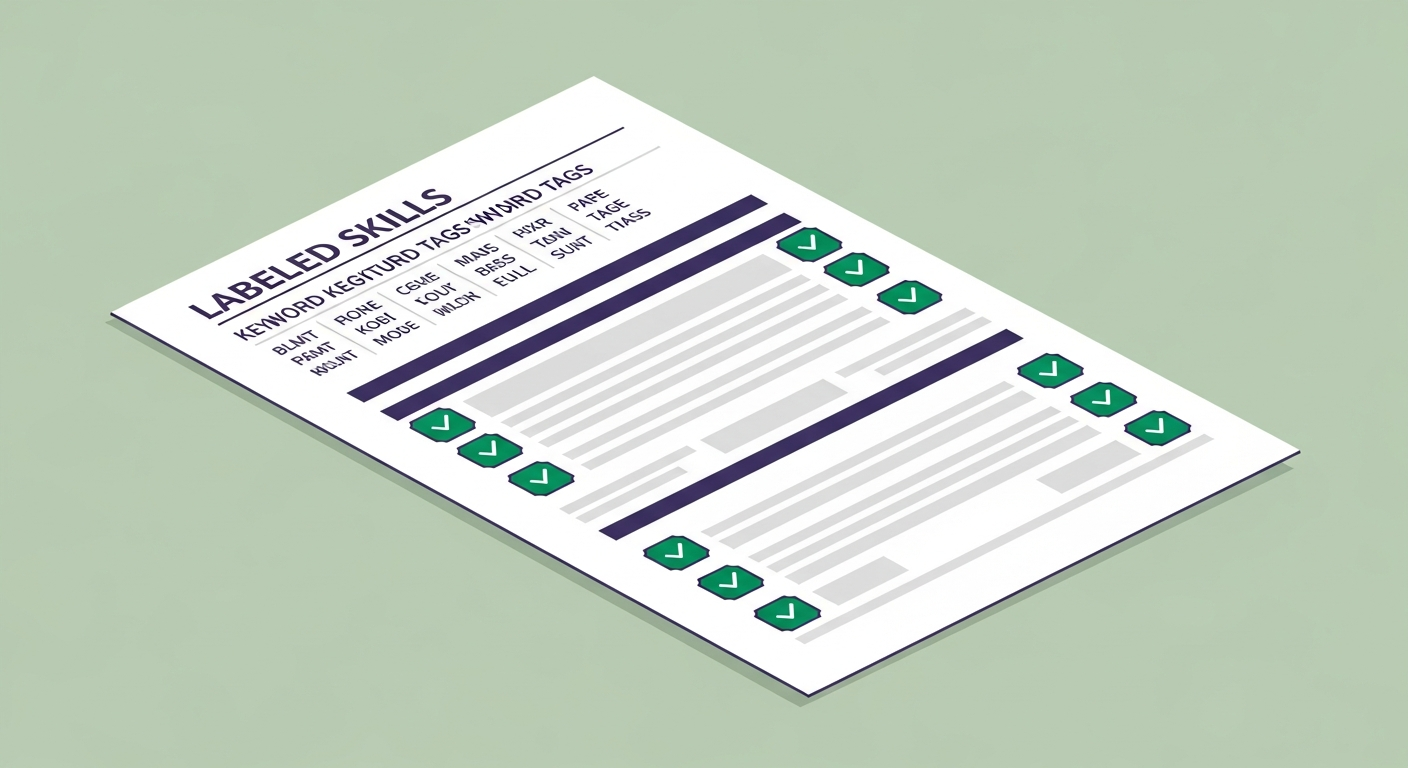
Dedicated skills section, keyword-loaded. A discrete section titled "Skills" or "Technical Skills" with terms pulled verbatim from the job description. Not a bullet in your summary vaguely referencing competencies — a standalone section with specific, exact-match keywords. This is the highest single-leverage change for candidates who've been skipping it. For a detailed guide on selecting and placing the right terms, see how to find the right keywords for your resume.
Mirror the job description's exact language. "Machine learning" not "ML" unless the posting uses the abbreviation. "Budget management" not "financial oversight." "Python" not "Python 3.11" if the posting just says "Python." The algorithm is matching strings, not interpreting intent. Your preferred synonym and their required phrase are only equivalent if the strings are identical.
Test before every submission. Paste your resume into ATSFixer before applying to any role. The score shows exactly where the algorithm will drop you — missing keywords, parsing failures, structural gaps. Our users improve by an average of +31 points after one adaptation, and the time from paste to PDF is 30 seconds. According to a TopResume survey, 63% of recruiters say they reject resumes due to formatting issues rather than content. The content of your resume is probably fine. The container needs work.
When Automated Screening Doesn't Apply to You
Automated screening is standard at companies with significant application volume and dedicated HR platforms. It is not universal — and treating it as though it is will cost you at small companies where a human reads your resume from the first line.
Most companies under 50 employees don't use an ATS. A ten-person startup or a family-owned business with two open roles isn't running Workday. Those applications land in an inbox and get read by the hiring manager directly. Over-engineering keyword density for a company that size is the wrong call — the most algorithmically optimised resume is not always the most compelling human read. Write for the person. A clean single-column document works well for both audiences, so you don't have to choose.
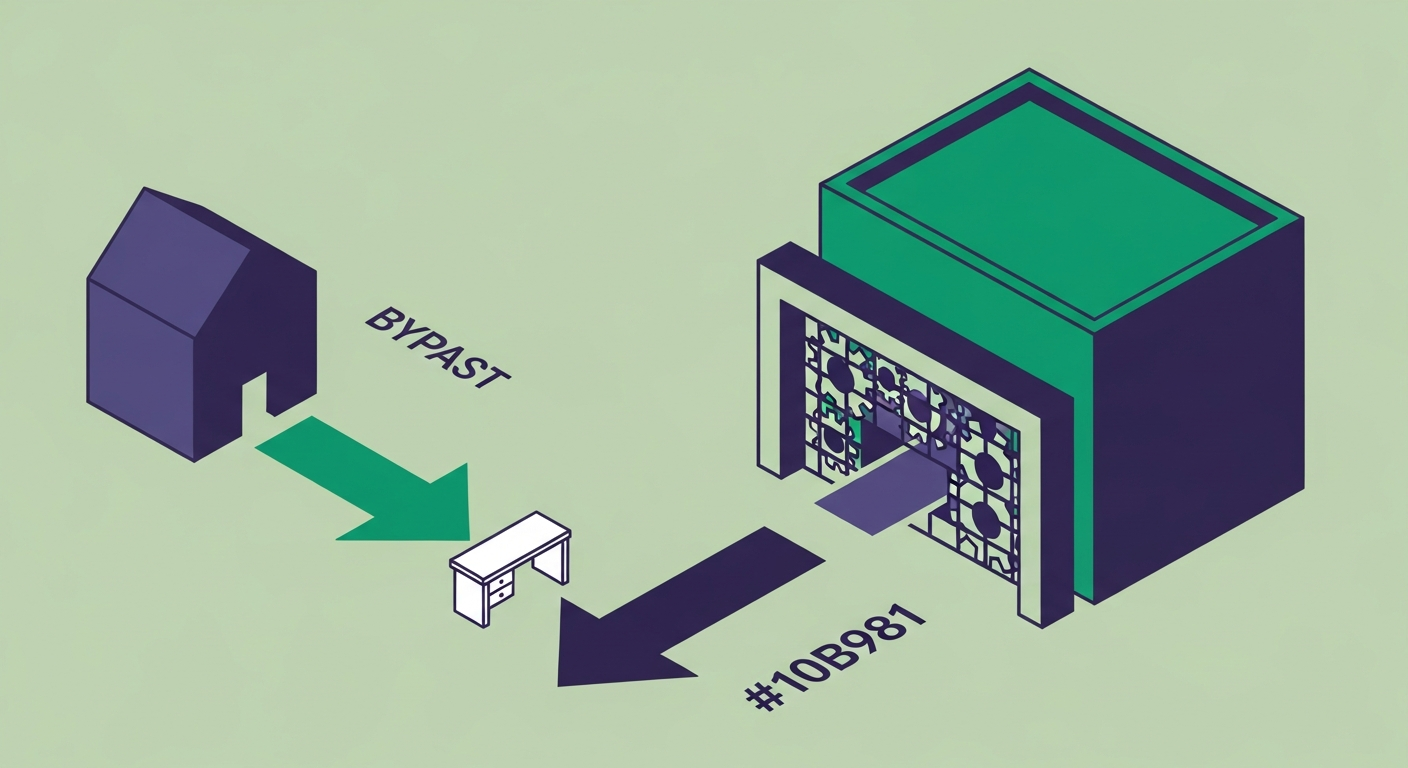
Referrals bypass the screening queue. When someone inside the company passes your name directly to the hiring manager, your resume often gets reviewed outside the ATS system entirely — or gets flagged for direct attention regardless of its algorithmic score. This is one reason the 70% of roles filled before they're publicly posted matters: a referred candidate starts from a different position. The algorithm didn't rank them. A human vouched for them.
Some industries run different evaluation systems. Academic institutions use Interfolio. Some creative-sector employers use portfolio review platforms. Some government roles use structured application forms where traditional ATS scoring plays little part. Research the specific system before you optimise for a platform that isn't in play.
The working rule: if you're applying through an online portal at a company with more than 50–100 employees, assume automated screening is running and check your score before you submit. If you're applying via email, referral, or directly to a small organisation, write first for the human on the other end.
Automated screening is the reason 75% of job seekers get no response and assume the worst about themselves. Most of the time, the worst-case interpretation is wrong — the problem is a sidebar or a synonym. Fix the document structure, mirror the job description's phrasing, and know your score before you apply. The algorithm doesn't have opinions about you. It has a checklist. A checklist, unlike a recruiter, you can actually prepare for.
Related from ATSFixer
Frequently Asked Questions
Automated resume screening is software that parses your resume and assigns a score before a human recruiter ever sees it. The score is based on keyword matching, section structure, and document parsability — not on your qualifications or experience. At 98% of Fortune 500 companies, applications below a score threshold are archived automatically. The recruiter reviews only the top-ranked candidates.

Jordan Marcus
Senior Career Strategist
Jordan has reviewed 4,000+ resumes and coached candidates into roles at Google, Stripe, and McKinsey. She writes about the mechanics of ATS and what actually gets people interviews.