On this page
- How ATS Reads Marketing Resume Keywords
- Core Marketing Keywords Every Resume Needs
- Keywords by Channel: SEO, PPC, Email, Content, Social
- Marketing Tools and Platforms That Score as Hard Skills
- Metrics Keywords That Score Higher Than Generic Skills
- Marketing Resume Keywords by Role
- The Marketing Keywords That Are Everywhere—and Why That's a Problem
- How to Place Marketing Keywords for Maximum ATS Score
Marketing candidates have a specific blind spot on the resume: they describe what they do in marketing language rather than in the language of the job description they're applying to.
"Digital marketing" is not a marketing resume keyword. Neither is "brand strategy" or "content creation." Those are categories. The keywords that score on ATS are the specific tools, platforms, channels, and metrics that appear in the job description — and then appear in the same form on your resume.
This guide covers which marketing keywords move ATS scores, how to read a job description for the ones that matter most, and the one habit killing more marketing applications than any other: using broad category terms where specific tool names would score. (It's a marketing problem. The audience is an algorithm. The audience wants exact-match text.)
How ATS Reads Marketing Resume Keywords
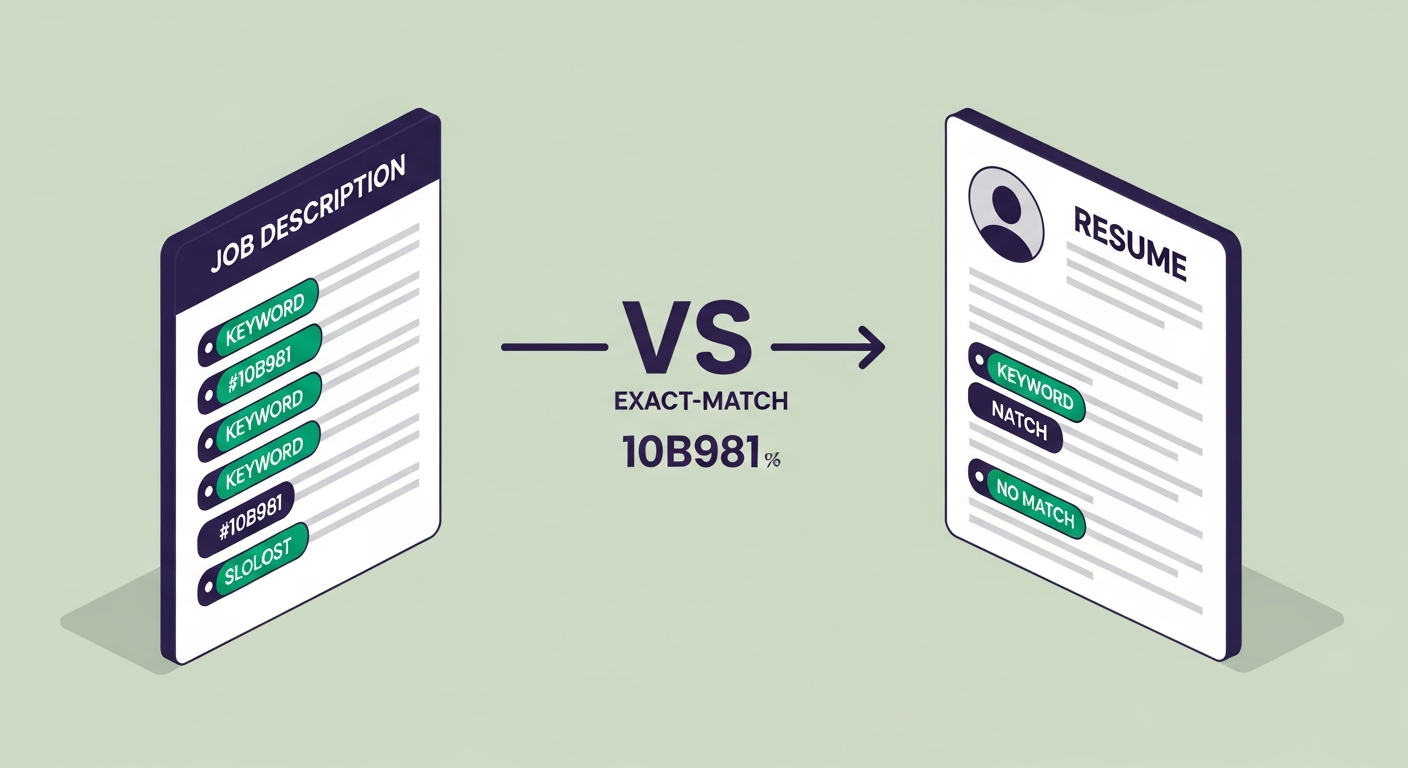
ATS platforms don't read "digital marketing" and infer you understand SEO, PPC, and email campaigns. They compare "digital marketing" against whatever appears in the job description — character by character. If the job description says "SEO," "paid media," and "HubSpot," the system scores each of those strings. "Digital marketing" as a catch-all matches none of them.
Consider how this plays out in practice. A candidate applied for a content marketing role. The job description listed "HubSpot" across nine different sections — workflows, CRM, landing pages, campaign reporting. Her resume said "marketing automation" and "CRM management." She had three years of HubSpot experience. The system scored her at 28 out of 100. She rewrote four bullets to mention HubSpot by name, added it to her skills section, and rescored: 74. The experience hadn't changed. The exact word had.
This is the core of how ATS reads marketing keywords: exact string matching, not semantic inference. "Campaign management" is not the same as "campaign planning." "Social media management" is not the same as "social media strategy." "Analytics" is not "Google Analytics 4." The more precisely your language mirrors the posting's language, the higher your match score.
According to Jobscan's analysis, the average job description contains 15–25 hard-skill terms. Most marketing resumes cover fewer than half of them — either because of broader language, skipped tool names, or not reading the job description carefully enough before applying.
The fix is mechanical, not creative: read the posting, extract the exact tools and terms it uses, and place those exact strings on your resume. For a broader look at how ATS scoring works across all resume sections, see our guide on how ATS systems work.
Core Marketing Keywords Every Resume Needs
Some marketing keywords appear across almost every job description regardless of channel, company size, or seniority level. These are the baseline — not differentiators, but necessary for your resume to pass the initial filter.
Campaign and strategy terms:
- Campaign management
- Go-to-market (GTM) strategy
- Brand positioning
- Demand generation
- Lead generation
- Marketing strategy
- Marketing operations
Measurement and performance:
- ROI analysis
- A/B testing
- Conversion rate optimization (CRO)
- Customer acquisition cost (CAC)
- Marketing attribution
- Performance reporting
Content and communications:
- Content strategy
- Copywriting
- Editorial calendar
- Brand messaging
Process and collaboration:
- Cross-functional collaboration
- Stakeholder management
- Project management
- Budget management
- Vendor management
These terms should appear on every marketing resume where the experience supports them. That said — because they're universal, they're also the least differentiating. ATS will match them against a job description that uses the same language, and so will 80% of other marketing candidates applying to the same role.
What moves you above them isn't the universal terms. It's the specific channel keywords, exact tool names, and metric-backed results that most candidates either skip or bury in vague bullet points. Those come next.

Keywords by Channel: SEO, PPC, Email, Content, Social
Marketing job descriptions are channel-specific. "Digital marketing" is a department, not a channel. Here are the specific keyword sets for each major marketing channel — use the ones that match the role you're targeting.
SEO (Search Engine Optimization):
SEO, on-page SEO, technical SEO, keyword research, SERP analysis, link building, domain authority, Core Web Vitals, page speed optimization, organic traffic growth, Google Search Console, Ahrefs, SEMrush, Moz, Screaming Frog
Paid Media / PPC:
PPC, Google Ads, Meta Ads, paid social, programmatic advertising, display advertising, retargeting, lookalike audiences, ROAS, CPC, CPM, Quality Score, Google Ads Manager, Meta Business Suite, LinkedIn Campaign Manager
Email Marketing:
Email marketing, drip campaigns, email automation, marketing automation, email flows, segmentation, A/B testing, open rate, click-through rate, list management, deliverability, HubSpot, Klaviyo, Mailchimp, Marketo, ActiveCampaign
Content Marketing:
Content marketing, content strategy, blog management, editorial calendar, SEO content, long-form content, thought leadership, content distribution, WordPress, Contentful, Webflow, Ahrefs, BuzzSumo
Social Media:
Social media management, community management, organic social, paid social, engagement rate, follower growth, reach, impressions, social listening, Instagram, LinkedIn, TikTok, X (Twitter), Hootsuite, Buffer, Sprout Social, Later
One rule: only list the channel keywords for channels you've actually worked in. An SEO specialist applying for a content role doesn't need to include every PPC term just because it's in this list. Read the job description, identify the channels it emphasizes, and match your resume to those — not to every channel you've ever heard of. (If you list "TikTok content strategy" on your resume and have never opened the app, someone will find out.)
For a general framework on which keywords carry the most scoring weight and where to place them, see our guide on resume keywords.
Marketing Tools and Platforms That Score as Hard Skills
Marketing tool names are the clearest differentiator on a marketing resume. They're specific, they appear verbatim in most job descriptions, and they're the most reliable source of exact-match keyword scores. "Marketing automation" as a category may or may not match a job description that specifically says "HubSpot" or "Marketo." The tool name always matches. The category term often doesn't.
CRM and marketing automation:
- HubSpot — most commonly listed across SMB and mid-market roles at every level
- Salesforce — standard for enterprise sales-marketing alignment roles
- Marketo / Adobe Marketo Engage — enterprise B2B marketing automation
- Pardot — Salesforce's B2B marketing tool, still widely used in financial services and SaaS
- ActiveCampaign, Klaviyo — dominant in e-commerce and DTC
Analytics platforms:
- Google Analytics 4 (GA4) — list both "GA4" and "Google Analytics 4" if space allows; job descriptions vary in which version they use
- Tableau, Looker, Google Looker Studio — data visualization and reporting
- Adobe Analytics — enterprise-tier; common at large retail and media companies
- Mixpanel, Amplitude — product-led and SaaS marketing roles
Advertising platforms:
- Google Ads Manager, Meta Ads Manager, LinkedIn Campaign Manager
- The Trade Desk (programmatic roles)
- Amazon Advertising (e-commerce and retail marketing)
SEO tools:
- SEMrush, Ahrefs, Moz, Google Search Console, Screaming Frog
Creative and content:
- Adobe Creative Suite (Photoshop, Illustrator, InDesign — list each separately if you use each separately)
- Canva (ubiquitous in content and social roles)
- Figma (design-adjacent marketing roles, UX writing)
One important note: list only tools you have genuine working experience with. A tool name on a resume implies you can use it — that will come up in the interview, often in the first 10 minutes. "Exposure to" or "basic knowledge of" X is a safer framing for tools where your experience is limited.
Free ATS Score Check
Your result looks like this —
get yours in 30 seconds.
Drag & drop your resume here
PDF or Word · max 10 MB
Results in under 30 seconds · no sign-up required
Metrics Keywords That Score Higher Than Generic Skills
Marketing metrics have become keywords in their own right. Terms like ROAS, CAC, MQL, CTR, and engagement rate now appear in job descriptions as expected knowledge — not just as context for bullet points. If the job description for a growth marketing role lists "CAC," "ROAS," and "MQL/SQL pipeline," those are keywords your resume needs to match.
Acquisition metrics:
CAC (customer acquisition cost), CPA (cost per acquisition), MQL (marketing qualified lead), SQL (sales qualified lead), lead volume, lead conversion rate, top-of-funnel growth
Paid performance metrics:
ROAS (return on ad spend), CTR (click-through rate), CPC (cost per click), CPM (cost per thousand impressions), Quality Score, impression share
Email metrics:
Open rate, click rate, unsubscribe rate, list growth rate, email deliverability
Organic and content metrics:
Organic traffic, search traffic, domain authority, engagement rate, reach, impressions, follower growth rate, share of voice
Revenue and pipeline metrics:
Pipeline generated, revenue influenced, LTV (lifetime value), churn rate, retention rate, NPS
Including these in your skills section helps — but pairing them with specific numbers in work experience bullets is what converts the keyword match into recruiter interest.
"Managed PPC campaigns" matches "PPC" in the job description.
"Managed Google Ads campaigns at $50K monthly budget, achieving 4.2× ROAS against a 3.0× target" matches "Google Ads," "PPC," and "ROAS" simultaneously — and gives the recruiter three things to evaluate: the platform, the metric, and the result. The ATS passes you forward. The recruiter reads the number and decides whether to call.
Metrics-backed bullets are one of the clearest ways to close the gap between two candidates with identical keywords. Use ATSFixer's free score tool to confirm which metric terms from a specific job description are missing from your resume.
Marketing Resume Keywords by Role
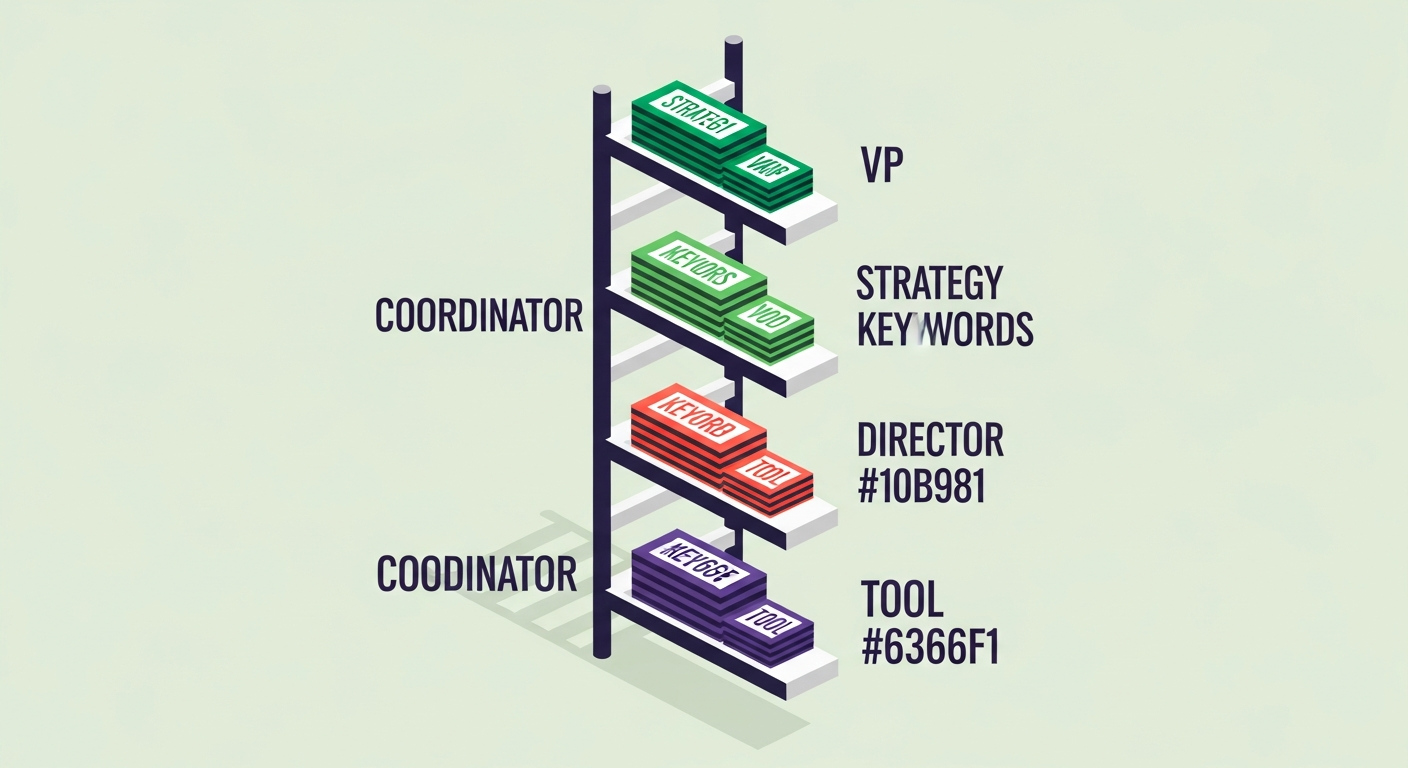
The keyword set that matters most depends on the role level, not just the channel. Using coordinator-level keywords on a director application signals misalignment in both directions.
Marketing Coordinator / Marketing Assistant:
Campaign coordination, asset management, content scheduling, social media scheduling, marketing operations, email marketing execution, reporting, event support, vendor coordination. Tools: HubSpot, Asana, Trello, Canva, Mailchimp, Monday.com. The emphasis is execution and coordination — focus on process and output keywords, not strategy-level terms.
Marketing Manager:
Go-to-market strategy, campaign strategy, budget management, marketing planning, brand management, cross-functional collaboration, vendor management, team leadership, demand generation. Tools: HubSpot or Salesforce, Google Analytics 4, project management platform of choice. ATS at this level looks for management-tier language: "led," "managed," "owned," "oversaw" — these signal seniority more effectively than any single tool name.
Content Marketing Manager:
Content strategy, editorial calendar, SEO content, content performance, organic traffic growth, long-form content, thought leadership, content distribution, editorial workflow. Tools: WordPress or CMS of choice, Ahrefs or SEMrush, Google Search Console, project management tool. Content roles increasingly require both strategy and SEO fluency — having both sets of keywords matters.
Digital Marketing Manager / Paid Media Specialist:
PPC management, paid social, programmatic advertising, ROAS, CAC, A/B testing, landing page optimization, attribution modeling, media planning and buying. Tools: Google Ads Manager, Meta Business Suite, LinkedIn Campaign Manager, GA4, Tableau or Looker. Paid roles are the most metric-driven — quantified results in bullets carry more weight here than in any other marketing track.
VP / Director of Marketing:
Demand generation, revenue marketing, GTM strategy, brand positioning, marketing budget ownership, P&L responsibility, board-level reporting, C-suite collaboration, category leadership, competitive positioning. At director-and-above, tool names take a back seat to outcomes: pipeline generated, revenue influenced, year-over-year growth percentages. The keywords shift from platform-specific to business-impact-specific.
For a detailed breakdown of how to build the skills section for your specific level, see our guide on skills to put on a resume.
The Marketing Keywords That Are Everywhere—and Why That's a Problem
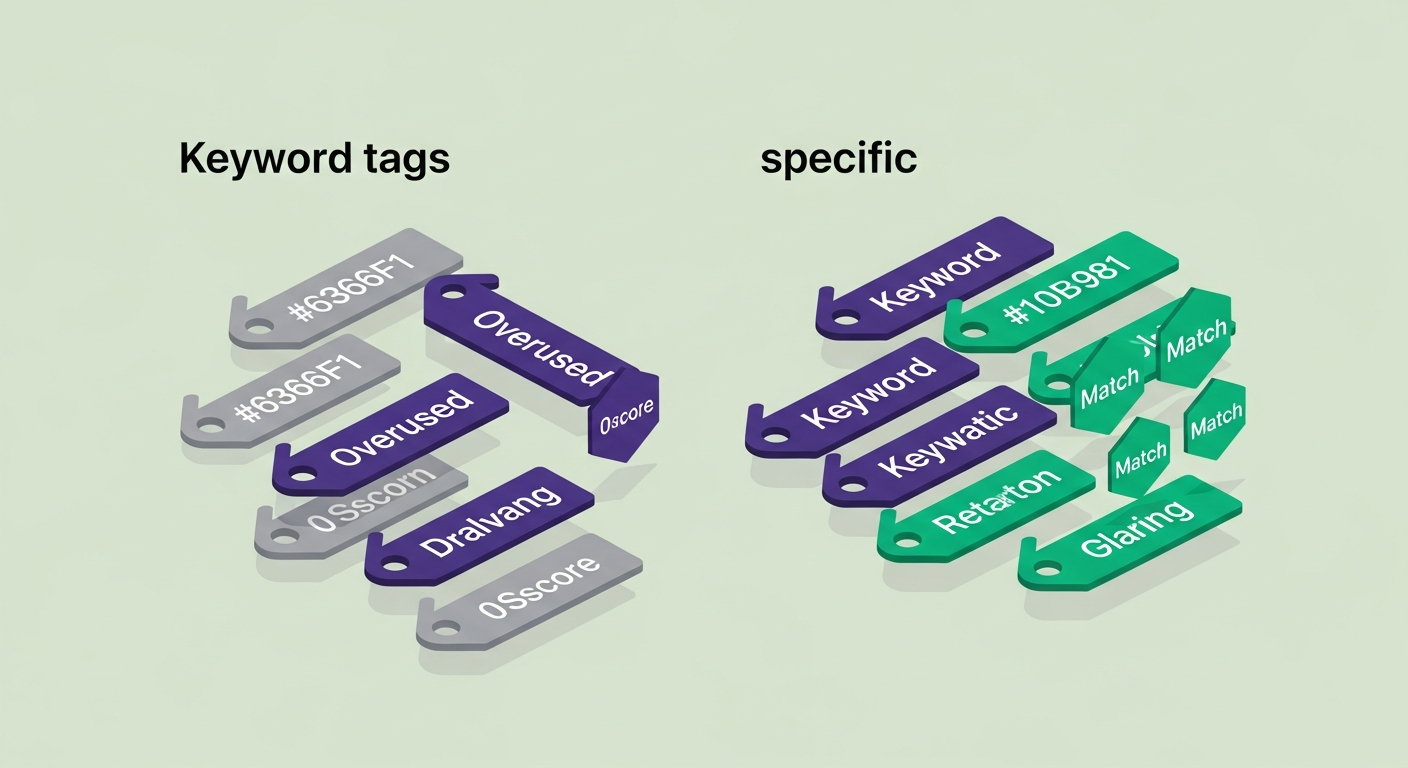
Some marketing keywords are so common on resumes that ATS can no longer use them to differentiate candidates. The algorithm still scores them — you need them, because the job description probably includes them. But when 200 of the 250 applicants have "digital marketing" and "content creation" on their resume, those terms produce no ranking difference among the 200. What moves one resume above another is the specific, narrower version of the same skill.
Terms that have reached saturation in marketing resumes:
- "Digital marketing" — present on virtually every marketing resume; scores a match but creates no separation
- "Brand awareness" — a business objective, not a skill; ATS mostly scores it against job descriptions that use the same phrase, which many don't
- "Content creation" — so broad it covers anything from Instagram captions to white papers to video scripts
- "Social media" — a channel family, not a platform skill
- "Customer engagement" — a metric category, not a measurable skill
- "Strategic thinker" — a self-assessment that scores zero against any job description's keyword list
- "Results-driven" — every candidate says this; it matches nothing specific
- "Creative" — same problem
The fix isn't removing these terms — it's not relying on them to carry your ranking. Replace category-level terms with specific sub-terms whenever the job description supports it:
- "Social media" → "LinkedIn Ads," "Instagram Reels content," "TikTok organic growth"
- "Content creation" → "long-form SEO blog content," "product landing pages," "email nurture sequence copywriting"
- "Brand awareness" → "brand positioning framework," "top-of-funnel campaign strategy," "share of voice tracking"
- "Analytics" → "Google Analytics 4," "Tableau dashboards," "multi-touch attribution modeling"
- "Digital marketing" → name the specific channels you own: "SEO, paid social, and email marketing"
This is where the 3× multiplier lives. Job seekers who tailor their resume to the specific language of each posting are 3× more likely to get an interview than those who submit a generic document, according to Jobscan's analysis of over one million resume scans. Generic marketing language gets you through the ATS filter if it matches. Specific language gets you through the filter and moves you up the ranking.
Soft skills in a skills section score nothing here either. "Team player," "strong communicator," and "collaborative" appear on almost every marketing resume. The algorithm can't use them to differentiate — so it doesn't. Prove soft skills in your bullets. Reserve the skills section for hard skills that produce exact-match points.
For guidance on how to check which specific terms you're missing for a given job description, see our resume AI checker guide.
How to Place Marketing Keywords for Maximum ATS Score
Which marketing keywords you include matters. Where you place them matters almost as much.
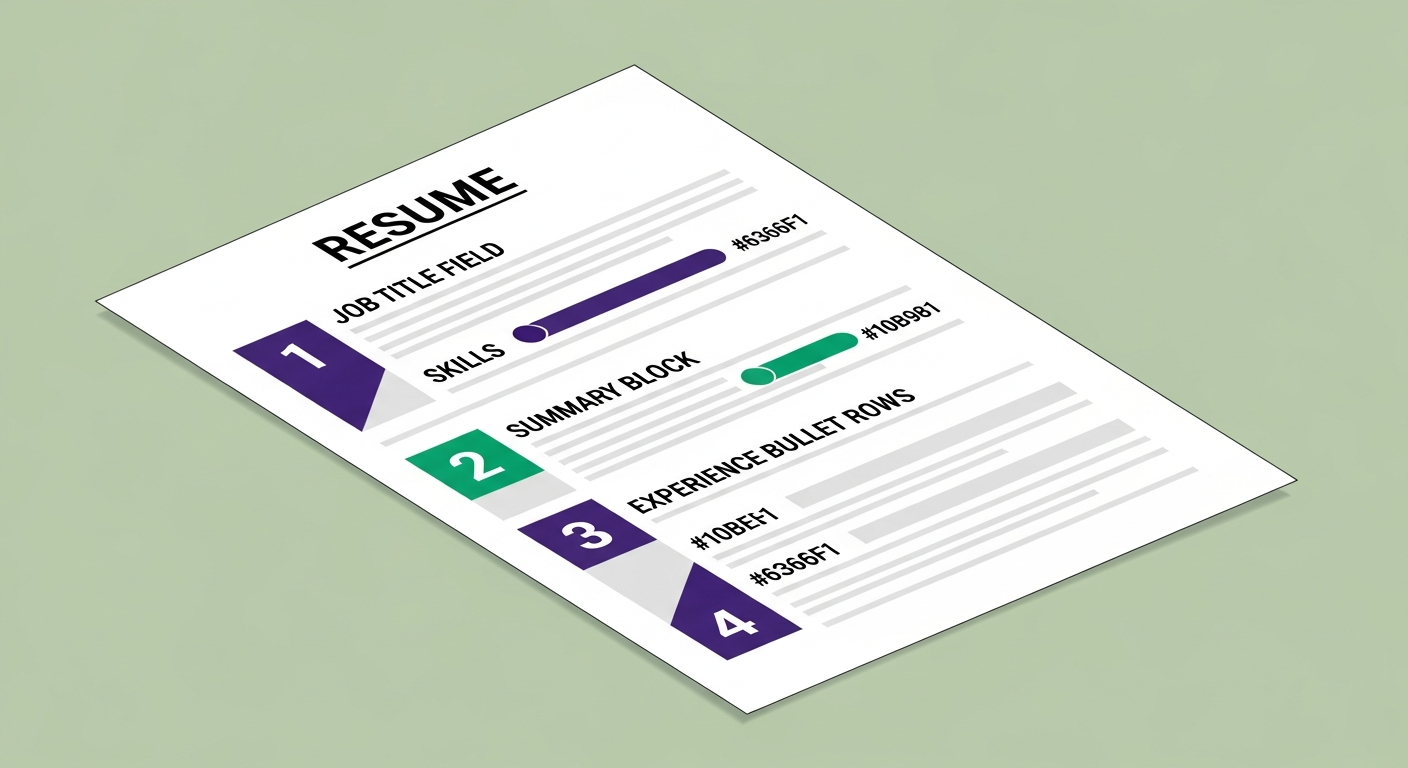
Priority placements, in order of ATS scoring weight:
1. Skills section
This is your primary keyword real estate. List 12–20 hard skills — exact tool names, channel terms, and metric abbreviations. No soft skills. ATS parsers score this section as a dedicated structured field. Keywords here score once independently and again when they appear elsewhere in the document.
2. Work experience bullets
Use exact keywords in context: "Managed HubSpot marketing automation workflows for six-channel lead nurture sequences" scores "HubSpot" and "marketing automation" in the experience field. Avoid vague bullets that describe categories rather than actions — "worked on digital marketing campaigns" gives the parser nothing specific to match.
3. Professional summary
The summary is parsed early in the ATS pass. Include 3–4 of the highest-priority keywords from the job description — especially job-title-level terms and the tools that appear most frequently in the posting. Keep it to 3–4 sentences.
4. Job titles
You can't change historical titles. But if your actual working title differed from your official title (both are common in startups), check your employment contract — some companies permit resume-title adjustments. If the job description says "Growth Marketing Manager" and your title was "Marketing Manager, Growth," that's worth noting in context.
The pattern that consistently scores highest: a keyword that appears in the skills section and in at least one work experience bullet scores higher than the same keyword appearing in only one section. ATS platforms weight frequency and placement together. Two mentions across two scored fields reinforces the match. One mention in one section does not.
The process, every time you apply:
- Read the job description and underline every tool name, channel, platform, metric, and methodology mentioned
- Cross-reference against your skills section — add the ones you have genuine experience with
- Rewrite at least two work experience bullets to incorporate the highest-priority terms from the posting
- Check that the professional summary mirrors the role's top 3–4 requirements
If you're applying to multiple marketing roles with different tool stacks — HubSpot-focused at one company, Salesforce at another — you need two versions of the resume. A single generic version will miss keyword matches at both.
The hardest marketing brief most marketers ever have to write is their own resume. The strategy is actually simple: read the job description, use its exact words, put them in the right places. The algorithm will take it from there.
Related from ATSFixer
Frequently Asked Questions
The best keywords are the ones in the specific job description you're applying to. In general, the highest-scoring marketing resume keywords are tool names (HubSpot, GA4, Salesforce, SEMrush), channel terms (SEO, PPC, email marketing, paid social), and metric abbreviations (ROAS, CAC, CTR, MQL). These score as exact-match hard skills and appear frequently across marketing job descriptions.

Jordan Marcus
Senior Career Strategist
Jordan has reviewed 4,000+ resumes and coached candidates into roles at Google, Stripe, and McKinsey. She writes about the mechanics of ATS and what actually gets people interviews.