On this page
- Why Executive Assistant Keywords Are a Different Beast
- The ATS Scores Some EA Keywords Zero — Here's Which
- Scheduling and Operations Keywords That Score Highest
- Communication and Documentation Keywords Most EAs Leave Off
- Technology and Software: List the Tools, Not the Category
- Keywords That Differentiate a Senior EA Resume
- Industry-Specific EA Keywords Change More Than You'd Expect
- Tech and Startup
- Finance and Banking
- Healthcare
- Legal
- Where You Put Keywords Matters as Much as Which Ones You Use
- The Skills Section
- The Summary Section
- Experience Bullets
- Frequently Asked Questions
Keywords for an executive assistant resume fall into four categories: scheduling and calendar management, communications and documentation, technology and tools, and role-level terms. Pick the wrong words — or phrase the right ones incorrectly — and the ATS filters you out before a recruiter opens your file.
(I've reviewed enough EA resumes to know that "multi-tasker" has never once helped anyone get an interview. It's on about 90% of them anyway. The algorithm is as tired of it as I am.)
Here's what actually scores, what doesn't, and where to put it.

Why Executive Assistant Keywords Are a Different Beast
Executive assistant is one of the broadest job titles in professional services. The role spans everything from managing a regional VP's calendar to running global logistics and drafting board communications for a C-suite executive at a Fortune 500. The job descriptions vary to match — and so do the ATS keyword profiles.
According to the U.S. Bureau of Labor Statistics, executive secretaries and executive administrative assistants handle complex scheduling, communications management, and administrative coordination at the highest organisational levels. The O*NET occupation profile for the role lists over 40 distinct skill requirements. The job descriptions companies actually post cluster around a subset of those — but which subset varies significantly by industry, seniority, and company size.
Three things follow from this that most EA keyword guides don't address:
- "Administrative assistant" and "executive assistant" are different keyword strings. Most ATS platforms treat them as distinct job titles with distinct skill weights. If the job description says "executive support" and your resume says "administrative support," those are not the same string to the parser — regardless of how equivalent the work was.
- Entry-level and senior EA keywords are not interchangeable. Entry-level postings emphasise basic scheduling, office management, and tool proficiency. Senior and C-suite postings add board meeting preparation, executive briefings, confidential project management, and global logistics. Using the wrong level's vocabulary — in either direction — hurts your score.
- The qualifying adjective in a phrase matters. "Calendar management" is a different keyword weight than "complex calendar management" on many platforms. Both can appear on your resume. The second matches a more specific requirement that often appears in senior EA postings and carries higher scoring weight on those job descriptions.
There's also an overlap trap worth naming: "executive assistant" and "personal assistant" are used interchangeably in conversation but have distinct profiles on most ATS platforms. If a posting says "executive assistant," your resume should say "executive assistant" — not "PA" or "personal assistant." The rule that applies throughout: mirror the exact language in each job description you're targeting, not your preferred terminology for the same work.
This is harder than it sounds, because most people have been using their own vocabulary for years. The ATS doesn't know what you prefer. It knows what the job description says.

The ATS Scores Some EA Keywords Zero — Here's Which
ATS systems extract structured data from your resume, run it against the job description, and weight keyword matches by category. Hard skills, tool names, and specific process terms score highest. Soft-skill adjectives sit at the bottom of the scoring hierarchy — in practice, near zero.
"Calendar management" is a scoreable keyword. "Detail-oriented" is not.
The synonym problem is where most EA resumes leave points on the table. A senior executive assistant applied for a role at a 600-person financial services company. The job description listed "stakeholder communication" as a required competency — across the opening paragraph, the responsibilities section, and the required qualifications. Her resume said "cross-functional collaboration" throughout. Same skill. The ATS scored it as absent. She changed three phrases in her resume, matching the job description's exact wording. She got the callback within a week.
(Same 11 years of experience. Different words. The algorithm literally cannot tell the difference between a career's worth of collaboration and zero experience — unless you use the right noun.)
This isn't about keyword stuffing. It's about precision. "Coordinated executive meetings" and "managed C-suite calendar" contain the same work. The second phrase scores because it mirrors the language EA job descriptions actually use. The first does not.
For EA roles specifically, the scoring tiers work like this:
Scores well:
- Named software and tools (Microsoft 365, SAP Concur, Salesforce, DocuSign)
- Role-specific process nouns (board meeting preparation, expense reporting, itinerary planning, travel coordination)
- Exact phrases pulled from the specific job description you're targeting
- Level-appropriate seniority terms (C-suite support, executive briefings, confidential project management)
Scores poorly or zero:
- Adjective clusters with no process context ("highly organized," "detail-oriented," "proactive," "multi-tasker")
- Generic professional language ("team player," "go-getter," "results-driven," "self-starter")
- Vague scope statements ("assisted with various executive tasks," "supported team needs," "handled administrative duties")
A 2021 Harvard Business School and Accenture study covering 8 million job postings found that 88% of executives acknowledged their ATS filtered out qualified candidates who should have moved forward. The system isn't looking for the best candidate — it's looking for the best-matching text. Understanding how ATS systems work mechanically helps here: most platforms weight both placement and frequency, meaning a keyword appearing in your skills section and in a work experience bullet scores higher than the same keyword mentioned once. The ATS doesn't just check whether a term is present — it checks how prominently you've featured it.

Scheduling and Operations Keywords That Score Highest
Calendar management is the most frequently appearing keyword in EA job descriptions, across every seniority level and industry. If it isn't in your skills section and in at least one work experience bullet, you're almost certainly scoring below the cut-off for the roles you're targeting.
These are the terms that score in this category:
| Subcategory | Keywords to use |
|---|---|
| Calendar management | calendar management, complex calendar management, executive scheduling, multi-timezone scheduling, calendar optimization, recurring meeting management |
| Travel coordination | travel coordination, international travel coordination, itinerary planning, global travel logistics, visa processing, hotel and flight booking, ground transportation coordination |
| Meetings and events | meeting coordination, meeting facilitation, conference planning, corporate event coordination, boardroom booking, venue coordination, all-hands meeting coordination |
| Operations | office management, budget management, expense reporting, expense management, vendor management, facilities coordination, records management, document management, supplies procurement |
A specificity note: "travel coordination" scores differently from "travel management" on many platforms, simply because "coordination" mirrors the most common phrasing in EA job descriptions. When in doubt, use the exact language from the specific posting you're targeting rather than your preferred phrasing.
The one that gets left off most consistently: expense reporting. It's unglamorous work, and EAs often skip it on their resume assuming everyone already knows they do it. The ATS does not know what you assume it knows. If you manage expense reports, say so.
On the operations side: "vendor management" and "budget management" carry significantly more weight than "office management" on most ATS platforms, because they describe more specific and verifiable competencies. If you've done both, list both with specificity. "Managed $40K quarterly operations budget" scores on "budget management" and adds the proof point that makes the keyword credible to the recruiter who reads past the filter.

Communication and Documentation Keywords Most EAs Leave Off
The communication category is where senior EA resumes separate from entry-level ones. If you've drafted correspondence on behalf of an executive — emails, memos, or presentations that went out under their name — there is a specific keyword for that work: "executive communications" or "executive correspondence." Most EAs do this. Most don't name it on their resume.
(It's not ghostwriting in the literary sense. But it is writing that represents someone else. Name it. The ATS scores it, and the recruiter recognises it as a distinct competency at the senior level.)
| Subcategory | Keywords to use |
|---|---|
| Executive communications | executive communications, executive correspondence, business correspondence, stakeholder communication, executive communications management, internal communications |
| Board and leadership support | board meeting preparation, board pack preparation, executive briefings, board presentations, meeting minutes, action item tracking, leadership team support |
| Documentation | document preparation, report preparation, presentation preparation, policy documentation, contract routing, information confidentiality, confidential document management |
| Information management | database management, CRM management, SharePoint administration, records management, document management systems, filing systems |
A note on confidentiality: most EA job descriptions include it, often as "maintain confidentiality" or "handle confidential information with discretion." Using the phrase explicitly on your resume — "managed confidential executive correspondence" or "maintained discretion with sensitive business matters" — hits both the keyword match and the unstated concern every executive has when hiring an assistant. It's the one soft-sounding phrase that actually carries weight because it describes a specific responsibility, not a personality trait.
The board meeting preparation cluster deserves its own attention for senior EAs. "Board meeting preparation" and "board pack preparation" are distinct keyword strings that appear frequently in C-suite EA job descriptions and almost never in entry-level postings. If you've produced board materials — not just set up the room, but compiled the documents — use both terms. They differentiate your experience in a way that "meeting coordination" doesn't capture.
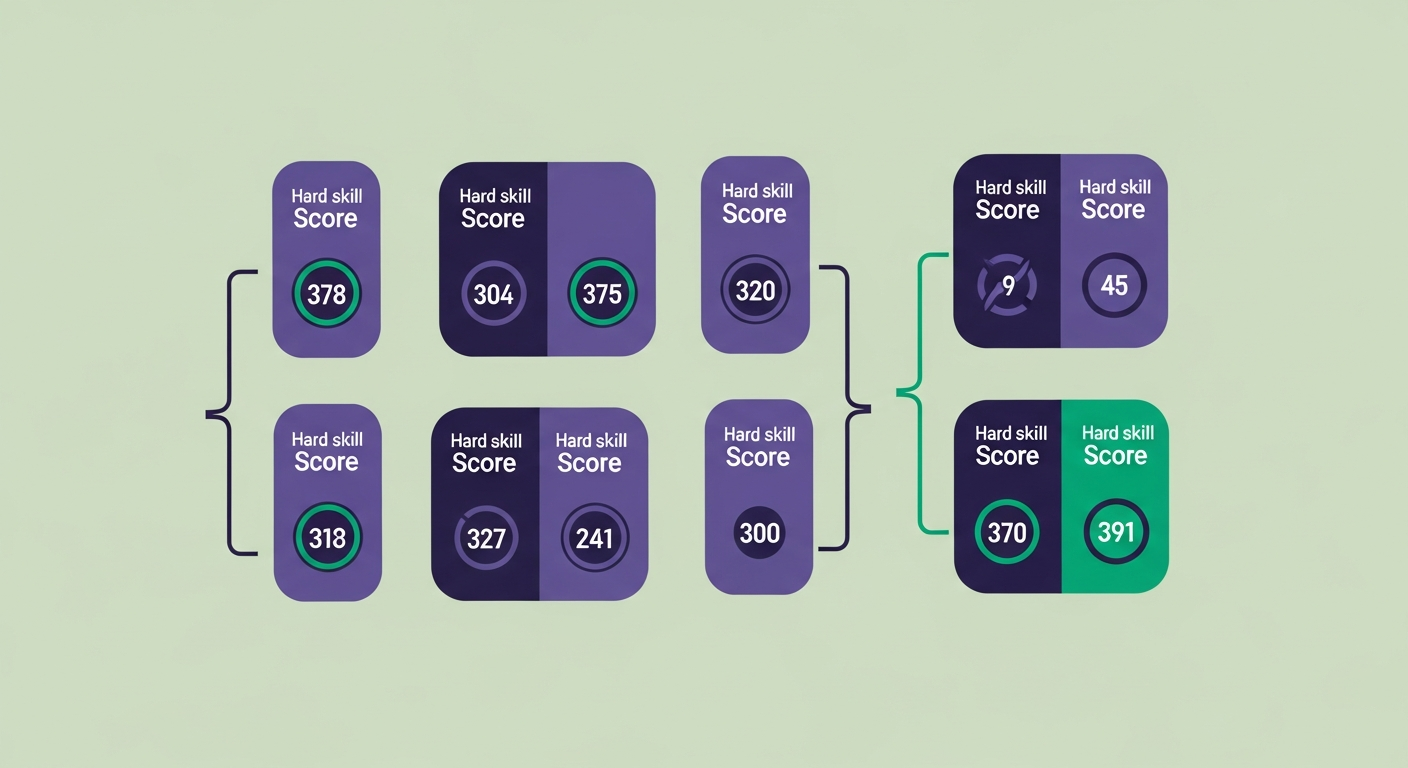
Free ATS Score Check
Your result looks like this —
get yours in 30 seconds.
Drag & drop your resume here
PDF or Word · max 10 MB
Results in under 30 seconds · no sign-up required
Technology and Software: List the Tools, Not the Category
Tool names are among the highest-scoring keyword types on ATS platforms, for one straightforward reason: they're unambiguous. "Microsoft 365" is either on your resume or it isn't. There's no synonym, no interpretation, no partial credit for a close approximation.
List every tool you actually use. Do not list tools you've barely touched. (Speaking from the vicariously uncomfortable experience of watching a candidate freeze when asked to walk through a Salesforce report view she'd listed as an "advanced" skill. The recruiter's expression told the whole story in about four seconds. The interview lasted eleven more minutes.)
| Category | Tools to list |
|---|---|
| Productivity and communication | Microsoft 365, Microsoft Office Suite, Word, Excel, PowerPoint, Outlook, Microsoft Teams, Google Workspace, Gmail, Google Calendar, Google Docs, Slack, Zoom |
| Scheduling and project management | Calendly, Doodle, Asana, Trello, Monday.com, Notion, Airtable |
| Finance and expense management | SAP Concur, Concur, Expensify, QuickBooks, NetSuite, Oracle |
| Document management | DocuSign, Adobe Acrobat, Adobe Sign, SharePoint, Dropbox, Box |
| CRM and business platforms | Salesforce, HubSpot, Microsoft Dynamics, Zoho CRM |
A few practical notes on tool keyword formatting:
- List the suite and the tools within it. "Microsoft Office Suite" and "Excel" are separate keyword strings on most parsers. Write "Microsoft Office Suite (Word, Excel, PowerPoint, Outlook)" to capture both the suite-level keyword and each tool individually.
- Include both full name and abbreviation. "SAP Concur" and "Concur" are sometimes treated as separate keyword hits. "Google Workspace" and "Google Calendar" are different strings. When space allows, list both.
- Don't claim proficiency levels you can't defend. "Proficient in Excel" and "advanced Excel (pivot tables, VLOOKUP, data validation)" mean different things, and interviewers at organisations that run on spreadsheets will test the second claim within the first ten minutes.
If you're unsure which tools belong in your skills section versus which are just contextual, the test is simple: could a recruiter or hiring manager ask you to demonstrate this tool on day one? If yes, list it. If it was a one-time encounter three years ago, leave it off.

Keywords That Differentiate a Senior EA Resume
If you're targeting a role supporting a CEO, CFO, COO, CHRO, or board-level executive, there's a layer of keywords specific to that level of work. Entry-level EA postings rarely include them. Senior EA postings almost always do. Using them accurately is a signal of relevant experience. Using them inaccurately — as resume padding — is a phone screen failure waiting to happen.
| Category | Keywords |
|---|---|
| C-suite and board support | C-suite support, C-level executive support, board meeting preparation, board pack preparation, corporate governance support, investor relations support, board presentations |
| Strategic and confidential support | executive briefings, confidential project management, strategic calendar management, executive decision support, confidential communications management |
| High-level stakeholder management | high-level stakeholder management, VIP coordination, global stakeholder communication, external relations management, board member liaison |
| Operations at scale | global travel logistics, multi-office coordination, executive search coordination, international team coordination, cross-functional project coordination |
The critical check: only use these terms if the work is accurate to your experience. "Board meeting preparation" on a resume where you coordinated the room logistics will fail the phone screen — the interviewer will ask what materials you produced, and the gap will be obvious. The keyword earns you the conversation. The honest experience keeps you in it.
A useful precision question: did you produce the materials, or did you handle logistics around them? "Compiled board packs including financial summaries, action item logs, and executive briefing documents" is different from "coordinated board meeting logistics and attendee scheduling." Both are real work. Both should be on your resume. The distinction is which keyword each bullet earns — and whether you can speak to it in detail.

Industry-Specific EA Keywords Change More Than You'd Expect
An EA role at a law firm and an EA role at a Series B tech startup have the same job title. They do not have the same keyword profile. The vocabulary of the environment shapes the vocabulary of the job description, which shapes the vocabulary of a well-matched resume.
Reading 5–10 job descriptions from your target industry before finalising your keyword list takes 30 minutes and typically changes your match score more than any other single step. Below is a breakdown of the terms that appear in industry-specific EA postings and rarely show up on generic EA resumes.
Tech and Startup
Tech companies often expect EAs to operate in product and engineering workflows, support fundraising logistics, and navigate tools that don't appear in traditional corporate environments:
- OKR tracking / OKR management
- Board deck preparation / board deck support
- Fundraising coordination / investor meeting coordination
- All-hands meeting coordination
- Sprint planning support
- Remote team coordination / distributed team management
- Notion, Linear, Jira, Airtable (tool fluency specific to tech orgs)
- Pitch deck coordination
- Headcount planning support
Finance and Banking
Finance EAs work in high-confidentiality environments with structured compliance cultures. The vocabulary reflects both the stakes and the formality:
- Investment committee support
- Board of directors support
- Regulatory compliance scheduling
- Investor communications management
- Deal team coordination
- NDA management / non-disclosure agreement coordination
- Roadshow coordination
- Financial reporting support
Healthcare
Healthcare adds regulatory and institutional vocabulary, particularly around patient privacy and research governance:
- HIPAA compliance awareness
- Clinical scheduling support
- IRB coordination
- Epic or Cerner (if applicable and accurate)
- Medical board support
- Grant coordination (research and academic institutions)
- Patient liaison support (clinical EA roles)
Legal
Legal EAs work with case management systems and billing platforms that don't appear in other industries — and ATS parsers at law firms are tuned to look for them:
- Legal billing platforms: Clio, Bill4Time, TimeSolv
- Case management support
- Court filing coordination
- Docket management
- Attorney support / partner support
- Conflict-check coordination
- e-Discovery support (coordination and logistics, not document review)
- Matter management
The intent is not to add vocabulary you can't explain in an interview. It's to recognise that "travel coordination" in a finance firm means roadshows, investor meetings, and compliance approvals — while at a tech company it means executive offsites and conference logistics. The underlying skill is the same. The keyword used in the job description is not. Use the industry's vocabulary, not a generic version of it.
Where You Put Keywords Matters as Much as Which Ones You Use
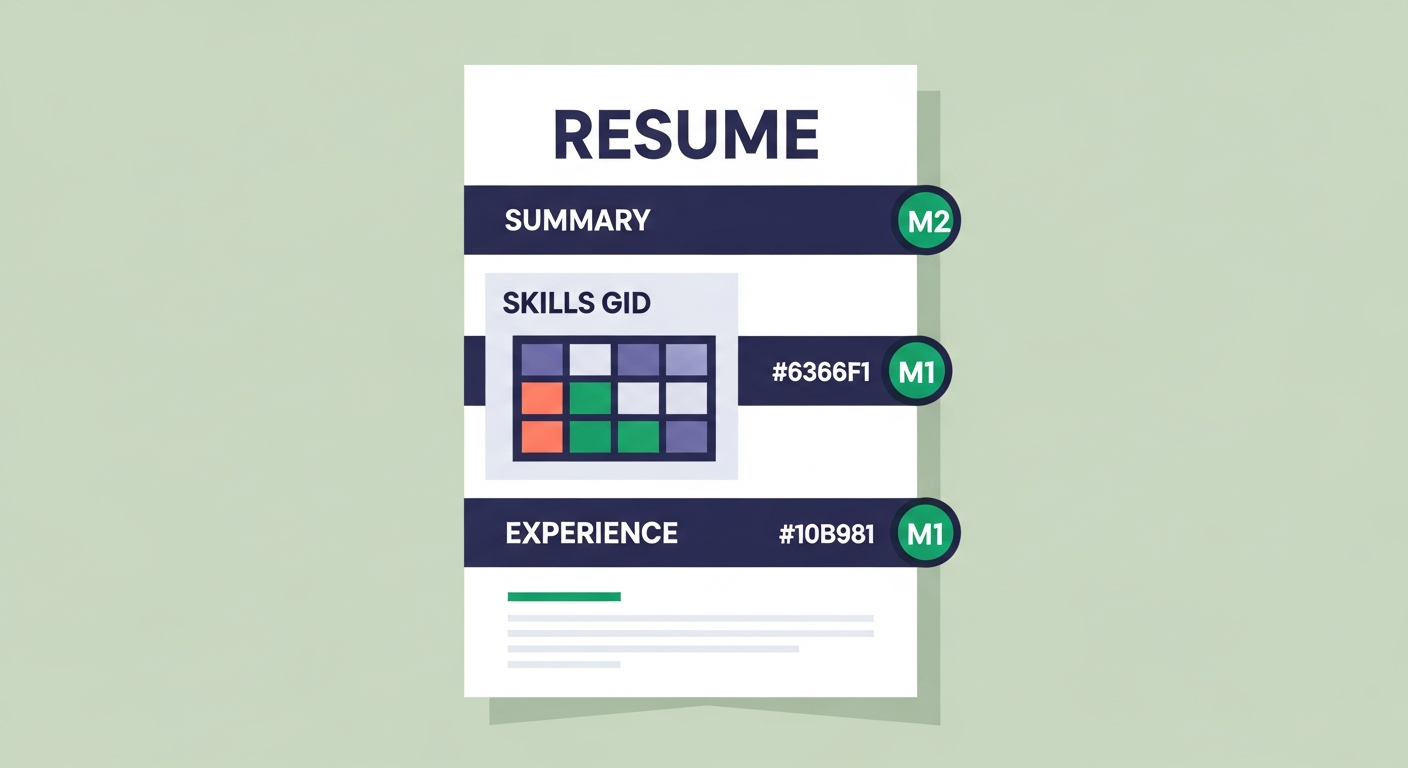
Having the right keywords gets you halfway there. Where they appear determines the scoring weight the ATS assigns them. Most EA resumes get the keywords approximately right and the placement wrong — which is why a resume with strong experience still scores below the threshold without keyword placement work.
The Skills Section
The skills section is the highest-scoring placement on an EA resume. Most ATS platforms parse it as a structured data field — not just scanned in a full-text pass, but extracted as a separate, dedicated input. Resumes with a dedicated skills section score 10–15 points higher on ATS screening than equivalent resumes without one, per ATSFixer internal data. That margin alone is often the difference between appearing in the top 15 results — where recruiters actually read — and not.
Format it simply: one or two columns, no prose, hard skills only. "Team player" does not belong here. Neither does "Microsoft Office" if you mean Word, Excel, and Outlook — break it down to the specific tools. The skills section is not a personality statement. It's a keyword delivery mechanism, and it works best when it's clean.
If you're uncertain which skills belong on your resume versus which to cut, the test is: would a recruiter ask you to demonstrate this in an interview? Hard skills that answer yes belong in the section. Soft skills and self-descriptions belong in your bullet points, proved through specific outcomes.
The Summary Section
Your professional summary is one of the first sections an ATS parser processes, and keywords placed there count toward your overall match score. Include 3–5 specific terms from the target job description, woven into natural sentences.
"Executive assistant with 9 years of C-suite calendar management, board meeting preparation, and confidential communications management" contains three scoreable keywords and reads sensibly to a human. "Dynamic and results-driven professional with a passion for supporting executive teams and exceptional organizational skills" contains zero scoreable keywords and makes recruiters wince slightly.
Keep summaries to 2–3 sentences. The goal is keyword density plus human readability — not a comprehensive biography. The recruiter who gets past the ATS filter will read it in 7.4 seconds, per the Ladders eye-tracking study (2018).
Experience Bullets
This is where keywords get proved. "Managed complex calendar for CEO of 300-person financial services firm, coordinating across 12 time zones and four direct reports" does two things simultaneously: it scores on "complex calendar management" and "C-suite support" in the full-text scan, and it gives a recruiter enough context to assess the scope of the work.
The rule: every keyword in your skills section should appear in at least one bullet in your experience section. Keywords without proof are unverifiable claims. Recruiters who get past the ATS filter will ask about anything prominent in the skills section — which means your bullets are also your interview preparation material.
The underlying principle, backed by numbers: job seekers who tailor their resume to each job description are 3× more likely to get an interview, per Jobscan's analysis of 1M+ resume scans (2022). For EA roles, tailoring means swapping in the exact phrases from each job description rather than using your preferred terminology for the same work. It takes 20 minutes per application. The return on that 20 minutes is measurable.
One honest note before you start optimising: if you're applying to companies with fewer than 50 employees, they may not use an ATS at all. Most small organisations don't. In those cases, keyword density matters less than a clear, straightforward document that explains what you did and for whom. ATSFixer will tell you where your EA resume stands against a specific job description. If the company is too small to run an ATS, a clean, honest document is the more important variable.
You've now read a more thorough guide to EA resume keywords than most executive assistants have. The algorithm will not appreciate the effort. The recruiter on the other side of the filter will, when your resume appears in the top 15 instead of being quietly filed under "not a match."
Related from ATSFixer
Frequently Asked Questions
Calendar management, travel coordination, executive support, meeting coordination, and expense reporting appear most frequently in EA job descriptions. Add the specific software tools you actually use — Microsoft 365, SAP Concur, Google Workspace — and the exact phrases from the specific job description you're targeting. Tool names are among the highest-scoring keyword types on any ATS platform.

Jordan Marcus
Senior Career Strategist
Jordan has reviewed 4,000+ resumes and coached candidates into roles at Google, Stripe, and McKinsey. She writes about the mechanics of ATS and what actually gets people interviews.