On this page
- When to Follow Up on a Job Application
- How to Write a Follow-Up Email That Gets a Response
- Follow-Up Email Templates for Every Scenario
- The ATS Problem That Makes Most Follow-Ups Pointless
- How Many Times to Follow Up (and When to Stop)
- When Following Up Won't Help — and What to Do Instead
- Frequently Asked Questions
Following up on a job application is one of those things everyone intends to do and approximately 70% of job seekers never actually do. The inbox stays quiet. The job listing disappears from the company careers page. By day 12, you've applied to six more roles and quietly accepted that the first one was a wash. (The first one probably wasn't a wash. It's probably sitting in a queue.)
Here is how to follow up on a job application: wait 5–7 business days after applying, send one short email — three sentences, not three paragraphs — and stop after two attempts. That is the complete answer for most situations.
Here is the part most guides do not include: if your resume was filtered out by the ATS before a human saw it, following up connects you with a recruiter who has no active record of your application. The right move is to fix the resume before you send the email. More on that below — but first, the mechanics.
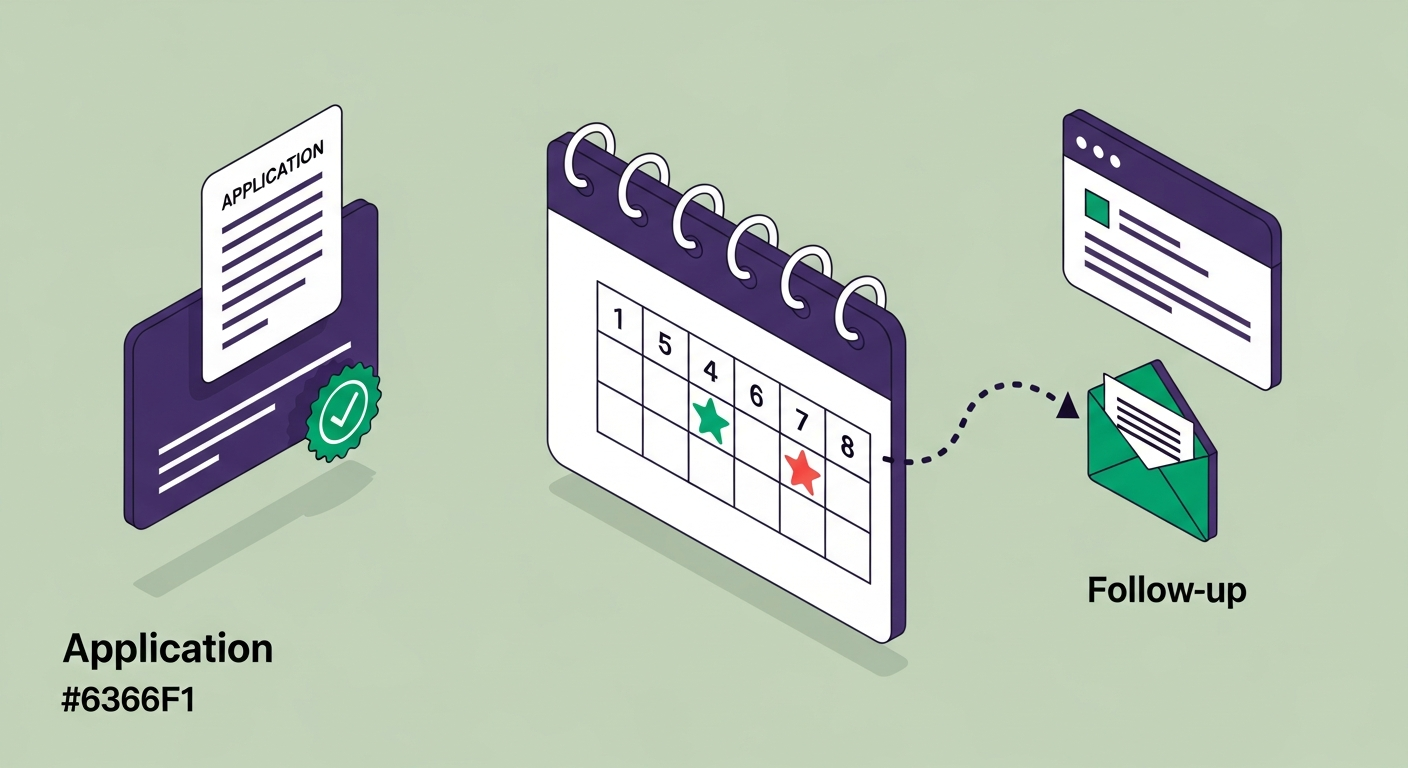
When to Follow Up on a Job Application
Five to seven business days after submitting your application. That is the standard window — enough time for the role to have been processed, not so long that the hiring team has moved on. One calendar week, roughly.
A few variations that change the timing:
If the posting listed a specific application deadline, wait until after that date has passed. Before the deadline closes, the hiring team is collecting applications, not reviewing them. Following up before the closing date is the equivalent of asking for the restaurant bill mid-appetiser — technically possible, but reads the room wrong.
If you submitted through an online portal and received an auto-confirmation email, that message came from the ATS, not a recruiter. It confirms your application was received by the system — not that it was seen by a human. Wait the full week before following up.
If the listing said "no calls", that means phone calls. A brief, professional email is generally acceptable unless the posting explicitly said "no inquiries" or "no follow-up of any kind."
If the role has been posted for 30 or more days, follow up sooner rather than later. Long-open postings fall into two categories: positions that have not yet found the right candidate (your resume may still be in play) or listings that were never updated after the role went internal. A follow-up email surfaces which situation you're actually dealing with.
How to Write a Follow-Up Email That Gets a Response
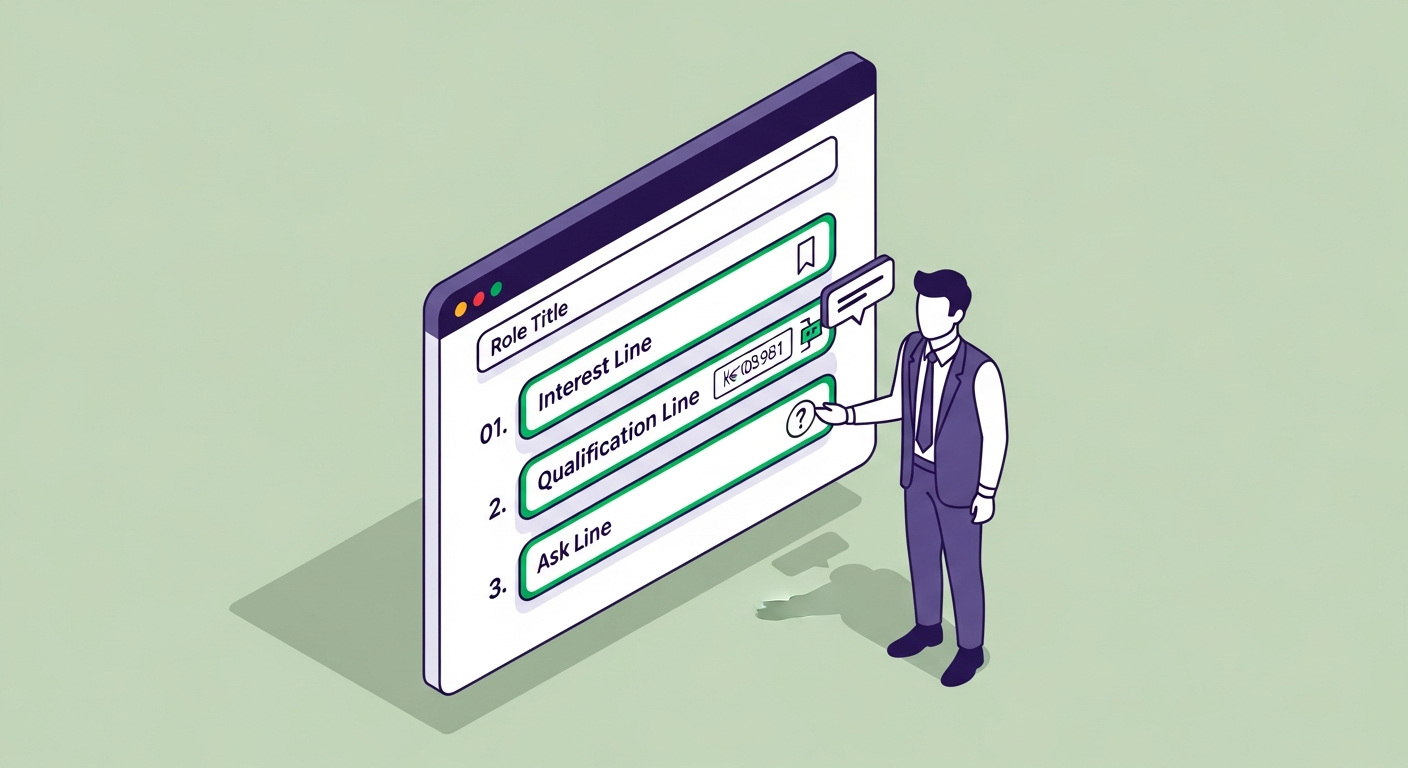
Three sentences. That is the ceiling. A follow-up email is not a second cover letter — it is a short check-in that signals continued interest without forcing the recruiter to process another 400 words they did not ask for.
The structure:
1. Your continued interest. One sentence that identifies the role and confirms you are still in. "I applied for the [Job Title] role on [date] and wanted to follow up to confirm my continued interest." This is not exciting copy. It's not supposed to be. It orients the reader immediately.
2. One specific qualification. Pick one concrete point of alignment between your background and what the role needs. Not "I believe my experience makes me a strong fit" — that is filler. Something like: "My background in [specific skill], specifically [concrete example or metric], seems like a direct match for what the team is working on." One sentence.
3. A single ask. The most common is: "Please let me know if there is anything additional you need from me." It is low-pressure and gives the recruiter an easy path to respond. You can also ask about timeline if the silence has gone longer than expected.
What not to include: an apology for following up, the phrase "I know you're very busy" (they do know that, and it does not accelerate anything), a request for "any feedback" (recruiters at the application stage are not career coaches), or your entire resume pasted into the email body. Give them the shortest path to a yes.
Subject line: functional over clever. "Following up — [Job Title] application, [Your Name]" is perfectly sufficient. Recruiters often manage 10–20 open roles simultaneously; a clear subject line helps them locate your original application in their inbox quickly.
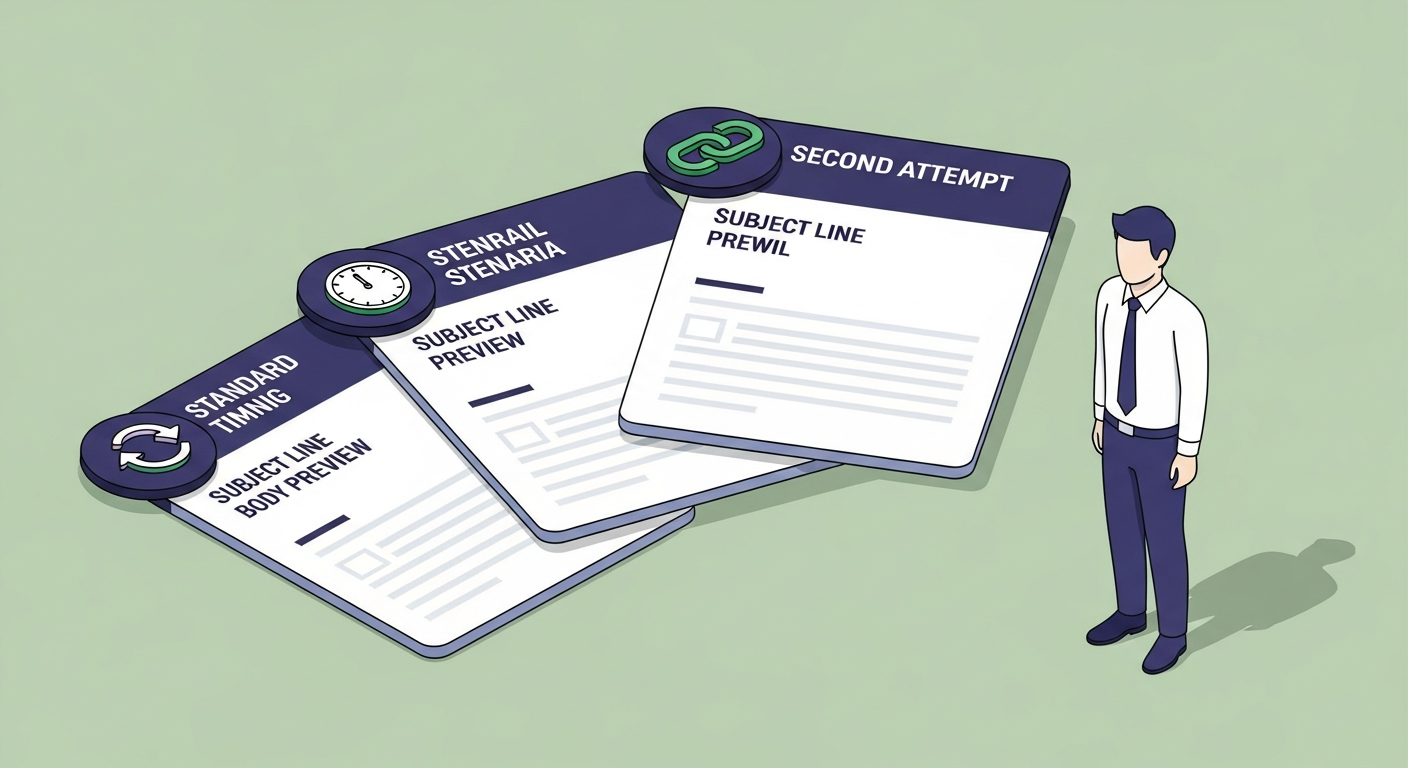
Follow-Up Email Templates for Every Scenario
These are working templates, not placeholder examples with fifteen square-bracketed fields. Adapt them — change the role name and the specific qualification — but keep the structure.
Standard follow-up (one week after applying)
Subject: Following up — [Job Title] application, [Your Name]
Hi [Name] / Hi [Company Name] Hiring Team,
I applied for the [Job Title] role on [date] and wanted to follow up to confirm my continued interest. My background in [specific skill] — in particular [brief concrete example] — seems like a direct match for what the team is working on.
Please let me know if there is anything additional you need from my end.
Best,
[Your Name] | [Phone]
When you have a referral connection
Subject: Following up — [Job Title] application (referred by [Name])
Hi [Name],
[Referral's name] suggested I follow up directly after I applied for the [Job Title] position on [date]. My experience in [most relevant qualification] aligns closely with what [referral] described as the team's current priorities.
Happy to send additional materials if helpful.
Best,
[Your Name] | [Phone]
Second follow-up (no response after the first)
Subject: Second follow-up — [Job Title] application, [Your Name]
Hi [Name / Hiring Team],
I sent a follow-up on [date] regarding my application for [Job Title]. I understand hiring timelines vary and I remain interested in the role.
If the position has moved in a different direction, I would appreciate knowing so I can focus my search accordingly — no pressure either way.
Best,
[Your Name] | [Phone]
The phrasing in the second template — "if the position has moved in a different direction" — does something specific. It gives the team an easy off-ramp, which makes them more likely to respond. Nobody enjoys ghosting candidates. They are doing it because there is no obvious way to close the loop cleanly. Give them one.
Free ATS Score Check
Your result looks like this —
get yours in 30 seconds.
Drag & drop your resume here
PDF or Word · max 10 MB
Results in under 30 seconds · no sign-up required
The ATS Problem That Makes Most Follow-Ups Pointless
None of the advice above helps if your resume was filtered out before a human saw it — and according to Jobscan, 75% of resumes are rejected by ATS before a recruiter reads them. That is not an edge case. That is the baseline for every application sent to a company using enterprise hiring software.
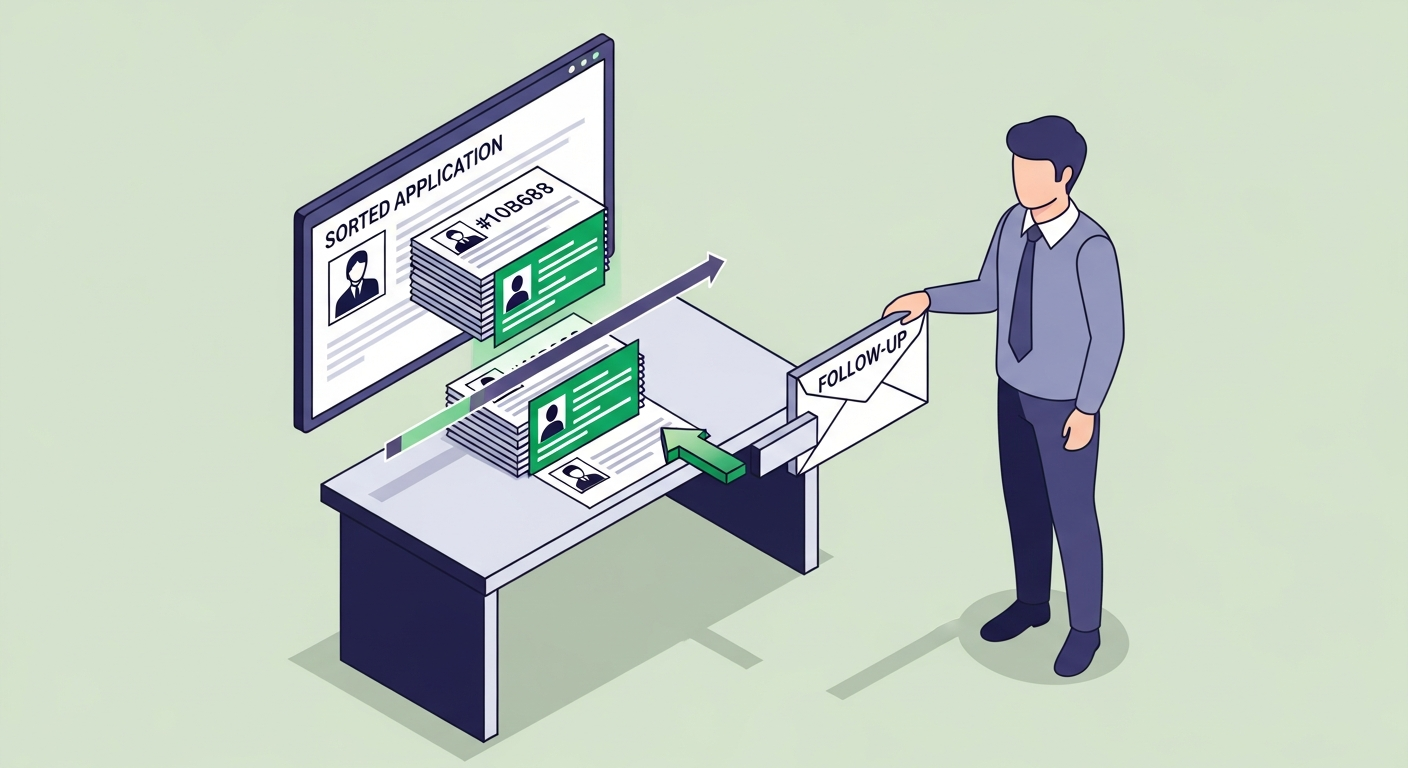
Your resume does not land in a recruiter's inbox. It goes into a ranked list. The recruiter reads from the top. If your resume scored below the threshold, it was never opened.
A recruiter at a 400-person company described her standard process publicly on LinkedIn: she opens Greenhouse, sorts candidates by ATS score, and reads the top 15 profiles. Her informal cutoff is around 65/100. Anyone below that score is never clicked — not because she decided they were unqualified, but because the pile above the line already has more qualified candidates than she has interview slots for. The algorithm sorted everyone before she touched her keyboard.
When you send a follow-up email in that scenario, you are asking a recruiter to manually search for someone their system ranked below the cut line. It puts them in an awkward position: they have no active record of your application in their normal workflow, and responding to your email requires extra work they were not expecting to do. This is not a reason to give up on the role. It is a reason to fix the resume first — then follow up.
Before you follow up on any application that has not received a response, run your resume through ATSFixer. Paste in the job description, get your score, and see exactly where you are losing points. If you are below 65, the follow-up email is the second problem. The first is getting into the active pile. ATSFixer users see an average improvement of +31 points after one adaptation. Fix the score — then send the email. You will be following up on a resume that is now in someone's queue, not one that is sitting below the threshold.
If you want to understand more about how ATS systems filter candidates before your application reaches a human, that is worth reading before your next application.
How Many Times to Follow Up (and When to Stop)
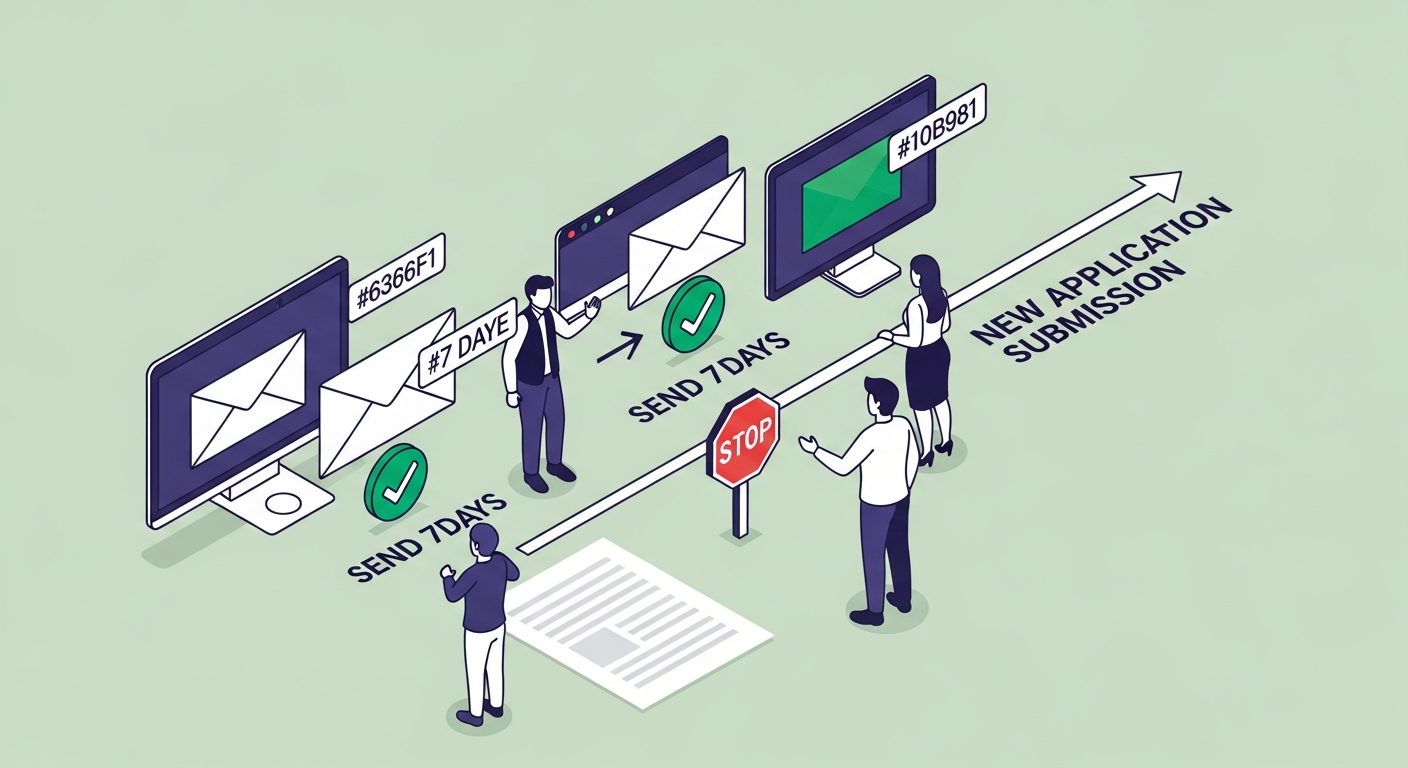
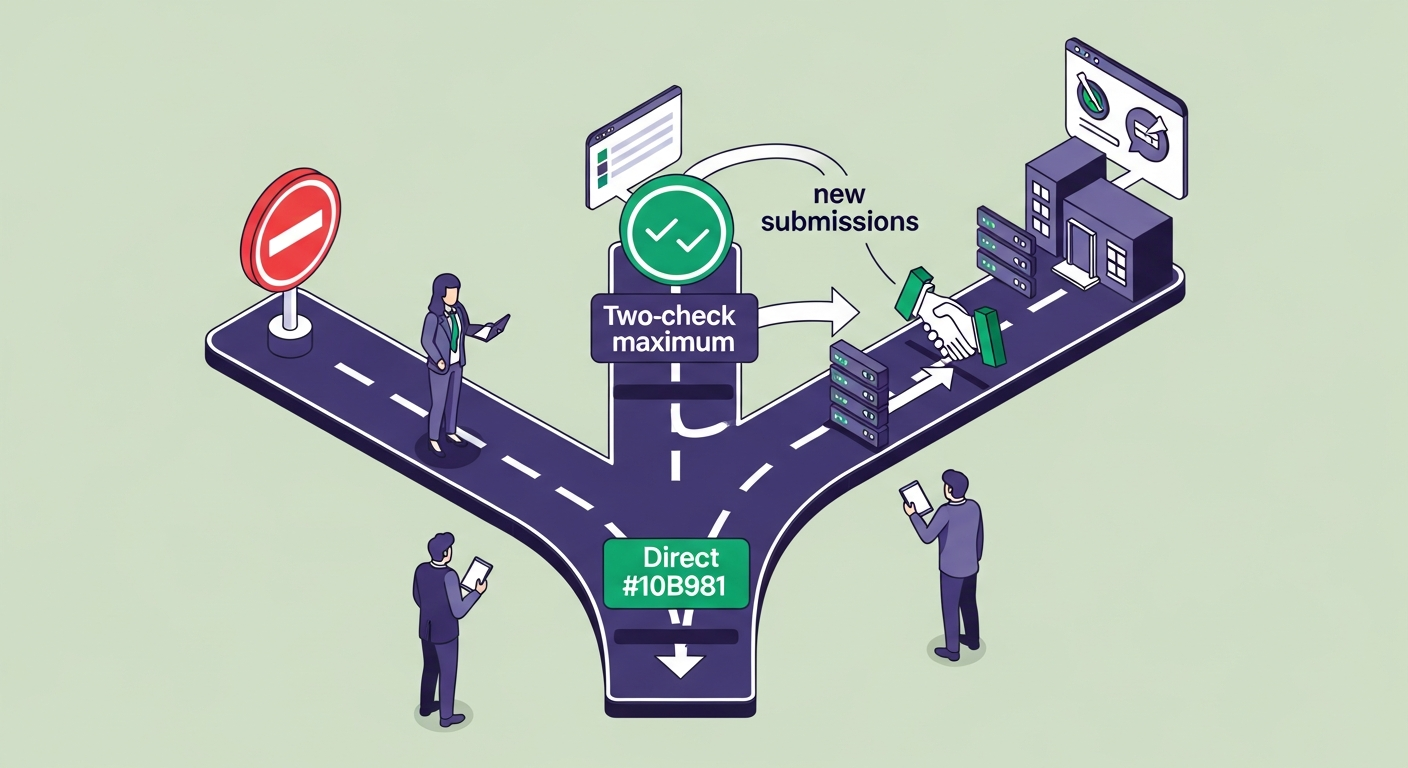
Twice. That is the maximum. One initial follow-up at 5–7 business days after applying, one second follow-up at 5–7 business days after the first if you have heard nothing. After two attempts, stop.
Continuing past two attempts does not improve your odds — and it does risk leaving a lasting negative impression at a company you may want to apply to again in two years. Hiring managers remember applicants who crossed the line into persistent. (The line is further than most people think, but two emails with no response is definitely past it.)
One exception: if you receive a partial response — something like "we're still reviewing applications" or "we'll be in touch shortly" — that resets the clock. They have acknowledged you. Wait another 1–2 weeks before considering another follow-up, if at all. Partial confirmation that the process is active is enough to let you refocus your energy elsewhere without anxiety.
On timing: job seekers who are unemployed and running a full-time search should be submitting 15–25 applications per week. At that pace, no single company's silence should be the primary focus of your mental bandwidth. Keep the pipeline moving. Follow up on everything. Move on from anything that has hit two attempts without a response.
The average time-to-hire in the U.S. is 44 days, per SHRM's 2023 research. Silence at day 7 is normal. You are sitting in a queue — not being ignored. Keep applying while you wait.
When Following Up Won't Help — and What to Do Instead
Following up is appropriate for most corporate roles at mid-to-large companies using ATS software. There are a few situations where it is not worth doing — or where doing it will actively make things worse.
When the listing explicitly says "no inquiries": This means no inquiries. Some high-volume roles — logistics, retail operations, manufacturing — receive hundreds of applications per day and have no bandwidth for individual follow-up management. Following up anyway does not demonstrate initiative; it demonstrates that you did not read the posting. These are not usually the same companies that later tell you initiative was the deciding factor in their hiring decision.
When you have already followed up twice: The silence is an answer. Move on.
When the company has fewer than 50 employees: Companies this size often do not use an ATS at all. Your resume goes directly to a human inbox, which means keyword optimisation in your resume matters less and overall clarity matters more. A follow-up phone call is often more effective than an email here — but still wait a full week.
When the role was posted 90 or more days ago: At this point, the role is on hold, filled internally, or the listing was never removed. A follow-up is unlikely to produce results. If you are still interested in the company, apply when a fresh role opens.
Honestly: ten tailored applications will outperform fifty generic ones. Jobscan's analysis of over 1 million resume scans found that job seekers who tailor their resume to each posting are 3× more likely to get an interview. If you are spending time composing follow-up emails before you have fixed the core issues in your resume, you are optimising the wrong end of the funnel. Fix the document. Check your ATS score. Then follow up. In that order — every time.
You read an entire article about follow-up email timing. That level of patience with a tedious process probably shows up in your work too. Useful when the recruiter eventually opens your application — significantly more likely once you have run it through ATSFixer first.
Frequently Asked Questions
Related from ATSFixer
Frequently Asked Questions
Wait 5–7 business days after submitting your application — roughly one calendar week. Any earlier reads as impatient; any later and the hiring team may have already moved forward with other candidates. If the posting listed a specific application deadline, wait until after that date has passed before reaching out.

Jordan Marcus
Senior Career Strategist
Jordan has reviewed 4,000+ resumes and coached candidates into roles at Google, Stripe, and McKinsey. She writes about the mechanics of ATS and what actually gets people interviews.