On this page
- Why Most Resumes Don't Stand Out
- The Algorithm Sees Your Resume Before Any Human Does
- How to Make a Resume Stand Out to an ATS
- Use the Exact Language from the Job Description
- Use a Format the Parser Can Actually Read
- What Actually Makes a Resume Stand Out to a Recruiter
- The Summary: Two Sentences That Do the Heavy Lifting
- Quantify Your Achievements: The Fastest Way to Rise in the Stack
- How to Make a Resume Stand Out with No Experience
- When This Advice Doesn't Apply
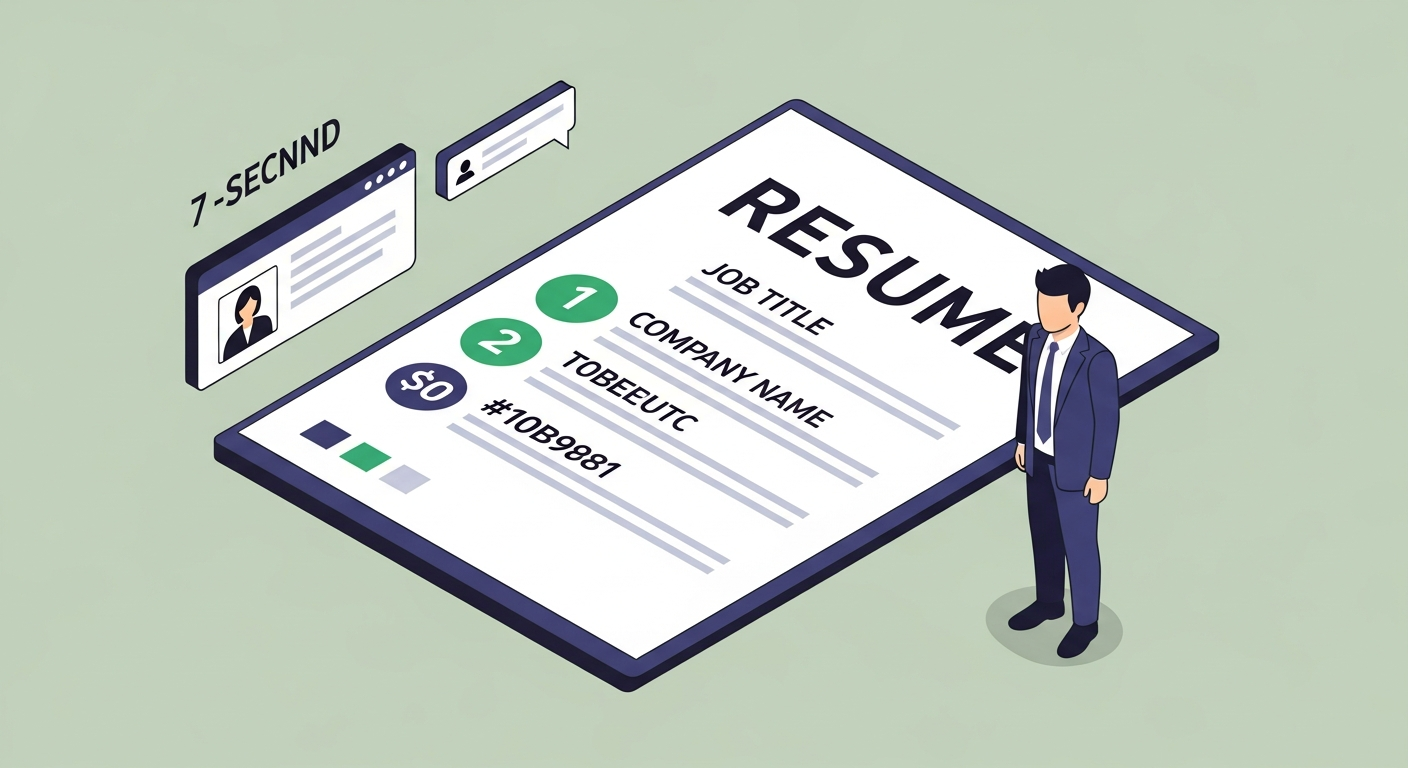
There are two audiences a resume has to impress. The first doesn't care about your qualifications — it checks whether you used the right words in the right places. The second has 7.4 seconds. Neither is especially forgiving, and they want completely different things from your document.
To make a resume stand out, you need to clear both filters in order. According to Jobscan, 75% of resumes are rejected by applicant tracking software before a recruiter ever reads them. So before your resume can stand out to a human, it has to pass a machine. Most "how to stand out" advice skips that part entirely.
This guide covers both — in order.
Why Most Resumes Don't Stand Out (and It's Not the Qualifications)
A job seeker spent two weeks sending the same resume to 27 different postings. Zero callbacks. In week three, she tailored her resume to a single job description — matched the exact phrases, restructured her skills section, removed the two-column layout. Three interview requests came back in four days. Same experience. Different document.
That's the pattern behind most resume problems. The qualifications are usually fine. The format, the language, and the keyword choices are what kill the application before it reaches anyone with the authority to hire.
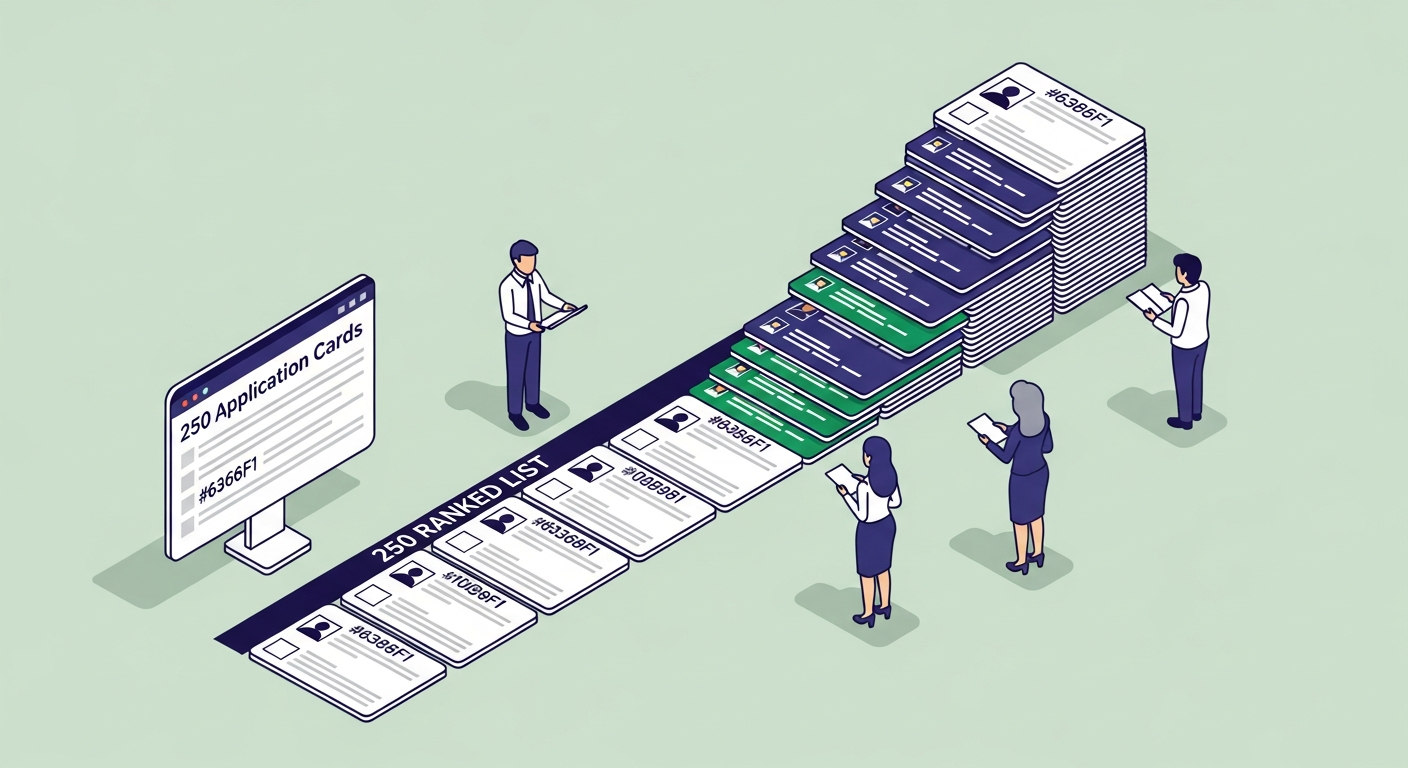
The average corporate job opening receives 250 applications, according to Glassdoor research. Of those, the recruiter spends an average of 7.4 seconds on an initial scan — per the Ladders eye-tracking study — and typically reviews the top candidates sorted by ATS score. Not all 250. The top 10 or 15. If your resume didn't score high enough to make that shortlist, no one ever opened it.
Standing out means getting into that top tier. Getting into the top tier is a keyword and formatting problem, not a qualifications problem. Which is good news, because keywords and formatting are things you can actually fix in an afternoon.
The Algorithm Sees Your Resume Before Any Human Does
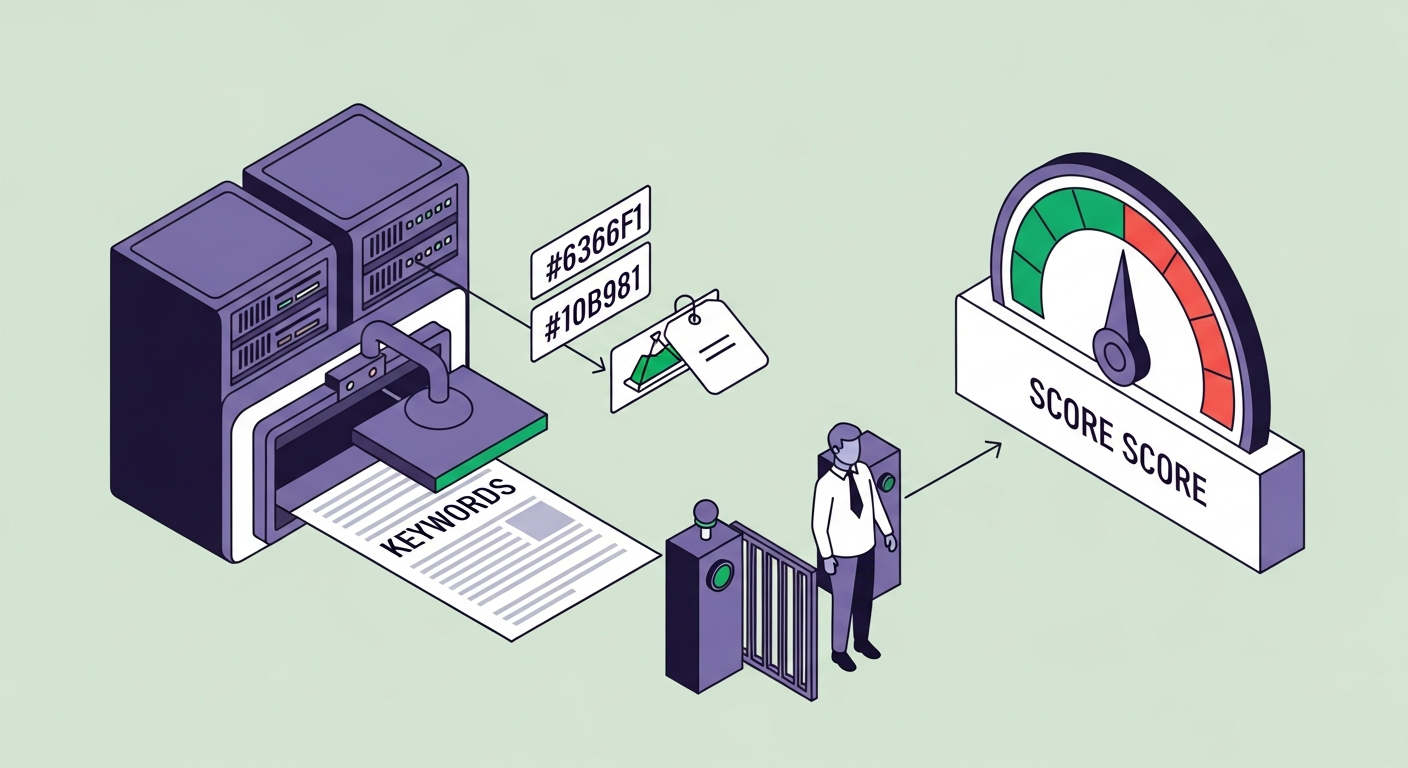
98% of Fortune 500 companies use an ATS to filter applicants, according to Jobscan's 2023 survey of HR professionals. The system parses your resume, extracts structured data fields, scores it against the job description's requirements, and ranks you against every other applicant. The recruiter opens the sorted queue and starts at the top. Anyone below the cutoff score is never opened — not because the recruiter decided they were unqualified, but because the list is too long to read past position 15.
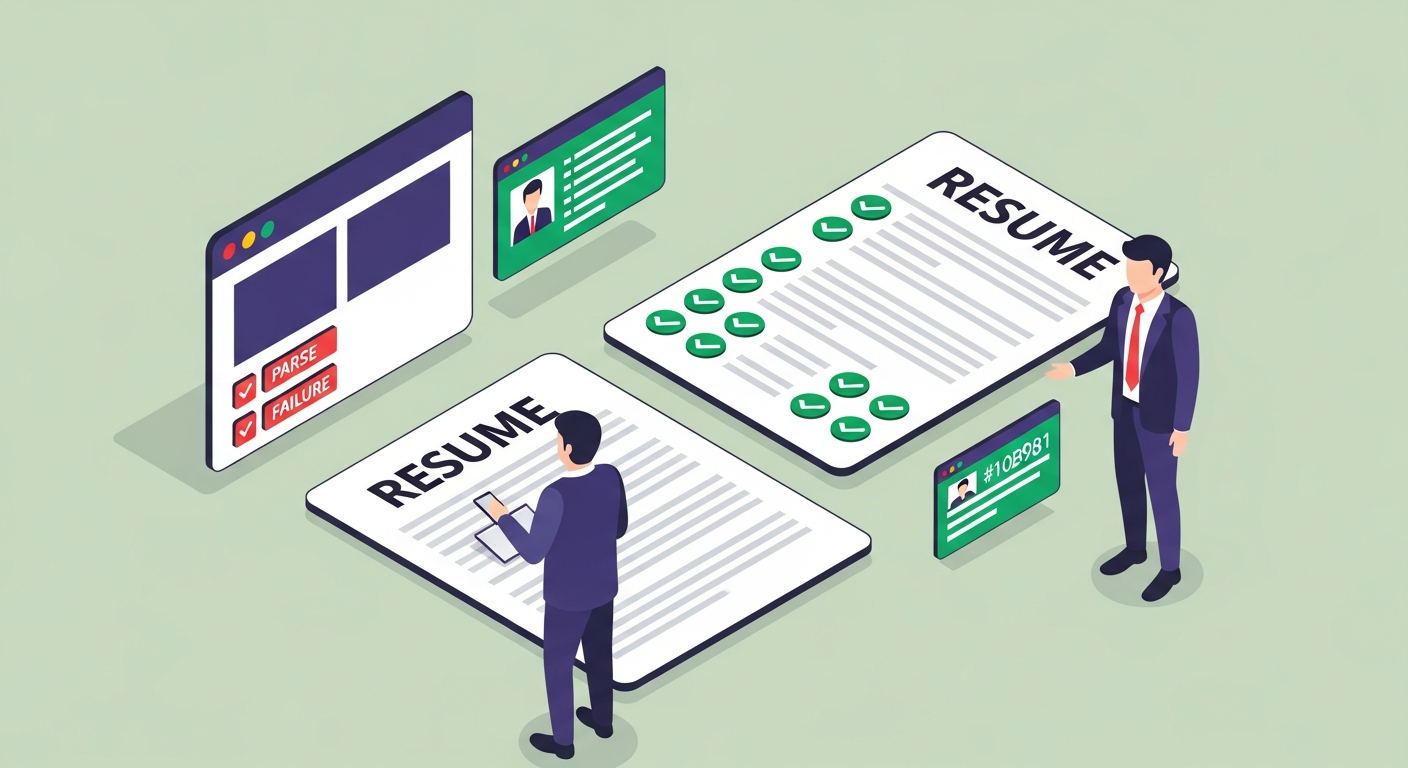
The problem with chasing "stand out" advice without understanding this first is that most of it targets the human reader. A unique design. A bold, creative objective. A visually impressive format. These elements either score poorly on ATS or break the parser entirely. ATSFixer data shows that 1 in 3 resumes submitted through Workday are corrupted during parsing because of columns, tables, or text boxes. A beautifully designed resume can score 12 out of 100. (The one in the screenshot. Which no one will see, because it never passed the algorithm.)
A software engineer with 8 years of experience submitted exactly this kind of resume — two columns, skills sidebar, clean layout. His ATS score: 12/100. The parser merged his sidebar skills with his job titles into unreadable text. He appeared, to the algorithm, like a nearly blank document. He switched to single-column. Same content, no experience changes. New score: 71. Interview request the same week.
The resume that looks most impressive as a design artifact is often the resume most likely to get you filtered. That's not a design problem. That's a sequencing problem. Fix the algorithm first, then worry about visual polish.
How to Make a Resume Stand Out to an ATS
ATS scoring comes down to three things: whether your resume contains the right keywords, whether those keywords appear in the right fields, and whether the document can actually be parsed. Get all three right and you pass most filters.
Use the Exact Language from the Job Description
ATS systems score on exact-match keyword logic. "Cross-functional collaboration" does not score the same as "stakeholder management," even if they describe identical work. A project manager applied for a role that listed "stakeholder communication" throughout the job description. Her resume said "cross-functional collaboration." Same meaning. Zero match. She changed two phrases and got the interview.
The process is mechanical, not creative: open the job description, identify the 10–15 hard-skill terms and role-specific phrases it uses, and check which of those appear on your resume. Where your experience matches but you used different language, update it to the posting's exact phrasing. Where the required skill genuinely doesn't exist in your background, don't invent it — the recruiter will notice at the interview. What you can do is make sure everything that is true about your background uses the exact vocabulary of the posting.
Job seekers who tailor their resume to each application are 3× more likely to get an interview, according to Jobscan's analysis of over one million resume scans. That's not a marginal gain — it's the difference between the algorithm surfacing you and burying you.
The full guide on keywords for your resume covers how to read any job description for the terms that matter most and where to place them for maximum scoring impact.
Use a Format the Parser Can Actually Read
63% of recruiters say they reject resumes due to formatting issues, not content, according to a TopResume survey. Most of those formatting issues are invisible from the candidate's side — until you understand how a parser works.
Parsers read text in a single left-to-right pass. A two-column layout gets read as one merged line — skills from the left column combined with job titles from the right, producing garbled text. Tables and text boxes either get skipped or corrupted. Headers and footers often disappear entirely. The system can't extract your employer names, job titles, or dates of employment.
The fix is straightforward: single-column layout, standard section labels ("Work Experience" — not "Where I've Made My Mark"), no graphics, no text boxes. For a breakdown of which format elements break which ATS platform, the scannable resume guide covers every major system.
What Actually Makes a Resume Stand Out to a Recruiter
Once you're through the ATS filter, a different set of rules applies. The recruiter isn't scoring you on keyword frequency. She's scanning for three things in roughly 7.4 seconds: a clear job title, a recognizable employer, and evidence of results — numbers, scope, specific outcomes.
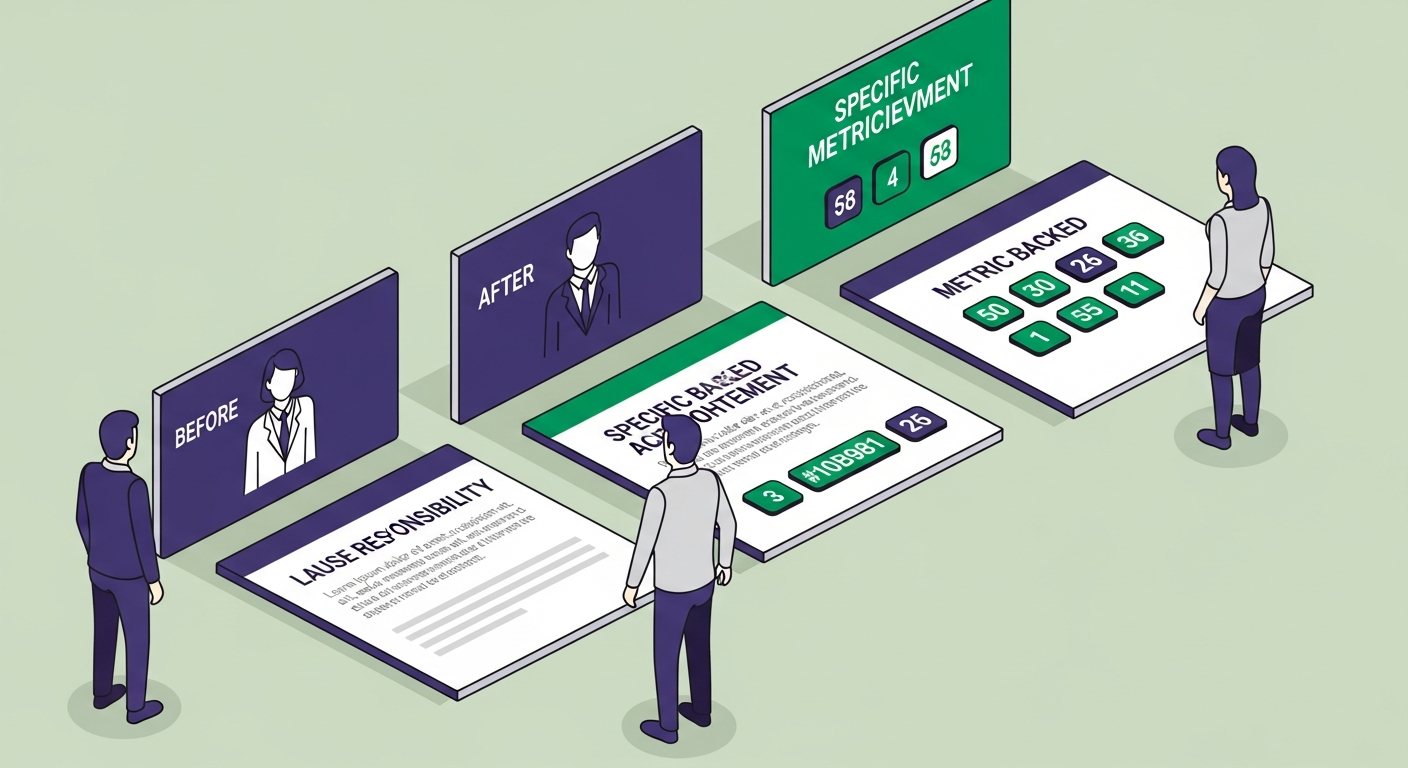
Most resumes fail this test not because the experience isn't there, but because the relevant information is buried. Bullets describe responsibilities ("managed team of engineers") rather than outcomes ("cut deployment time by 40% leading a team of 4"). The top third of the page — which is what a recruiter sees first during a quick scan — is occupied by boilerplate phrases that tell her nothing she couldn't have assumed from the application itself.
What actually catches a recruiter's eye:
- Numbers in bullets. "Increased sales by 23%" beats "responsible for revenue growth" every time. Numbers are visually distinct and carry proof rather than claim.
- A clean hierarchy. Company name, role title, and dates should be scannable in under two seconds — not buried mid-line inside a creative format.
- A relevant job title near the top. If your last role was "Senior Product Manager" and the posting is for "Senior Product Manager," that word match near the top of page one counts.
- A skills section with specific hard skills. "Team player" scores nothing on ATS and impresses no recruiter. A section listing specific tools, platforms, certifications, and methodologies does both.
Resumes with a dedicated skills section score an average of 10–15 points higher on ATS screening than equivalent resumes without one, according to ATSFixer internal data. It's the part of the resume that does double duty — scoring in the ATS's structured parsing pass and showing the recruiter technical depth at a glance. The skills section guide covers what to include, what to leave out, and why "detail-oriented" is the resume equivalent of listing "breathes regularly" under your qualifications.
Free ATS Score Check
Your result looks like this —
get yours in 30 seconds.
Drag & drop your resume here
PDF or Word · max 10 MB
Results in under 30 seconds · no sign-up required
The Summary: Two Sentences That Do the Heavy Lifting
The professional summary at the top of your resume is the first thing a recruiter actually reads after the initial scan. It's not where you introduce yourself. It's where you answer, immediately, whether you're what they're looking for. (Two sentences. I know how that sounds. I also know that most four-line summaries are just one sentence repeated four times with different adjectives.)
"Seeking a challenging role where I can leverage my skills and grow professionally" appears on approximately 40% of resumes. It has never once helped anyone get a job. I've reviewed over 4,000 resumes. If it had worked even once, I think someone would have mentioned it. It tells the recruiter nothing that she couldn't have assumed from the fact that you applied.
A summary that works leads with your specific function and years of experience, names the primary skill or domain the role requires, and ends with a concrete output or differentiator.
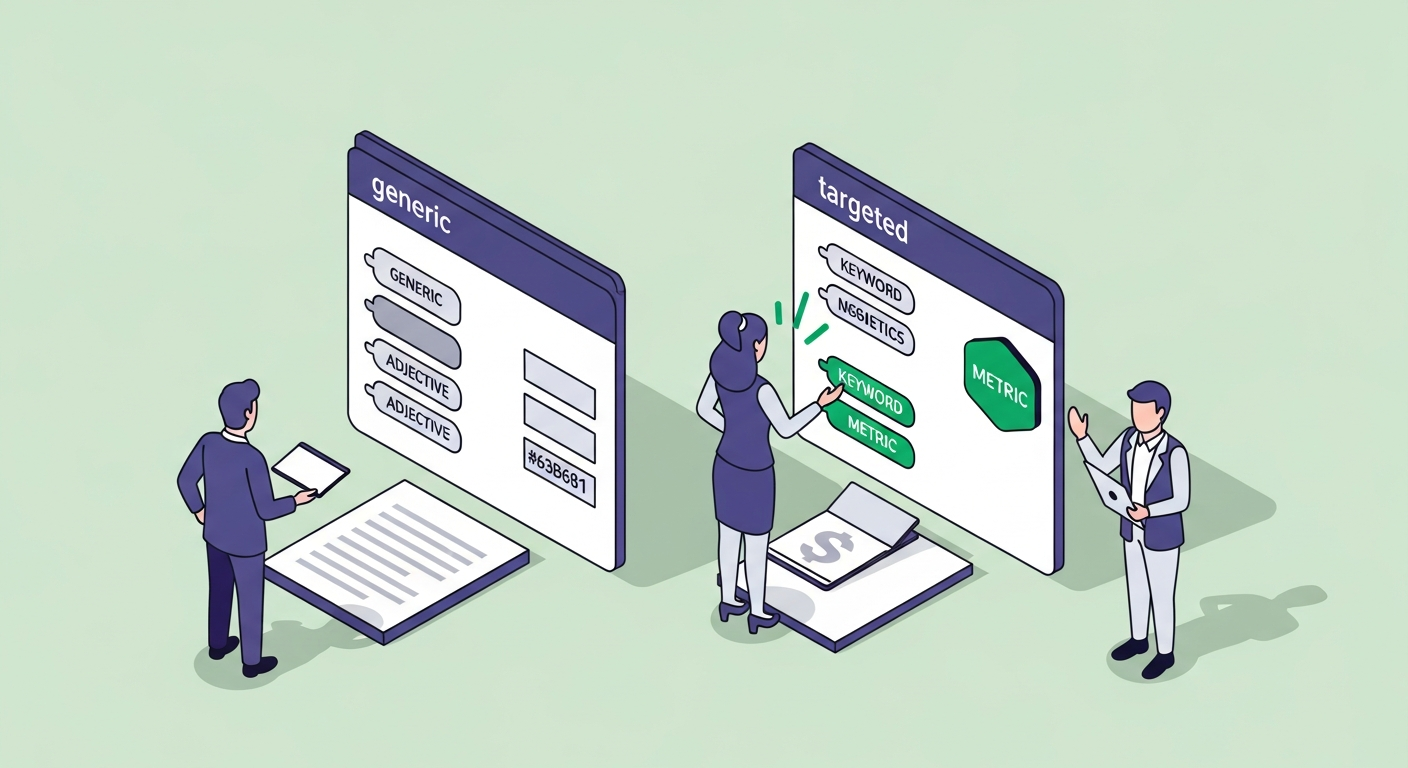
Generic: "Results-driven marketing professional seeking a position where I can contribute my skills to a dynamic team."
Targeted: "B2B demand generation marketer, 6 years in SaaS. Built pipeline programs contributing $4M in qualified pipeline in 2024. Specialized in HubSpot, ABM, and LinkedIn Ads."
The second version contains the primary keyword from the job description, a measurable outcome, and specific tools. The recruiter who posted "B2B Demand Generation Manager" reads it and knows, in eight words, whether to keep going. That's the only job the summary has.
For 15 specific templates organized by role type, see the resume introduction examples post. The targeted summary section covers how to mirror exact-match keywords from any job posting without making the summary read like a keyword list wrapped in a sentence.
Quantify Your Achievements: The Fastest Way to Rise in the Stack
Every recruiter has read "improved operational efficiency" on a resume. What does that mean? Improved by 3%? Cut costs by $200,000? Reduced a process from three days to four hours? "Efficiency" is a claim. The number is the proof. The claim and the proof are not interchangeable.
Quantification doesn't require access to confidential company data. It requires remembering specifics: how many people on the team, how large the budget, how many accounts or clients, what the before-and-after looked like. Most of that lives in memory or in old performance reviews. The exercise is less "gathering data" and more "writing down what you already know."
A simple structure: [Action verb] + [what you did] + [measured result].
- "Managed client relationships" → "Managed 18 enterprise accounts with combined ARR of $2.4M and 96% annual retention"
- "Led product launches" → "Led 3 product launches in 18 months, generating $1.2M in first-year revenue"
- "Improved customer satisfaction" → "Reduced average ticket resolution time from 48 hours to 6 hours, lifting CSAT score from 3.2 to 4.6"
If you genuinely can't quantify something, the next best move is specificity. "Recruited top engineering talent" is vague. "Sourced and closed 11 mid-level software engineers in Q3 2025 via LinkedIn Recruiter and employee referrals" is specific enough to be credible without a number.
Quantified bullets also work twice: they stand out visually during the recruiter's 7.4-second scan, and they often contain specific terminology (CSAT, ARR, ROAS, MQL) that appears in job descriptions and scores as a keyword match. It's one of the rare cases in resume writing where optimizing for the algorithm and optimizing for the human produce the same edit.
The resume improvement guide covers the full checklist — including the fastest way to audit which bullets on your current resume are responsibility-based rather than achievement-based and convert them.
How to Make a Resume Stand Out with No Experience
If you're early in your career, the keyword and quantification advice above still applies — it just applies to different material. No formal work experience doesn't mean no relevant content. It means you have to be more deliberate about what you surface and where you put it.
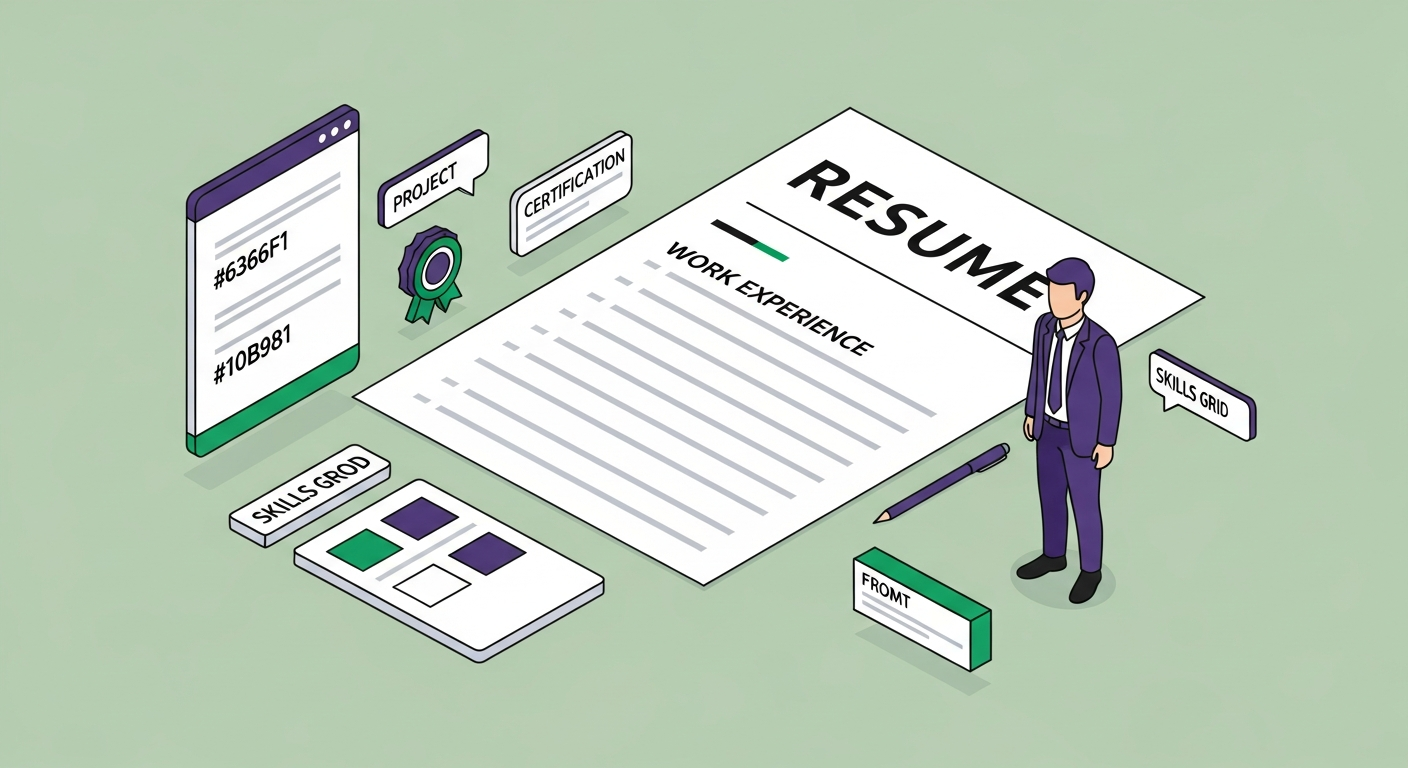
What fills the experience section when you don't have traditional jobs:
- Projects and coursework. List these like jobs — project name, one-line description, what you built or contributed, and a measurable outcome where possible. GitHub links and live demos belong here.
- Internships and part-time roles. Treat these exactly like full-time positions. ATS doesn't downweight them based on hours worked or whether they paid minimum wage.
- Volunteer work. Include it only when it's genuinely relevant to the role. "Managed social media for a nonprofit" belongs on a marketing resume. Sorted donations at a food bank during the holidays does not.
- Certifications. Google Data Analytics, AWS Cloud Practitioner, HubSpot Inbound Marketing — these are parseable, searchable, and signal specific technical competency without needing a job title behind them.
The skills section carries the most weight when you lack formal experience. List tools you actually know by their exact name — not "CRM software" but "Salesforce" or "HubSpot." Skip soft skills entirely. "Communication" and "problem-solving" appear on every resume and score zero with ATS. Use that space for hard skills that produce exact-match points against job description language.
For a section-by-section structure built specifically for first-time resumes — including what to write in a summary when you don't have a job title to lead with — the no experience resume guide covers all of it.

When This Advice Doesn't Apply (Honest Caveats)
Not every application runs through an ATS. Most companies with fewer than 50 employees don't use one. A small agency, a local firm, a startup in its first year — applications often land directly in someone's inbox, and a human reads it first. In those cases, keyword density matters less. The cover letter carries more weight. A personal referral outweighs almost everything else.
70% of jobs are filled before they're publicly posted, according to LinkedIn Economic Graph research — filled through networks before a posting appears on a job board. For referral-based applications even at large companies, if someone with organizational pull submits your name to a hiring manager directly, ATS ranking becomes less determinative. The manager may pull your resume from queue regardless of score.
Honestly, there are two different games here. ATSFixer is the right tool for applications at medium-to-large companies with structured hiring pipelines — technology firms, financial institutions, healthcare systems, professional services companies with 200+ employees where Greenhouse, Workday, or Taleo sits between you and the recruiter. For the small-company, referral-first tier, write an honest, clear document and have someone put your name in front of the right person. That version wins on its own terms.
If you're applying through a portal to a company that uses ATS and want to know exactly where your resume stands before you hit submit, run it through ATSFixer. Our testing shows we're accurate to within ±3 points of real ATS output, and the average improvement after one ATSFixer adaptation is +31 points. That's usually enough to move from the bottom half of the sorted queue into the top 15 the recruiter actually reads.
You made it to the end of an article about resume algorithms. That level of patience already puts you ahead of most applicants. Now go fix the two-column layout.
Related from ATSFixer
Frequently Asked Questions
Three things catch a recruiter's eye in the 7.4 seconds they spend on an initial review: a relevant job title, recognizable employers, and numbered achievements in bullets. Beyond those signals, a targeted professional summary that mirrors the job description language and a skills section listing specific hard skills do more to create separation than any design choice.

Jordan Marcus
Senior Career Strategist
Jordan has reviewed 4,000+ resumes and coached candidates into roles at Google, Stripe, and McKinsey. She writes about the mechanics of ATS and what actually gets people interviews.