On this page
- What Hard Skills Are (and Why the Definition Matters)
- Hard Skills vs. Soft Skills: Why One Scores and the Other Doesn't
- Hard Skills Examples by Industry
- Technology & Software Development
- Data & Analytics
- Marketing & Growth
- Finance & Accounting
- Healthcare
- Project Management
- Legal
- Sales & Customer Service
- How to List Hard Skills on a Resume
- Hard Skills That Sound Right but Score Zero
- How Many Hard Skills Should You List
Hard skills examples are easy to find. Every career site has a list — Python, SQL, Google Analytics, project management. Most lists are correct. The problem is that none of them explain how ATS parsers actually evaluate what you write.
75% of resumes are rejected by automated systems before a human reads them. The filter isn't evaluating your qualifications. It's matching specific phrases against a job description. "Python" scores. "Programming experience with scripting languages" scores zero on most platforms — even if Python is exactly what you have and exactly what they want.
This post covers what hard skills examples look like on a resume that passes ATS, which specific terms to use instead of generic equivalents, and the pattern that makes most candidates bleed keyword points without realizing it. For a deeper look at how ATS systems score your resume, that's covered separately — this one focuses specifically on how hard skills are evaluated.

What Hard Skills Are (and Why the Definition Matters for Your Score)
Hard skills are specific, measurable abilities acquired through training, education, or experience. They're teachable, verifiable, and — critically — they're what ATS parsers are designed to extract and score.
Software proficiency. Programming languages. Certifications. Industry tools. Foreign language fluency. Financial modeling. Medical coding. These are hard skills. They have names. They appear in job descriptions. They show up in skills sections. They score.
Soft skills are the other category. Communication. Problem-solving. Leadership. Time management. These aren't hard skills, and the distinction matters enormously when your resume hits an ATS before a human sees it.
ATS platforms like Greenhouse, Workday, and Taleo parse your resume into structured fields. The "skills" field is fed to a keyword match engine that looks for nouns — tool names, certification names, technical terms. It's not built to evaluate whether you "work well under pressure." It's built to find "Salesforce CRM." (I know. I didn't make the rules. I just run test resumes through these systems every week to see which ones matter.)

Hard Skills vs. Soft Skills: Why One Scores and the Other Doesn't
Hard skills score on ATS. Soft skills don't.
A resume with "Python, SQL, Tableau, Power BI, Google Analytics" in the skills section gives the parser structured keyword data it can match against a job description. A resume with "analytical thinker, collaborative team player, results-driven professional" gives the parser nothing it can use.
Soft skills in a skills section score nothing. "Team player," "strong communicator," "results-driven" — every resume has these. A 2021 Harvard Business School study of 8 million job postings found that 88% of executives admit their ATS over-filters qualified candidates. That over-filtering happens because the algorithm optimises for keyword density in specific structured fields — not for human judgment. You can't out-personality an ATS.
The right approach: prove soft skills in your experience bullets. "Led a cross-functional team of 8 to deliver a $2.4M product launch on time" shows leadership. List hard skills in your dedicated skills section — "Jira, Confluence, Agile, Scrum, PMP" — where the parser is specifically looking for them.
| What you wrote | Scores on ATS? | What to write instead |
|---|---|---|
| "Project management" | Inconsistent | PMP, Agile, Scrum, Jira |
| "Data analysis" | Sometimes | Python, SQL, Tableau, Excel |
| "Communication software" | No | Slack, Zoom, Microsoft Teams |
| "Financial modeling" | Sometimes | Excel, DCF modeling, Bloomberg Terminal |
| "CRM tools" | No | Salesforce, HubSpot, Pipedrive |
The right column scores reliably. The left column doesn't — or at best, scores by accident.

Hard Skills Examples by Industry
The most effective hard skills on a resume are role-specific. A generic "top 10 skills" list won't help you pass ATS for a particular role. What helps is knowing which specific terms your target employers and their ATS platforms scan for in your field. These are the terms to mirror exactly from the job description.
Technology & Software Development
Programming & frameworks: Python, JavaScript, TypeScript, Java, C++, Go, Rust, React, Vue.js, Node.js, Django, FastAPI, Spring Boot
DevOps & infrastructure: Docker, Kubernetes, AWS, Azure, Google Cloud Platform (GCP), Terraform, CI/CD, Jenkins, GitHub Actions
Databases: PostgreSQL, MySQL, MongoDB, Redis, Elasticsearch, BigQuery, Snowflake
Certifications: AWS Certified Solutions Architect, Google Cloud Professional, Certified Kubernetes Administrator (CKA)
Data & Analytics
Languages & tools: Python, R, SQL, Apache Spark, Hadoop, dbt
BI & visualisation: Tableau, Power BI, Looker, Google Data Studio, Metabase
Methods: regression analysis, A/B testing, statistical modeling, machine learning, predictive analytics
Platforms: Databricks, Snowflake, BigQuery, Amazon Redshift, Amplitude, Mixpanel
Marketing & Growth
Digital channels: Google Ads, Meta Ads, LinkedIn Ads, programmatic advertising, SEO, SEM, email marketing
Tools: Google Analytics 4, HubSpot, Marketo, Salesforce Marketing Cloud, Semrush, Ahrefs, Klaviyo, Mailchimp
Metrics: ROAS, CPA, CAC, LTV, conversion rate optimization (CRO)
Content & design: WordPress, Contentful, Figma, Adobe Creative Suite
Finance & Accounting
Core skills: financial modeling, DCF analysis, three-statement modeling, variance analysis, FP&A
Tools: Microsoft Excel (advanced), Bloomberg Terminal, SAP, Oracle Financials, Workday Financials, Hyperion, Anaplan
Certifications: CPA, CFA, CMA, Series 7, Series 63, CAIA
Standards: GAAP, IFRS, SOX compliance, internal audit
Healthcare
Clinical systems: Epic, Cerner, MEDITECH, patient charting, ICD-10 coding, CPT coding, HIPAA compliance
Nursing-specific: phlebotomy, IV insertion, medication administration, triage, wound care, BLS certification, ACLS certification
Medical imaging: PACS, MRI, CT, ultrasound, radiology reporting
Project Management
Methodologies: Agile, Scrum, Kanban, Waterfall, PRINCE2, Six Sigma, Lean
Tools: Jira, Asana, Monday.com, Microsoft Project, Confluence, Smartsheet, Notion
Certifications: PMP, PMI-ACP, Certified Scrum Master (CSM), CAPM, Six Sigma Black Belt
Legal
Research tools: Westlaw, LexisNexis, Bloomberg Law, Fastcase
Core competencies: legal research, contract drafting, contract negotiation, legal writing, due diligence, eDiscovery
Practice-area terms: M&A, securities law, intellectual property (IP), labor and employment law, corporate governance, regulatory compliance
Document management: iManage, NetDocuments, Clio, LexWorkplace
Sales & Customer Service
CRM tools: Salesforce, HubSpot CRM, Pipedrive, Zoho CRM, Microsoft Dynamics 365
Metrics: ARR, MRR, quota attainment, CSAT, NPS, FCR, SLA management
Sales tools: Outreach, Salesloft, Gong, Chorus, LinkedIn Sales Navigator
Support tools: Zendesk, Freshdesk, Intercom, ServiceNow
Free ATS Score Check
Your result looks like this —
get yours in 30 seconds.
Drag & drop your resume here
PDF or Word · max 10 MB
Results in under 30 seconds · no sign-up required
How to List Hard Skills on a Resume
Four rules that move the score. None of them are complicated. All of them are violated constantly.
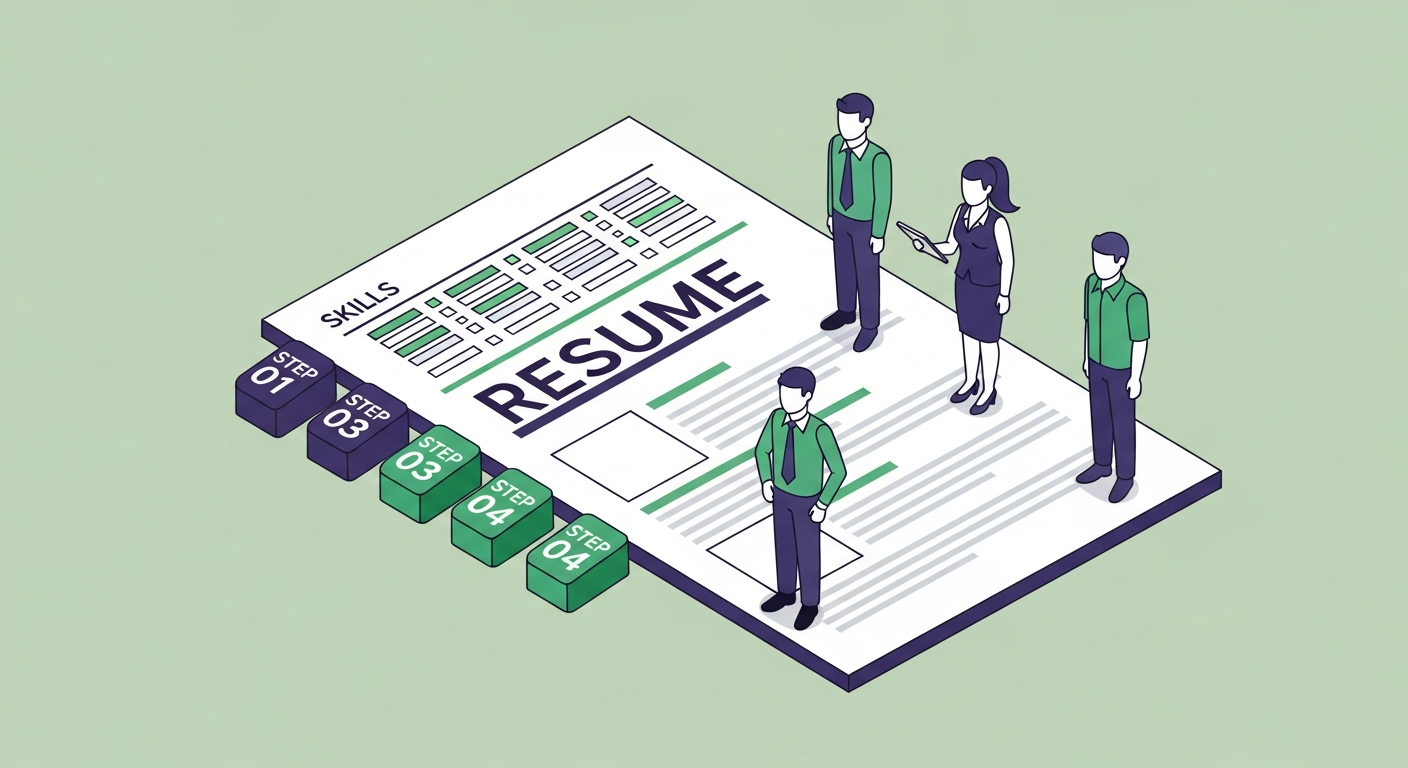
1. Use a dedicated skills section. ATS parsers have a structured field for skills. When you list them under a recognizable header — "Skills," "Technical Skills," "Core Competencies" — the parser extracts them into that field and scores them against the job description. Burying skills only in your experience bullets means the parser may or may not catch them. The dedicated section scores twice: as structured data and as full-text keywords. For a full breakdown of which resume sections ATS scores as structured fields, that's worth a read before you finalize your layout.
2. Mirror the job description's exact phrasing. If the posting says "Google Analytics," write "Google Analytics" — not "web analytics tools" or "GA4." Synonyms don't score equally on most platforms. A project manager once listed "cross-functional collaboration" instead of "stakeholder communication." Same meaning to any human. Zero match to the parser. She changed two phrases and got the interview. According to Jobscan's analysis of over a million resume scans, job seekers who tailor their resume to the job description are 3x more likely to get an interview. Exact keyword matching is the mechanism behind that number.
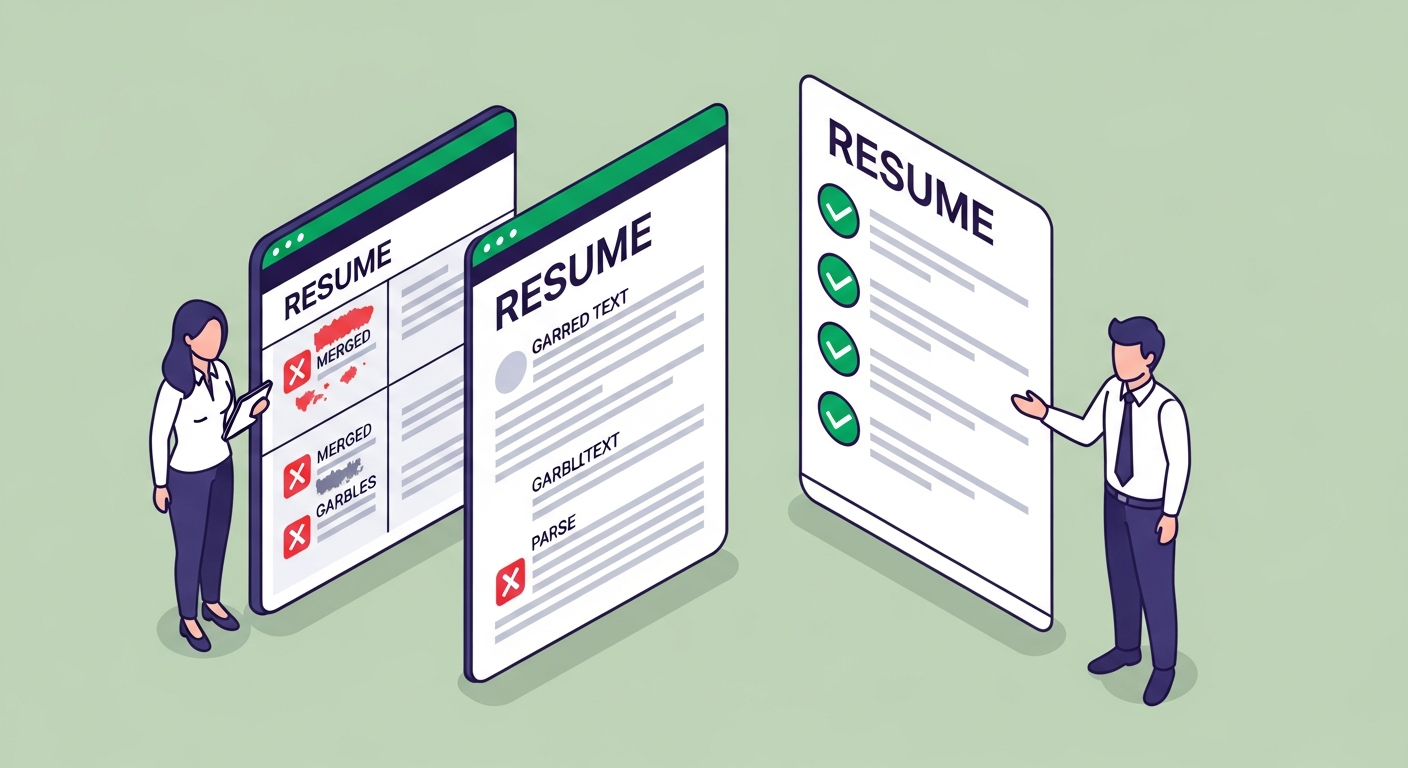
3. Single-column layout only. ATS parsers read left to right in a linear pass. A two-column resume with a sidebar skills section gets parsed as garbled text — skill names merge with job titles into nonsense strings. In ATSFixer's internal testing, 1 in 3 resumes submitted through Workday are corrupted during parsing due to columns, tables, or text boxes. Understanding what makes a resume scannable is the foundation — layout before content.
4. Prove skills in your bullets too. Most ATS platforms weight keyword frequency and placement. Keywords appearing in both your dedicated skills section and your experience bullets score higher than keywords appearing only once. "SQL" in the skills section plus "Built SQL queries to automate weekly reporting across 4 departments, cutting manual hours by 6 per week" in a bullet is better than either alone.
Hard Skills That Sound Right but Score Zero
Most hard skills examples guides stop at the list. This section covers what happens when you phrase things wrong — and why phrasing matters as much as the skill itself.
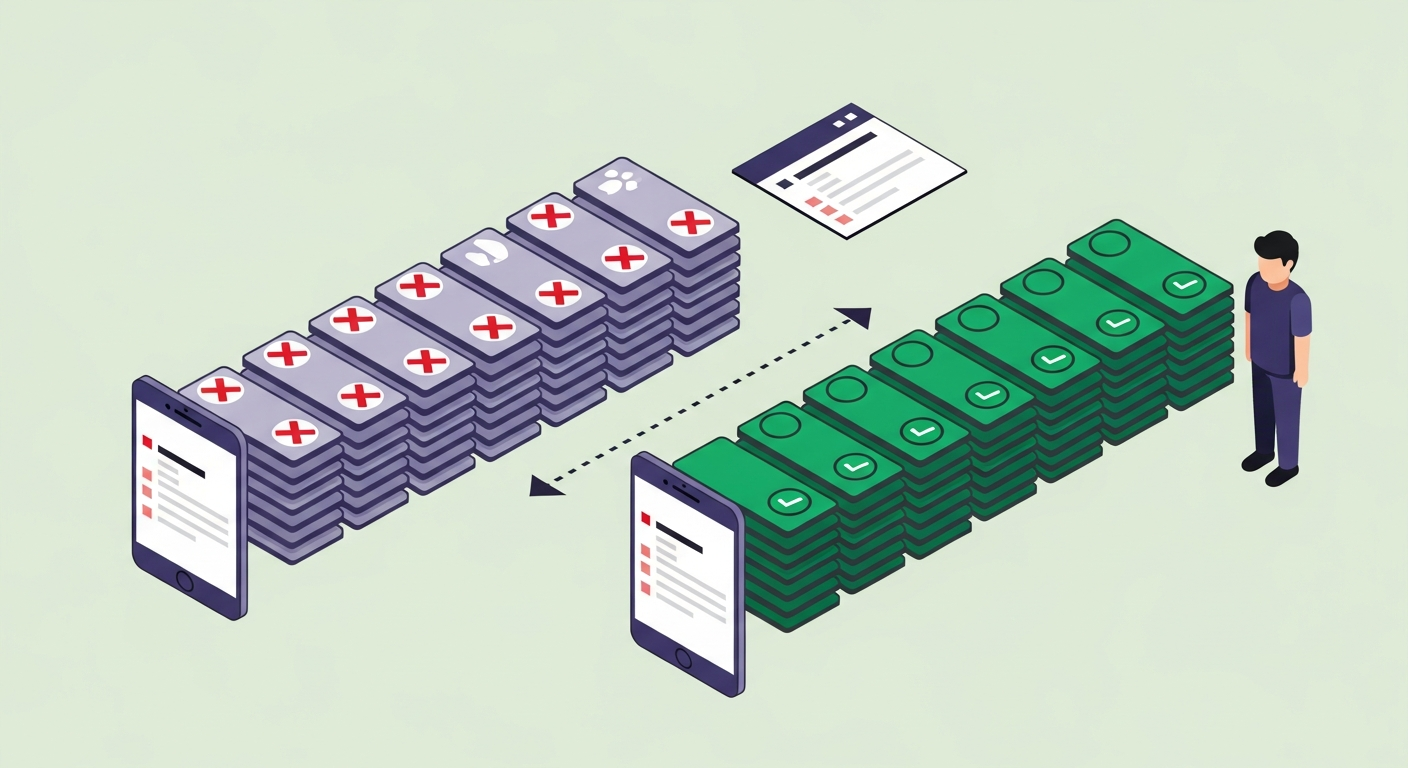
ATS parsers extract named entities: tool names, certification abbreviations, recognized technical terms. They don't infer meaning. "Data tools and platforms" doesn't map to Python and SQL in the parser's world, even though it clearly does in yours. The algorithm and I have a complicated relationship. It keeps filtering people I would hire. I keep writing about why.
Here's what consistent testing through Greenhouse, Workday, Lever, Taleo, and iCIMS shows:
"Proficient in Microsoft Office" → low to zero score on most platforms.
"Microsoft Excel, Microsoft Word, Microsoft PowerPoint, Microsoft Outlook" → each scores as a separate keyword hit.
"Data tools and platforms" → zero.
"Python, SQL, Tableau, BigQuery" → four separate hits.
"Project coordination and stakeholder management" → inconsistent.
"PMP, Agile, Scrum, Jira, stakeholder communication" → five separate hits.
"Strong CRM experience" → zero.
"Salesforce, HubSpot, Pipedrive" → three hits.
"AI and machine learning background" → inconsistent.
"TensorFlow, PyTorch, scikit-learn, machine learning" → four hits.
The pattern is the same every time: generalizations don't score reliably. Named tools, certification abbreviations, and specific technical terms score. The more specific the phrase, the more predictably it matches.
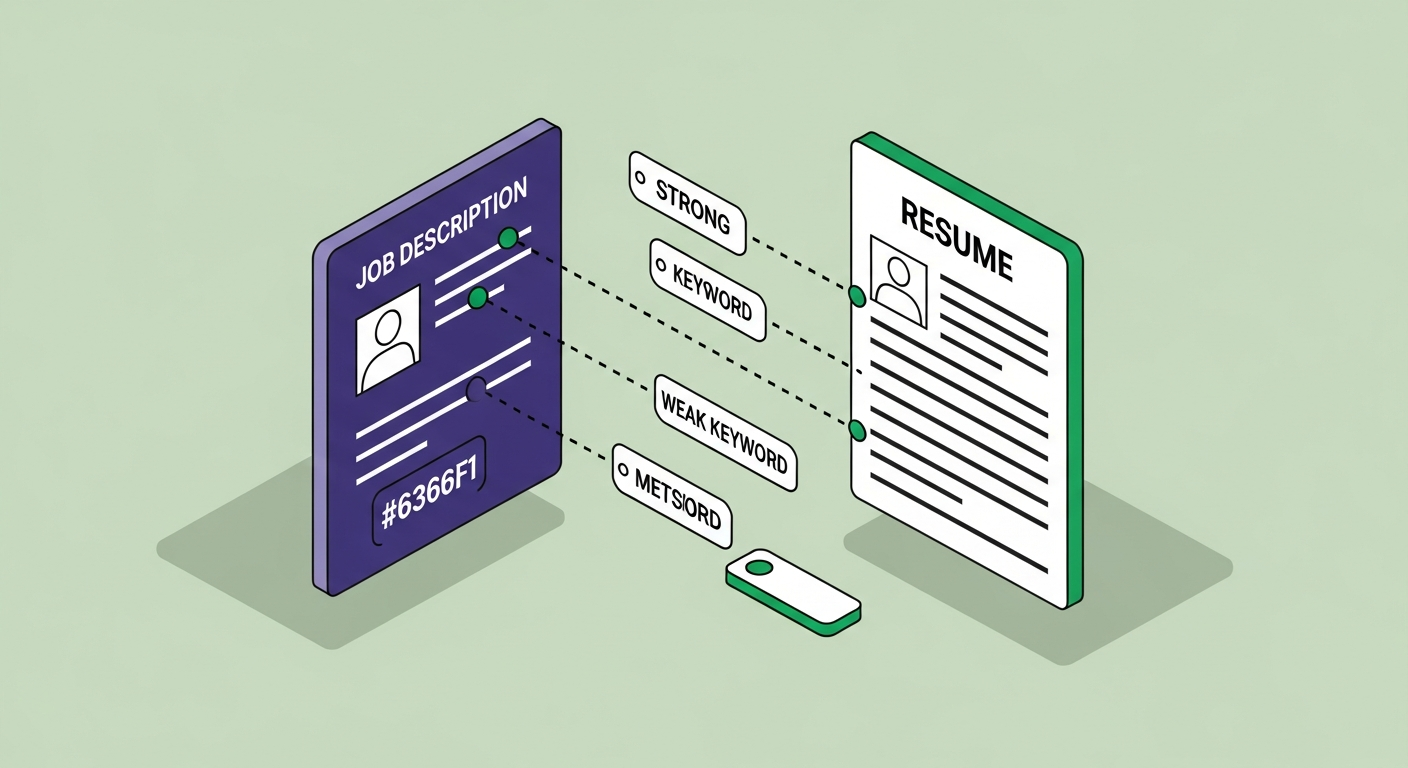
If you want to know exactly which terms you're missing for a specific job description, that's what ATSFixer does — paste your resume and the job posting, and you get a keyword-by-keyword breakdown of what the algorithm sees and what's absent. Takes 30 seconds.
How Many Hard Skills Should You List on a Resume
There is no correct number. There is a correct approach.
The average job description contains 15–25 hard-skill terms, according to Jobscan's analysis of over a million job postings. Your skills section should capture every one of those terms you genuinely have — not approximate versions, not category names. The exact terms.
That means the right number changes with every application. A role at a fintech startup might list Python, SQL, dbt, Looker, and Stripe API. A role at a traditional bank in the same "data analyst" category might list Excel, VBA, Bloomberg, and SAP. Same job title. Completely different keyword set. Completely different optimization pass.
Honestly, the right question isn't "how many skills should I list" — it's "which skills does this specific job description ask for that I actually have." Answering that and listing them precisely is the whole job. For more on how to decide which skills to put on your resume by role type, there's a full breakdown there.
One practical thing: don't pad with soft skills. They dilute the density of your skills section without adding ATS score. Don't stuff in keywords you can't back up in a bullet or a conversation — that breaks down the moment someone asks about it.
And if "references available upon request" is still sitting at the bottom of your resume, delete it. That line has always been implied. It takes up the space of three keyword hits. Use it.
Related from ATSFixer
Frequently Asked Questions
Hard skills are specific, measurable abilities — tool names, software, certifications, technical methods. Soft skills are behavioral and interpersonal — communication, leadership, problem-solving. On a resume, the distinction matters because ATS parsers are built to extract and score hard skills from a dedicated skills section. Soft skills don't map to the structured fields the parser looks for and typically score zero.

Jordan Marcus
Senior Career Strategist
Jordan has reviewed 4,000+ resumes and coached candidates into roles at Google, Stripe, and McKinsey. She writes about the mechanics of ATS and what actually gets people interviews.