On this page
- What Soft Skills Actually Are (And What They Aren't)
- Soft Skills vs. Hard Skills — The Resume Scoring Problem
- Top Soft Skills Employers Want in 2026
- Communication
- Adaptability
- Problem-Solving
- Leadership
- Teamwork
- Emotional Intelligence
- Time Management
- Critical Thinking
- Which Soft Skills Score on ATS (and Which Score Zero)
- How to List Soft Skills on Your Resume Without Getting Filtered
- Soft Skills Examples by Job Type
- Marketing and Communications
- Technology and Engineering
- Sales and Customer Service
- Management and Leadership
- Healthcare and Education
- When Soft Skills Don't Matter as Much as You Think
- Frequently Asked Questions
Soft skills examples are everywhere. The lists are long, the categories are plentiful, and almost none of them explain which ones actually move your ATS score — and which ones are eating up resume real estate that a real keyword could be using instead.
75% of resumes are filtered by automated systems before a human reads them. The filter doesn't care whether you're a great communicator. It cares whether "stakeholder communication" appears in your resume in exactly the same form it appeared in the job description. That distinction is the whole point of this guide.
Short answer on soft skills examples: yes, you need them. Yes, employers value them. No, listing "team player" in your skills section is not going to help you get screened in — and here's exactly what to do instead.
What Soft Skills Actually Are (And What They Aren't)
Soft skills are behavioral traits and interpersonal abilities that don't require a certification to develop and don't have a tool name attached. Communication. Adaptability. Problem-solving. Leadership. These are real skills — employers want them, hiring managers evaluate them in interviews, and they often make the difference between two equally qualified candidates.
Hard skills are the opposite: specific, measurable abilities with a clear deliverable. Python. Salesforce. SQL. GAAP. PMP certification. ATS parsers are built to extract these as structured keyword data and compare them against a job description.
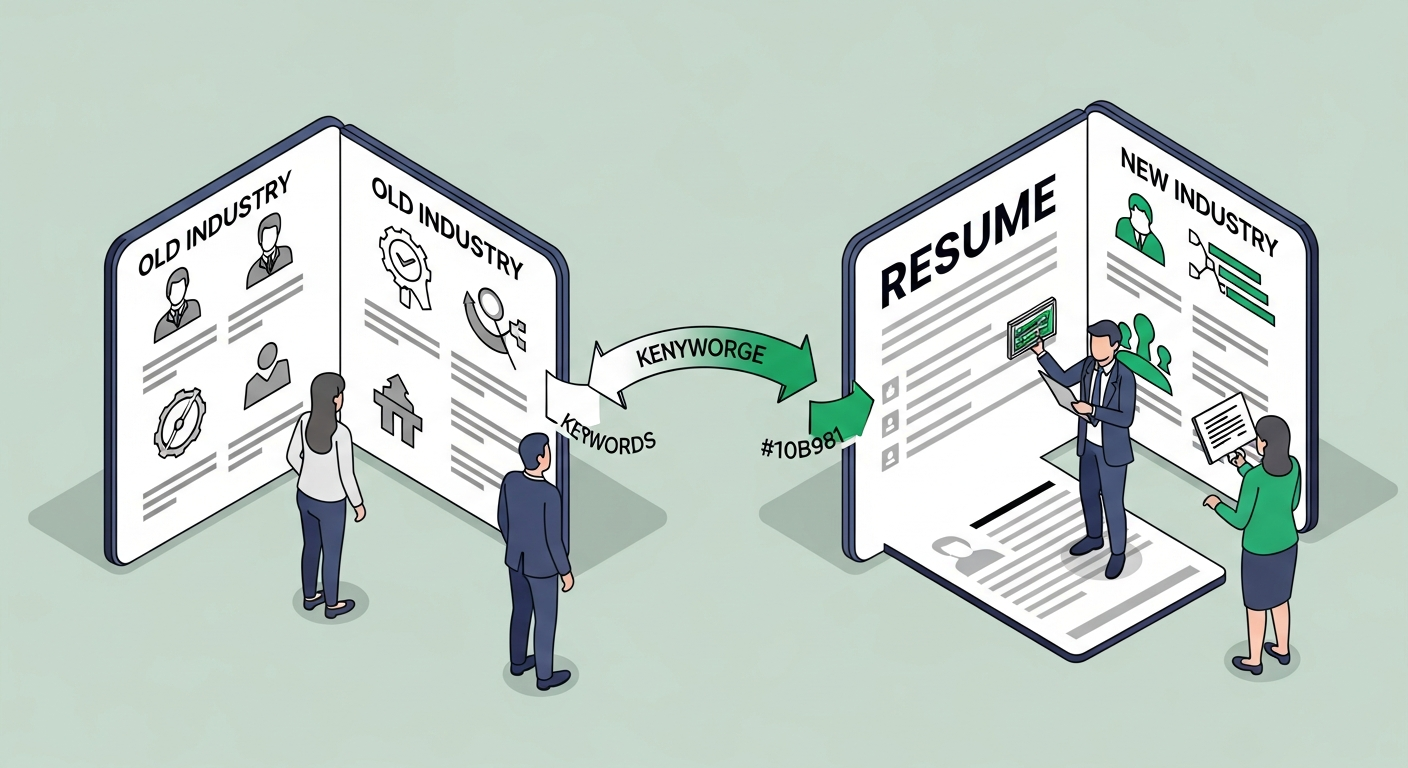
The distinction matters for your resume in a specific way. Hard skills score in your skills section. Soft skills score when they appear as exact-match phrases from the job description — and only when they're supported by evidence in your experience bullets.
What doesn't score: a list of personality adjectives. "Detail-oriented. Collaborative. Results-driven." Every resume has these. The algorithm stopped weighting them because they carry no signal.
(The resume equivalent of listing "breathes regularly" under personal qualities. Technically true. Universally true. Not a differentiator.)
Soft Skills vs. Hard Skills — The Resume Scoring Problem
When an ATS scans your resume, it's doing exact-match keyword scoring. "Stakeholder management" on the job description needs to appear as "stakeholder management" on your resume. Not "managing key relationships." Not "cross-functional coordination." The exact phrase — because synonyms score zero on most platforms.
A project manager applied for a role listing "stakeholder communication" as a required competency. Her resume said "cross-functional collaboration." Any human reader would recognize those as equivalent. The ATS didn't look for equivalence. It looked for the exact phrase, found zero matches, and ranked her accordingly. She changed two phrases. Got the interview. Got the job.
That mechanic applies directly to soft skills. If the job description says "change management" and you write "adaptable to changing environments," you've said the right thing in the wrong words. The algorithm reads the words, not the meaning.
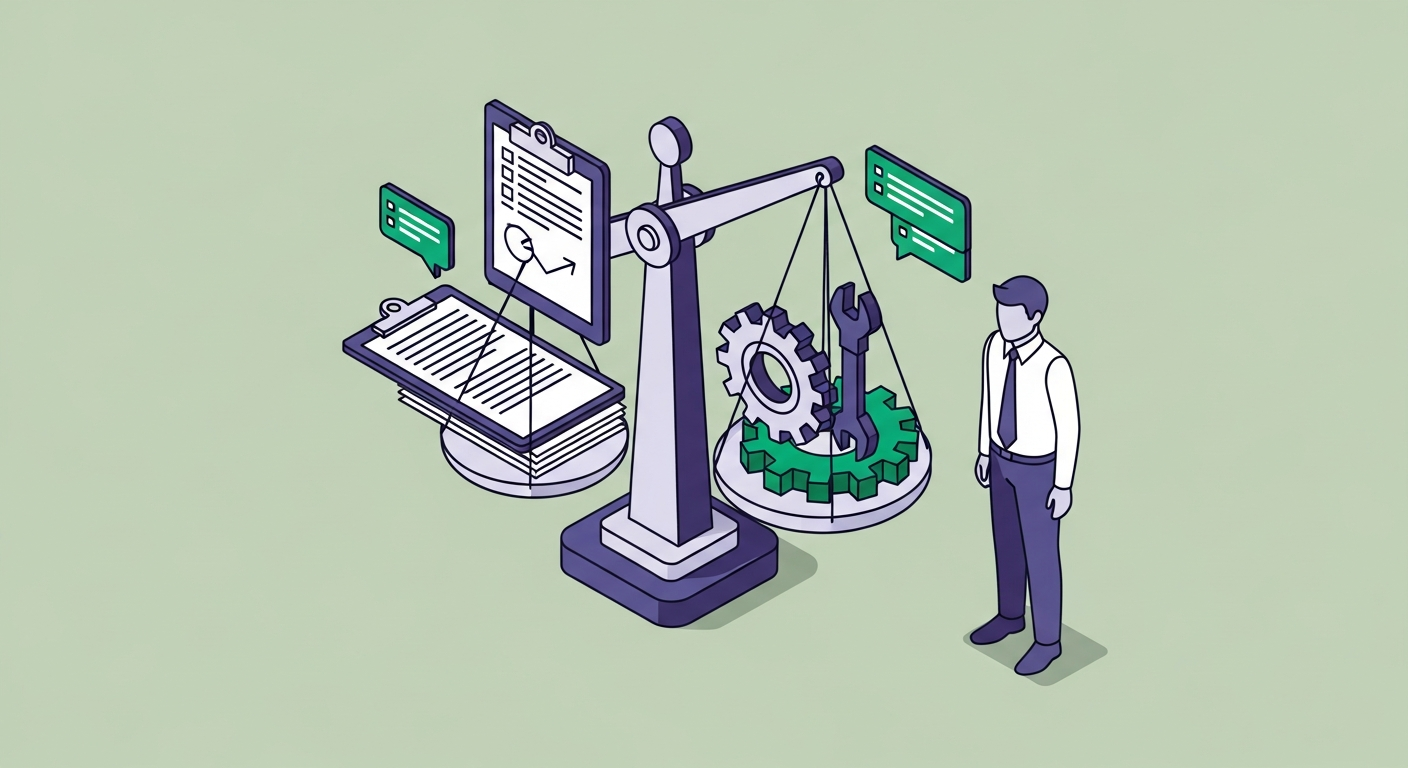
Here's the practical breakdown:
Hard skills — score in the skills section when exact-matched to the job description. Always list them there. "Python, SQL, Tableau, Google Analytics" gives the parser structured data it can compare against requirements.
Soft skills — score in the skills section only when taken verbatim from the job description's required or preferred qualifications. Score higher when they also appear in experience bullets with measurable evidence. Score zero when listed as generic adjectives that you made up yourself.
A 2021 Harvard Business School and Accenture study of 8 million job postings found that 88% of executives acknowledge their ATS filters out qualified candidates who should have moved forward. The over-filtering happens because the algorithm optimises for keyword density in specific structured fields — not for human judgment. You can't out-personality an ATS. You can out-keyword it.
Top Soft Skills Employers Want in 2026
These are the soft skills appearing most frequently in job descriptions across industries. Use this as a starting checklist — then confirm against the specific job posting you're targeting and match the exact phrasing it uses. The concept matters less than the phrase. The phrase is what scores.
Communication
The most-requested soft skill across every industry and seniority level. In job descriptions it appears as: "verbal and written communication," "presentation skills," "stakeholder communication," "executive communication," "cross-team communication." Each phrase scores differently on ATS — check which one your target posting uses and mirror it exactly. "Communication skills" as a standalone is the weakest version of all of them.
Adaptability
High demand since 2020 and still rising. Appears as "adaptability," "change management," "flexibility," and "thriving in fast-paced environments." Worth noting: "change management" has crossed from soft skill territory into something closer to a hard skill — it's certifiable (PROSCI), measurable, and scores very reliably on ATS. If the posting uses it, treat it like a hard skill and list it accordingly.
Problem-Solving
Appears in job descriptions as "analytical thinking," "critical thinking," "problem-solving," "troubleshooting," or "root cause analysis." Technical roles lean toward "troubleshooting" and "root cause analysis." Business roles lean toward "critical thinking" and "data-driven decision making." The phrase that matters is the one in your target posting — not the one that sounds most impressive to you.
Leadership
Nearly universal in mid-to-senior job descriptions, in multiple forms: "leadership," "people management," "team leadership," "mentoring," "coaching," "talent development." Pick the version your job description uses. "People management" and "leadership" are parsed as different terms by most ATS platforms — matching the wrong one costs you keyword points even when the intent is identical. I know. It's very pedantic. The algorithm doesn't care.
Teamwork
"Collaboration," "cross-functional collaboration," "team player," "cross-departmental coordination." The first two score meaningfully. "Team player" is on approximately 60% of all resumes and has been effectively deprioritized by most ATS algorithms. How you structure your skills section matters more than how many items you list — one verified keyword outperforms five generic adjectives every time.
Emotional Intelligence
A growing presence on job descriptions for management and client-facing roles. Appears as "emotional intelligence," "EQ," "empathy," "active listening," "conflict resolution." The last two score more reliably because they describe specific, demonstrable behaviors. "Conflict resolution" on a resume, backed by a concrete outcome bullet, is significantly more credible than "high emotional intelligence" as a standalone claim.
Time Management
Common in high-volume, deadline-driven roles. Appears as "time management," "deadline-driven," "prioritization," "ability to manage multiple projects simultaneously," "managing competing priorities." All score differently. The phrase "managing competing priorities" has become nearly universal in office-role postings and scores accordingly — if it's in the posting, use it verbatim and don't paraphrase it into oblivion.
Critical Thinking
Shows up in finance, consulting, strategy, research, and legal roles. Usually phrased as "critical thinking," "analytical skills," "strategic thinking," or "data-driven decisions." If the job description uses "strategic thinking," that's what belongs on your resume — not "big-picture mindset," which means the same thing to you and scores approximately nothing on the platform. Synonyms. Zero. Every time.
Free ATS Score Check
Your result looks like this —
get yours in 30 seconds.
Drag & drop your resume here
PDF or Word · max 10 MB
Results in under 30 seconds · no sign-up required
Which Soft Skills Score on ATS (and Which Score Zero)
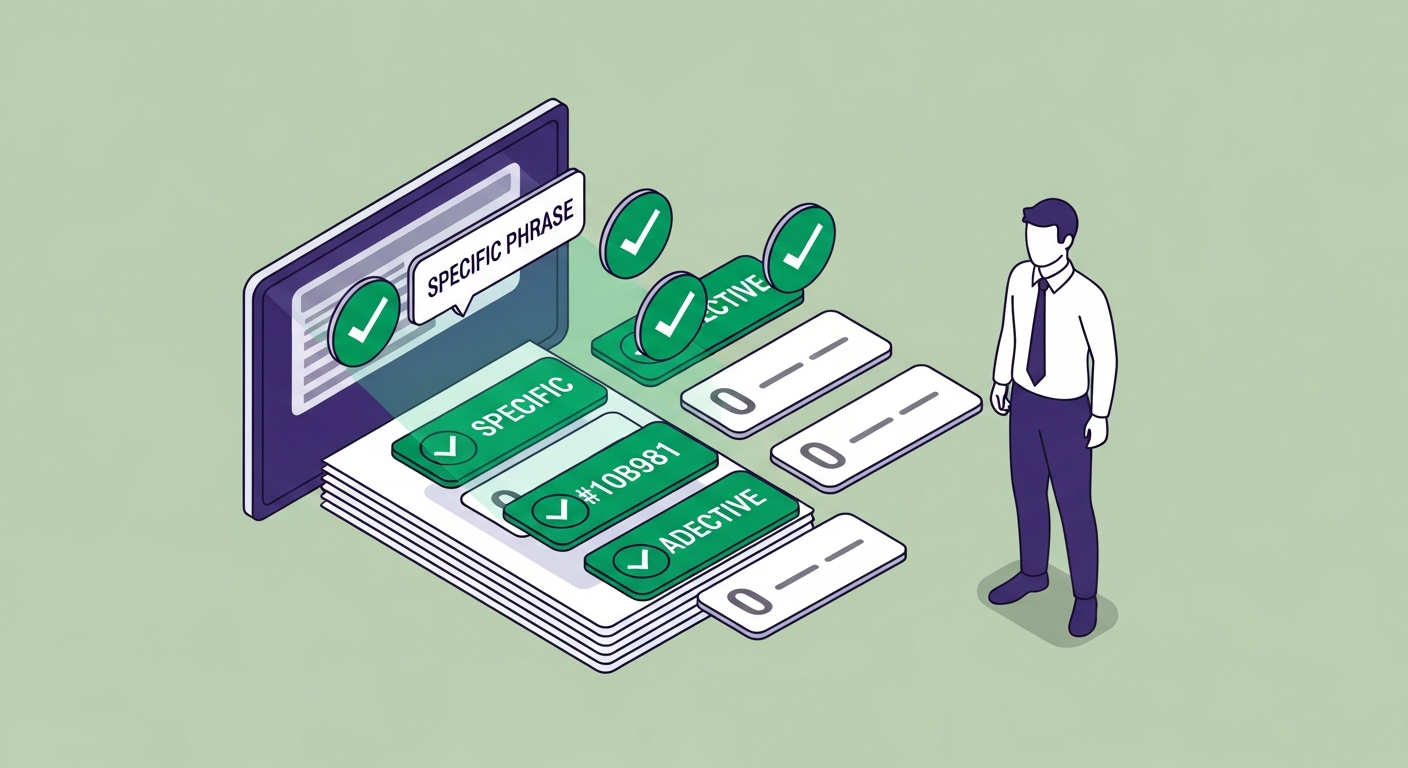
98% of Fortune 500 companies use an ATS to screen candidates, according to Jobscan's 2023 research. Most ATS platforms extract and score noun-based keywords — tool names, certifications, and specific phrase-match terms from the job description. Generic adjectives describing personality traits were deprioritized years ago because they appear on nearly every resume and carry no signal.
Soft skills that score reliably (when exact-matched from the job description):
- Stakeholder management / stakeholder communication
- Change management
- Conflict resolution
- Cross-functional collaboration
- People management
- Presentation skills
- Critical thinking
- Analytical skills
- Negotiation
- Project management (often treated as a hard skill — certifiable, measurable)
- Data-driven decision making
- Active listening
Generic soft skills that score zero or near-zero on most platforms:
- Team player
- Detail-oriented
- Hard worker
- Results-driven
- Self-starter
- Strong work ethic
- Passionate
- Motivated
- Go-getter (I'm including this one specifically so you know to remove it)
- People person
The difference isn't the quality of the skill. It's whether the ATS parser has been trained to extract and weight it. Generic trait-words are everywhere. The algorithm stopped caring.
ATSFixer data shows resumes with a skills section matched to the exact phrases in the job description score an average of 10–15 points higher than equivalent resumes without one — and that gap holds for soft-skill terms too, as long as you copied the phrase from the posting rather than invented it yourself.
The rule of thumb: if you copied the phrase straight from the job description's "required qualifications" section, it scores. If you wrote it yourself because it sounds impressive, it probably doesn't.
(I've run this test hundreds of times across Greenhouse, Workday, and Taleo. The algorithm is not moved by synonyms. It is specifically, stubbornly, inflexibly looking for the words in the job description. Which is a very good argument for reading the job posting before you apply — a step that, according to Jobscan research, roughly 45% of applicants skip entirely.)
How to List Soft Skills on Your Resume Without Getting Filtered
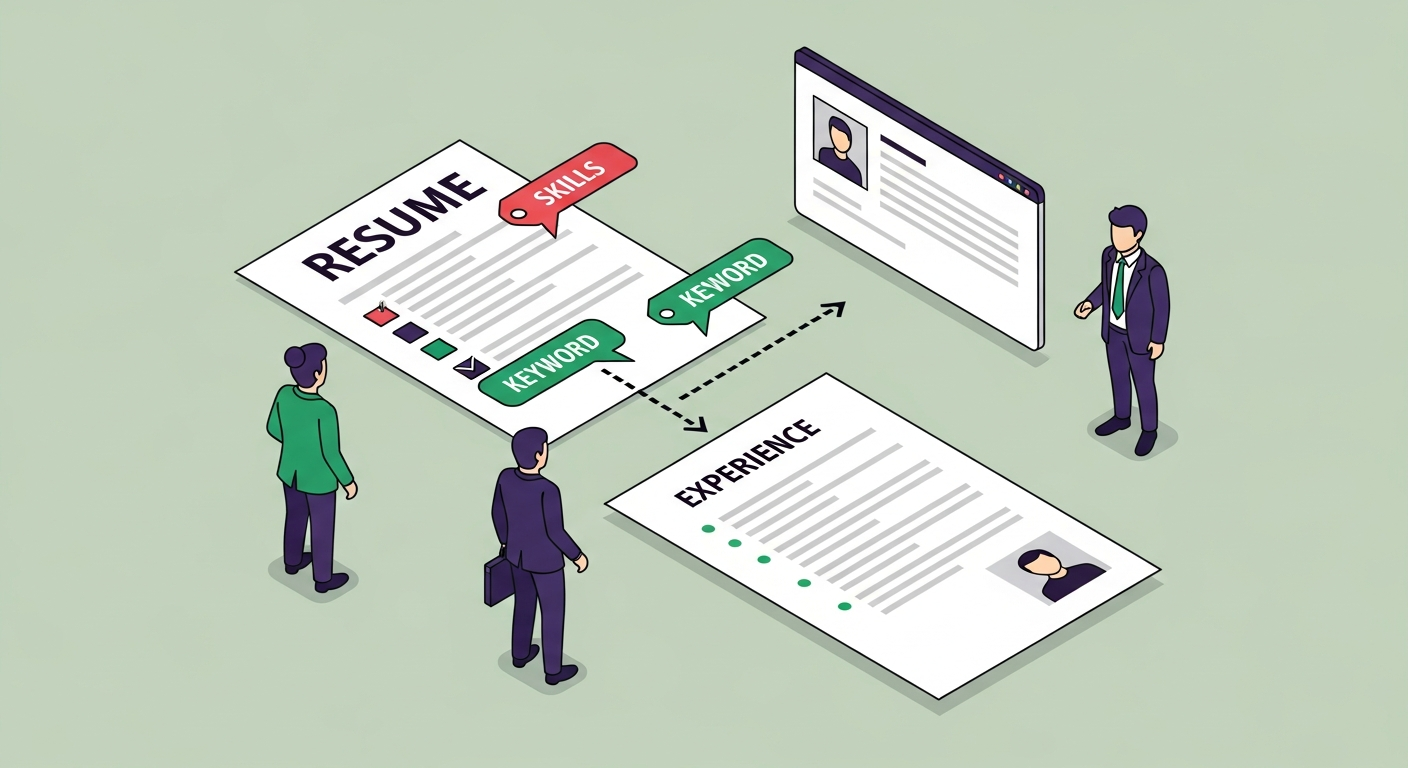
There are two places soft skills need to appear on a resume to score well: the skills section and the experience bullets. Keywords appearing in both locations are weighted more heavily on most ATS platforms than keywords that appear only once — the system interprets repetition as depth of competency.
In the skills section: list only the soft skills that appear verbatim in the job description's required or preferred qualifications. Two or three is usually enough. More than three generic soft skills begin crowding out the hard skills that score higher and do more measurable work.
A practical ratio: 70–80% hard skills, 20–30% soft skills, with the soft skills matched exactly to the job description. For more on how to build a skills section that scores, here's a full breakdown of what to actually put in a skills section — including how to order items by ATS relevance.
In the experience bullets: this is where soft skills live as evidence. Don't list "communication skills" as a standalone claim. Write the proof:
- Instead of: "Strong communication skills"
Write: "Presented quarterly results to board of 12 directors; reformatted summary approach and reduced follow-up questions by 40%" - Instead of: "Adaptable to change"
Write: "Led 6-department platform migration over 3 months; maintained 98% on-time delivery rate throughout transition" - Instead of: "Problem-solving skills"
Write: "Identified $240K in billing discrepancies through manual audit; implemented reconciliation process that reduced errors by 67%"
Each bullet proves the soft skill without labeling it. The ATS extracts concrete terms — "board of 12," "platform migration," "reconciliation process." The recruiter sees leadership, adaptability, and analytical thinking in action without you having to say the words. One shows. The other just tells.
If you're not sure whether your current resume is landing the keywords you think it is, paste it into ATSFixer. It shows you exactly which terms are matching, which ones are scoring zero, and which sections are pulling their weight — and the average improvement after one optimization is +31 points.
Soft Skills Examples by Job Type
The soft skills that score well vary significantly by industry and role. Here are the terms appearing most often in job descriptions by sector. Use these as a starting checklist — then confirm against the specific posting and match its exact phrasing.
Marketing and Communications
- Storytelling
- Cross-functional collaboration
- Stakeholder communication
- Presentation skills
- Creative problem-solving
- Campaign management (often scored as a hard skill in marketing ATS — verify against the posting)
Technology and Engineering
- Problem-solving
- Critical thinking
- Technical communication
- Cross-functional collaboration
- Root cause analysis
- Mentoring / knowledge sharing (scores in senior and staff-level postings)
Sales and Customer Service
- Negotiation
- Active listening
- Conflict resolution
- Empathy
- Relationship management
- Customer success (increasingly treated as a hard skill — use the posting's exact phrasing)
For a detailed breakdown of ATS-weighted phrases by seniority in customer-facing roles, the customer service resume keywords guide covers exactly which terms move the score and which ones don't.
Management and Leadership
- People management
- Team leadership
- Coaching / mentoring
- Change management
- Decision-making
- Conflict resolution
Healthcare and Education
- Empathy
- Patient communication / parent communication (use the role-specific variant from the posting)
- Adaptability
- Collaboration
- Critical thinking
- Stress management (appears frequently in nursing and emergency medicine postings)

When Soft Skills Don't Matter as Much as You Think
If you're applying to a company with under 50 employees, there's a reasonable chance no ATS is in the picture. The platforms are expensive to implement and configure, and small teams often review applications directly. In that context, ATS keyword optimization matters significantly less than a clear, honest, well-organized document that a human reader can evaluate quickly.
In highly technical roles where hard skills dominate — senior engineer, data scientist, quant analyst, specialized finance — a row of soft skills in the skills section is contributing very little to your score. The ATS is looking for Python, TensorFlow, GAAP, Bloomberg, DCF modeling. One verified technical keyword outweighs three soft skill adjectives every time. Use the space for another certification or tool name.
And in any hiring process that starts with a referral, the soft skill evaluation is happening in real time — through the person who referred you. The algorithm is largely beside the point. This is also why, according to Bureau of Labor Statistics and LinkedIn labor market data, roughly 70% of roles are filled before they're publicly posted. The job board is real, but it's the end of the queue.
The honest version of this: soft skills matter enormously to the job itself. They matter considerably to the hiring manager in the interview room. They matter far less to the ATS than most resume guides suggest — and the answer isn't to stop developing them, it's to stop listing generic versions on your resume and start proving them in your bullets where a human reader can evaluate the evidence.
You made it to the end of an article about soft skills. That already demonstrates patience, critical thinking, and a willingness to read past the headline. All three of those should be in your resume. In your bullets, though — not just as a list.
Frequently Asked Questions
Related from ATSFixer
Frequently Asked Questions
Soft skills examples for a resume include communication, adaptability, leadership, critical thinking, conflict resolution, and stakeholder management. The key is to use the exact phrasing from the job description you're targeting — "cross-functional collaboration" and "teamwork" are not the same term to an ATS, even though they mean the same thing to a human reader. Mirror the job posting's language, not your preferred phrasing.

Jordan Marcus
Senior Career Strategist
Jordan has reviewed 4,000+ resumes and coached candidates into roles at Google, Stripe, and McKinsey. She writes about the mechanics of ATS and what actually gets people interviews.